THE ADVENTURE COLLECTIVE® · Independent discovery and booking for outdoor travel

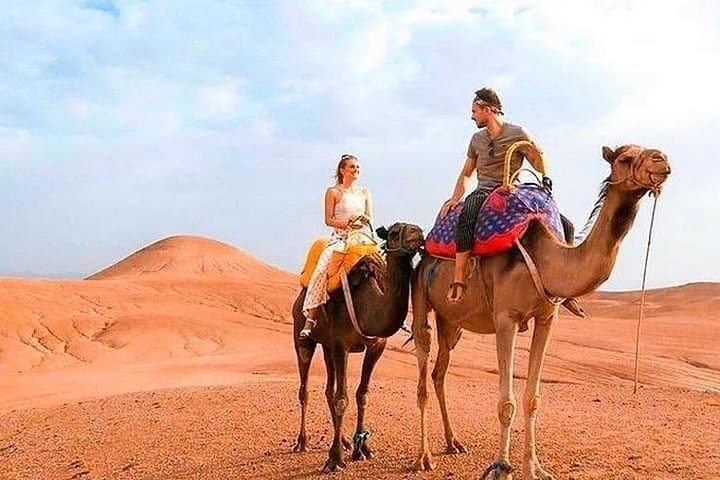
Spend a late afternoon racing across Agafay’s stony plains by quad, watch the Atlas silhouette swallow the sun from camelback, then settle into a camp for Gnawa music and a traditional tagine dinner. This half-day to evening combo mixes off-road thrills with cultural hospitality.
Spend a late afternoon racing across Agafay’s stony plains by quad, watch the Atlas silhouette swallow the sun from camelback, then settle into a camp for Gnawa music and a traditional tagine dinner. This half-day to evening combo mixes off-road thrills with cultural hospitality.
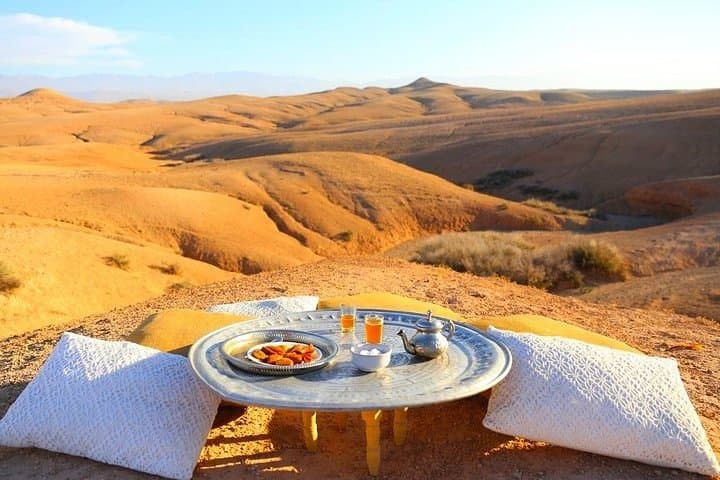
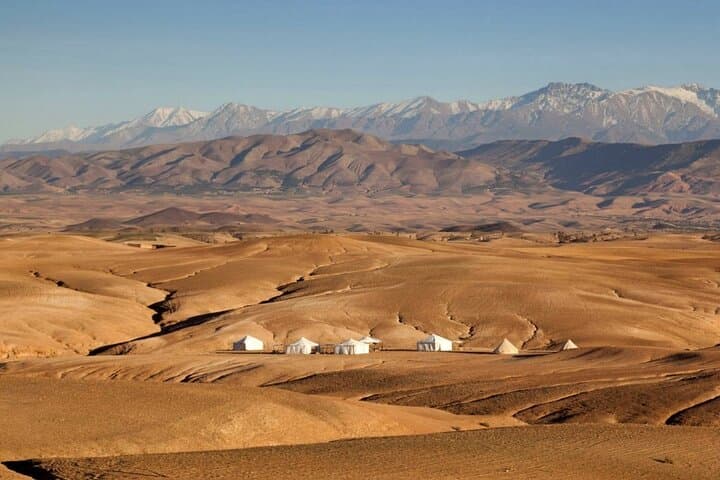
Dust kicks and a warm wind moves across stony plains as the minivan drops you at the edge of Agafay. The landscape is not sand dunes but a vast expanse of rounded, sun-baked rocks and scrub that roll toward the Atlas foothills; the wind sculpts the terrain and the heat gives the stones a low, steady hum. You start on quads—throttle in hand—threading tracks that carve shallow ruts across the lunar-like surface, arriving at a low ridge just in time for the sun to burn orange behind the distant mountains.
Verified experiences and guided adventures in the surrounding area.
Operated by marrakech Tours 2019 · Marrakech, Marrakech-Safi
Dust kicks and a warm wind moves across stony plains as the minivan drops you at the edge of Agafay. The landscape is not sand dunes but a vast expanse of rounded, sun-baked rocks and scrub that roll toward the Atlas foothills; the wind sculpts the terrain and the heat gives the stones a low, steady hum. You start on quads—throttle in hand—threading tracks that carve shallow ruts across the lunar-like surface, arriving at a low ridge just in time for the sun to burn orange behind the distant mountains.
Agafay’s rough, rocky plateau is a recent geological outcrop of debris shed from the High Atlas; it never held an ocean of sand like the Sahara but has long been a grazing and caravan fringe, where Berber communities traded tea and hospitality. That cultural presence shapes the evening: tents, Gnawa rhythms, belly dance and communal tagine that let you taste southern Morocco in one sitting.
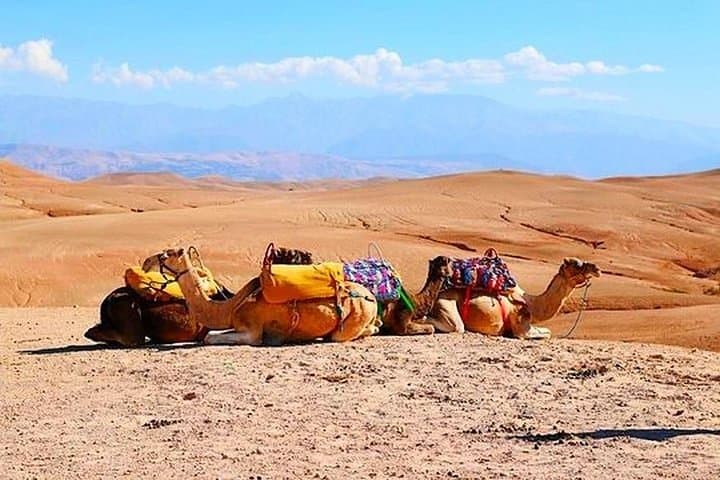
Practical notes: departure from Marrakech is about 35–45 minutes depending on traffic, and the full experience runs 7–8 hours. Quad riding is guided and beginner-friendly but requires basic coordination; camel rides follow at sunset when temperatures drop. Expect dusty conditions—closed shoes, sun protection and a secure way to carry your phone or camera are musts. Respect animals and follow guides’ safety briefings: stay seated, hold on, and avoid sudden movements around camels.
This trip fits travelers who want an active half-day plus an atmospheric evening—part motorized adventure, part cultural encounter—centered on dramatic light, low horizons and simple, savory food.
moderate.
7–8 hours.
Light to moderate—able to mount a camel, handle a short off-road ATV session, and stand at an evening camp.
Pickup is typically 35–45 minutes each way depending on your hotel location and traffic in Marrakech.
No; quads are operated on guided circuits and instructors give a safety briefing—novices are accommodated.
Children can attend but infants must sit on laps; operators often set age or height limits for solo quad use—check when booking.
Yes; traditional Moroccan camps usually offer vegetarian tagine and salads on request—notify the operator in advance.
Agafay is a rocky, non-sandy desert formed from High Atlas erosion; historically it marked grazing margins and routes used by Berber communities between mountain valleys and Marrakech.
Stay on established tracks to protect scarce vegetation and avoid stressing pack animals; choose operators who rotate camp locations and provide water responsibly.
marrakech Tours 2019 operates guided outdoor trips and adventures with an emphasis on safety, stewardship, and memorable experiences.
Dust kicks and a warm wind moves across stony plains as the minivan drops you at the edge of Agafay. The landscape is not sand dunes but a vast expanse of rounded, sun-baked rocks and scrub that roll toward the Atlas foothills; the wind sculpts the terrain and the heat gives the stones a low, steady hum. You start on quads—throttle in hand—threading tracks that carve shallow ruts across the lunar-like surface, arriving at a low ridge just in time for the sun to burn orange behind the distant mountains.
Dust kicks and a warm wind moves across stony plains as the minivan drops you at the edge of Agafay. The landscape is not sand dunes but a vast expanse of rounded, sun-baked rocks and scrub that roll toward the Atlas foothills; the wind sculpts the terrain and the heat gives the stones a low, steady hum. You start on quads—throttle in hand—threading tracks that carve shallow ruts across the lunar-like surface, arriving at a low ridge just in time for the sun to burn orange behind the distant mountains.
Agafay’s rough, rocky plateau is a recent geological outcrop of debris shed from the High Atlas; it never held an ocean of sand like the Sahara but has long been a grazing and caravan fringe, where Berber communities traded tea and hospitality. That cultural presence shapes the evening: tents, Gnawa rhythms, belly dance and communal tagine that let you taste southern Morocco in one sitting.
Practical notes: departure from Marrakech is about 35–45 minutes depending on traffic, and the full experience runs 7–8 hours. Quad riding is guided and beginner-friendly but requires basic coordination; camel rides follow at sunset when temperatures drop. Expect dusty conditions—closed shoes, sun protection and a secure way to carry your phone or camera are musts. Respect animals and follow guides’ safety briefings: stay seated, hold on, and avoid sudden movements around camels.
This trip fits travelers who want an active half-day plus an atmospheric evening—part motorized adventure, part cultural encounter—centered on dramatic light, low horizons and simple, savory food.