THE ADVENTURE COLLECTIVE® · Independent discovery and booking for outdoor travel

Ride through Marrakech’s historic Palmeraie at sunset—quad tracks, desert plateaus and a tea stop in a Berber enclave combine for a two-hour motorized adventure with a camel encounter.
Ride through Marrakech’s historic Palmeraie at sunset—quad tracks, desert plateaus and a tea stop in a Berber enclave combine for a two-hour motorized adventure with a camel encounter.
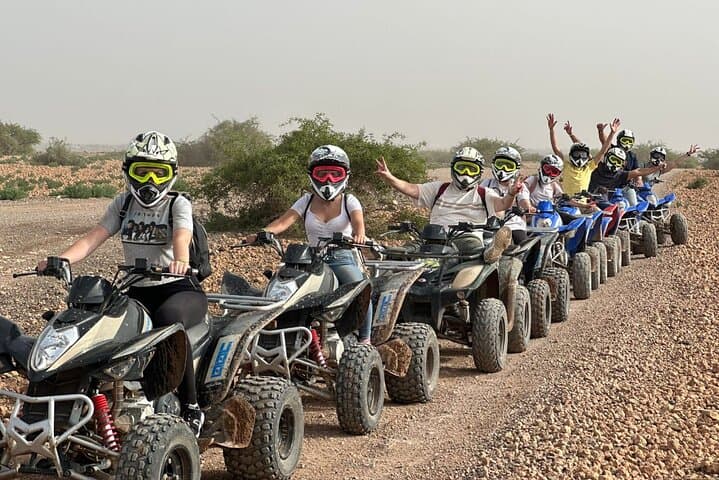
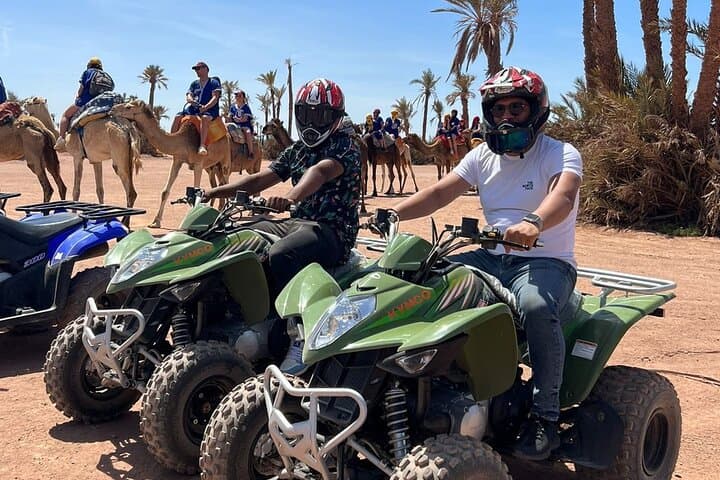
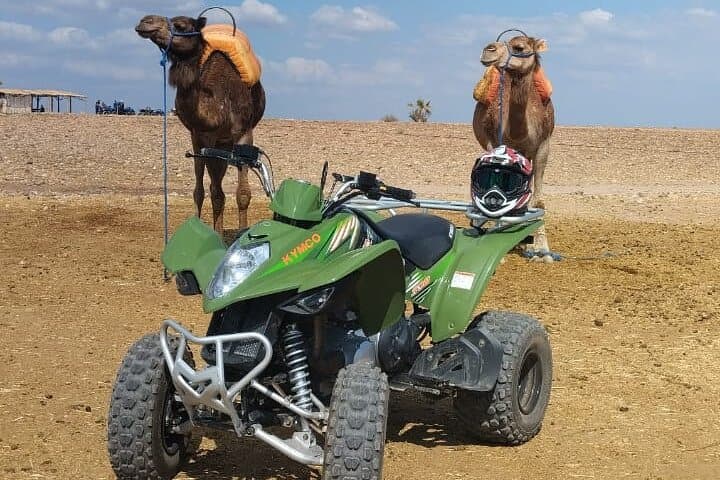
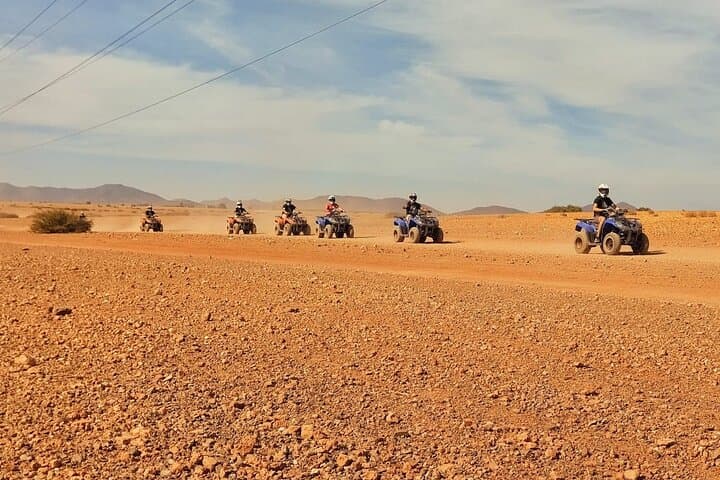
Late afternoon in the Palmeraie feels like a gear shift: the palm canopy cools, dust softens, and the trail opens to long views of stubbled desert plateaus. Riders head out on quads and buggies, engines humming beneath a sky that deepens to ochre, while nearby camels stand patient—an older rhythm beside the mechanical thrum. Guides thread the group through shaded lanes, past irrigation channels and low Berber homes, stopping for mint tea where the palms thin and the horizon widens.
Verified experiences and guided adventures in the surrounding area.
Operated by Raid Maroc Loisirs · Marrakech, Marrakech-Safi
Late afternoon in the Palmeraie feels like a gear shift: the palm canopy cools, dust softens, and the trail opens to long views of stubbled desert plateaus. Riders head out on quads and buggies, engines humming beneath a sky that deepens to ochre, while nearby camels stand patient—an older rhythm beside the mechanical thrum. Guides thread the group through shaded lanes, past irrigation channels and low Berber homes, stopping for mint tea where the palms thin and the horizon widens.
The Palmeraie has roots in the 11th century and today supports roughly 100,000 palms spread across hectares of cultivated oasis. Geologically the zone is an alluvial plain at the edge of Marrakech’s arid basin; khettaras and wells still shape where palms grow and where people settle. Local Berber villages punctuate the route, offering a snapshot of everyday life and a chance to learn about traditional uses of date palms.
Practically, expect sandy tracks, firm-packed service roads and brief open stretches exposed to wind. The two-hour outing includes helmets, bottled water, a tea break and transfers; driving age is 17+. Wear closed-toe shoes, sunglasses and a lightweight layer for wind. Keep to the guide’s line—tracks protect the palms and underground irrigation—and bring your camera for the long shadows of sunset. This mix of motorized thrill and low-key cultural stops is best timed to late afternoon to avoid midday heat and to catch the golden light that makes the Palmeraie feel both wild and lived-in.
easy.
2 hours.
Basic fitness; driving requires short bursts of balance and attention but no sustained exertion
No—guides provide a short safety briefing and basic instruction; drivers must be at least 17 years old to operate a vehicle.
The camel encounter is typically a brief, guided experience and photo opportunity rather than an extended trek; specifics depend on the itinerary that day.
Yes—helmets, bottled water, a tea break and transfers to/from central Marrakech accommodations are included in the standard package.
The operator has a cancellation policy; extreme weather may alter the route or timing, and the firm recommends booking a late-afternoon slot to avoid peak heat.
The Palmeraie has been cultivated since the 11th century and expanded as a managed oasis using traditional irrigation systems.
Stick to established tracks to protect fragile palm root systems and subsurface khettaras; avoid littering and leave tea-break spots cleaner than you found them.
Raid Maroc Loisirs operates guided outdoor trips and adventures with an emphasis on safety, stewardship, and memorable experiences.
Late afternoon in the Palmeraie feels like a gear shift: the palm canopy cools, dust softens, and the trail opens to long views of stubbled desert plateaus. Riders head out on quads and buggies, engines humming beneath a sky that deepens to ochre, while nearby camels stand patient—an older rhythm beside the mechanical thrum. Guides thread the group through shaded lanes, past irrigation channels and low Berber homes, stopping for mint tea where the palms thin and the horizon widens.
Late afternoon in the Palmeraie feels like a gear shift: the palm canopy cools, dust softens, and the trail opens to long views of stubbled desert plateaus. Riders head out on quads and buggies, engines humming beneath a sky that deepens to ochre, while nearby camels stand patient—an older rhythm beside the mechanical thrum. Guides thread the group through shaded lanes, past irrigation channels and low Berber homes, stopping for mint tea where the palms thin and the horizon widens.
The Palmeraie has roots in the 11th century and today supports roughly 100,000 palms spread across hectares of cultivated oasis. Geologically the zone is an alluvial plain at the edge of Marrakech’s arid basin; khettaras and wells still shape where palms grow and where people settle. Local Berber villages punctuate the route, offering a snapshot of everyday life and a chance to learn about traditional uses of date palms.
Practically, expect sandy tracks, firm-packed service roads and brief open stretches exposed to wind. The two-hour outing includes helmets, bottled water, a tea break and transfers; driving age is 17+. Wear closed-toe shoes, sunglasses and a lightweight layer for wind. Keep to the guide’s line—tracks protect the palms and underground irrigation—and bring your camera for the long shadows of sunset. This mix of motorized thrill and low-key cultural stops is best timed to late afternoon to avoid midday heat and to catch the golden light that makes the Palmeraie feel both wild and lived-in.