THE ADVENTURE COLLECTIVE® · Independent discovery and booking for outdoor travel

Paddle from Isla Esteves across high-altitude waters to the Uros floating islands on a 3-hour sunset kayak tour. Expect 10 km of mixed open-water and sheltered paddling, cultural visits, and vivid golden-hour views.
Paddle from Isla Esteves across high-altitude waters to the Uros floating islands on a 3-hour sunset kayak tour. Expect 10 km of mixed open-water and sheltered paddling, cultural visits, and vivid golden-hour views.
Late afternoon light skims the high-altitude water, turning Lake Titicaca into a wide, moving mirror as paddles cut clean wakes toward small reed islands. Participants depart from Isla Esteves’ bay in single or tandem kayaks, moving steadily along exposed shoreline and reed-fringed coves before reaching the rocky outcrop known locally as Foroba (Devil’s Island) and the Uros floating islands.
Verified experiences and guided adventures in the surrounding area.
Operated by Titicaca Worldwide · Puno, Puno
Late afternoon light skims the high-altitude water, turning Lake Titicaca into a wide, moving mirror as paddles cut clean wakes toward small reed islands. Participants depart from Isla Esteves’ bay in single or tandem kayaks, moving steadily along exposed shoreline and reed-fringed coves before reaching the rocky outcrop known locally as Foroba (Devil’s Island) and the Uros floating islands.
The lake is ancient—formed by tectonic basins and high Andean plateaus—and its shores carry layers of Aymara history. The Uros people made floating totora reed islands here centuries before modern borders; on arrival a local guide explains reed-house construction, traditional fishing and the role of the lake in daily life. Geology shows in the low, scoured headlands and the abrupt drop-off to deeper, cobalt water where wind can sharpen quickly.
Expect 10 km of paddling round trip over roughly three hours, with stretches of calm water alternated by wind-exposed sections that demand steady rhythm. Birds and waterfowl are constant companions; the lake often tests balance and concentration more than raw strength. Guides provide safety briefing and life jackets; no prior kayak experience is required but moderate fitness helps.
Practical pointers: plan for cold evenings—layers and a waterproof shell—bring sun protection and a dry bag for electronics, hydrate before launch, and time the return to coincide with sunset light.
This outing balances cultural contact with active paddling, offering a compact, approachable window into Lake Titicaca’s landscapes and lakeside communities.
moderate.
3 hours.
Moderate cardiovascular fitness and upper-body endurance for sustained paddling; able to sit and paddle for up to 90 minutes each way.
No—guides give a safety briefing and basic paddling instruction; moderate fitness helps for the 10 km round trip.
Yes—standard tour inclusions list kayaks and life jackets; confirm fit for children or those with special needs.
The route is approximately 10 km round trip and the tour lasts about three hours, typically departing mid-afternoon to finish at sunset.
Cameras in waterproof cases or dry bags are fine; drone use may be restricted near communities—check with the guide and local regulations.
The Uros peoples built floating totora reed islands here centuries ago to maintain autonomy and a distinct lakeside culture tied to fishing and reed crafts.
Totora reed beds and floating islands are fragile—avoid litter, use designated paths, and support local guides to ensure sustainable visits.
Titicaca Worldwide operates guided outdoor trips and adventures with an emphasis on safety, stewardship, and memorable experiences.
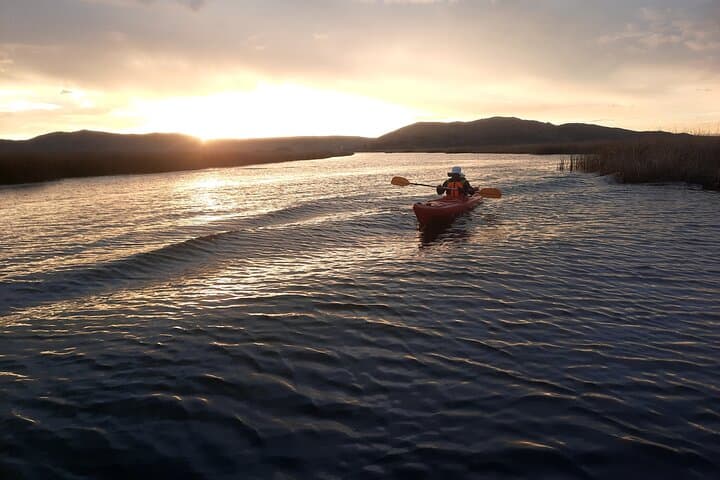
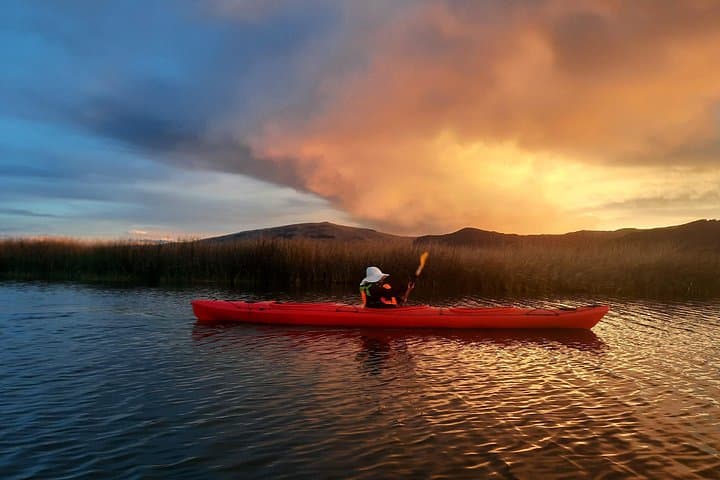
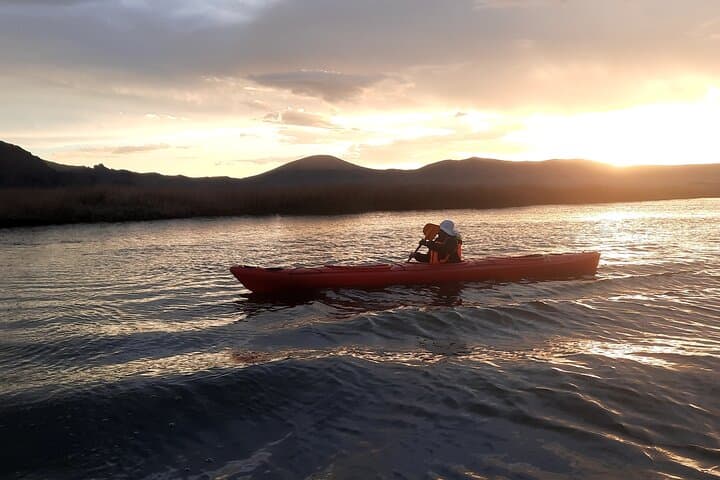
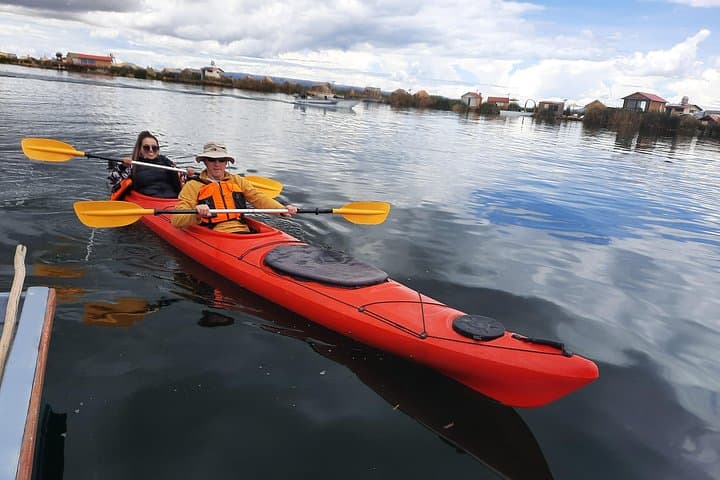
Late afternoon light skims the high-altitude water, turning Lake Titicaca into a wide, moving mirror as paddles cut clean wakes toward small reed islands. Participants depart from Isla Esteves’ bay in single or tandem kayaks, moving steadily along exposed shoreline and reed-fringed coves before reaching the rocky outcrop known locally as Foroba (Devil’s Island) and the Uros floating islands.
Late afternoon light skims the high-altitude water, turning Lake Titicaca into a wide, moving mirror as paddles cut clean wakes toward small reed islands. Participants depart from Isla Esteves’ bay in single or tandem kayaks, moving steadily along exposed shoreline and reed-fringed coves before reaching the rocky outcrop known locally as Foroba (Devil’s Island) and the Uros floating islands.
The lake is ancient—formed by tectonic basins and high Andean plateaus—and its shores carry layers of Aymara history. The Uros people made floating totora reed islands here centuries before modern borders; on arrival a local guide explains reed-house construction, traditional fishing and the role of the lake in daily life. Geology shows in the low, scoured headlands and the abrupt drop-off to deeper, cobalt water where wind can sharpen quickly.
Expect 10 km of paddling round trip over roughly three hours, with stretches of calm water alternated by wind-exposed sections that demand steady rhythm. Birds and waterfowl are constant companions; the lake often tests balance and concentration more than raw strength. Guides provide safety briefing and life jackets; no prior kayak experience is required but moderate fitness helps.
Practical pointers: plan for cold evenings—layers and a waterproof shell—bring sun protection and a dry bag for electronics, hydrate before launch, and time the return to coincide with sunset light.
This outing balances cultural contact with active paddling, offering a compact, approachable window into Lake Titicaca’s landscapes and lakeside communities.