THE ADVENTURE COLLECTIVE® · Independent discovery and booking for outdoor travel

Trade the city for red-dust backroads and golden rice fields on a 3–4 hour jeep tour from Phnom Penh. Visit monasteries, lotus ponds and family-run farms before a countryside sunset.
Trade the city for red-dust backroads and golden rice fields on a 3–4 hour jeep tour from Phnom Penh. Visit monasteries, lotus ponds and family-run farms before a countryside sunset.
The sun leans low over a patchwork of flooded fields as a restored U.S. Army Jeep kicks up red dust and slows at a village crossroads. You feel the country expand — narrow dirt tracks, children waving from shaded verandas, and the steady, deliberate work of farmers guiding water buffalo through ankle-deep paddies.
Verified experiences and guided adventures in the surrounding area.
Operated by Bayon Guide · Phnom Penh, Phnom Penh
The sun leans low over a patchwork of flooded fields as a restored U.S. Army Jeep kicks up red dust and slows at a village crossroads. You feel the country expand — narrow dirt tracks, children waving from shaded verandas, and the steady, deliberate work of farmers guiding water buffalo through ankle-deep paddies.
This short afternoon loop out of Phnom Penh traces the landscape that has shaped Khmer life for centuries: alluvial plains fed by the Tonle Sap system, thin layers of silt that make rice cultivation possible, and lotus ponds that figure prominently in local ritual and cuisine. Monasteries you visit are active spiritual centers where novices chant and villagers bring offerings; markets brim with live ducks, sticky rice and fresh vegetables sold the way they have been for generations.
The drive itself is uncomplicated but sensory — clanking Jeep, sudden smells of wet earth and frying fish, and wide views that open as roads fall away. Wildlife is common in the margins: water buffalo graze, kingfishers flash, and marsh birds watch from reed beds.
Practical details: the tour runs about 3–4 hours with local English-speaking guide, door-to-door pickup from Phnom Penh, and brief stops at a monastery, market, farming sites and a sunset viewpoint. Wear closed-toe shoes for walking through muddy sections, cover shoulders at religious sites, bring insect repellent and a reusable water bottle. Expect bumpy backroads and short walks — not strenuous, but a full sensory immersion in rural Cambodia best timed for late afternoon light.
easy.
3–4 hours.
Light activity level; suitable for most travelers who can handle short walks over uneven ground
The experience runs about 3–4 hours and usually includes pickup and drop-off in central Phnom Penh.
Yes — the tour is considered easy with short, low-impact walks; children should be accompanied by an adult.
Yes; visitors are welcome but should follow etiquette by dressing modestly and observing quiet behavior during ceremonies.
The Jeep can navigate light rain and muddy tracks, but very heavy downpours may alter the route or timing for safety and comfort.
These plains have fed Khmer kingdoms for centuries; rice cultivation and Buddhist monastic life remain central to local identity.
Travel here supports small rural economies, so choose operators who prioritize respectful village visits, avoid disturbing rice fields and minimize plastic waste.
Bayon Guide operates guided outdoor trips and adventures with an emphasis on safety, stewardship, and memorable experiences.
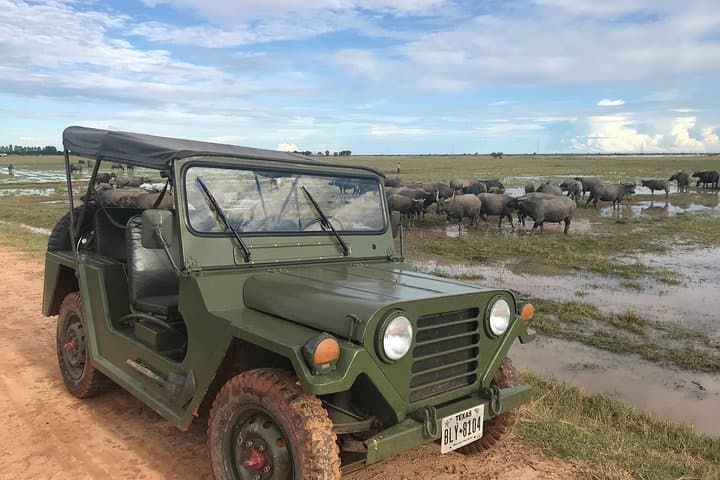
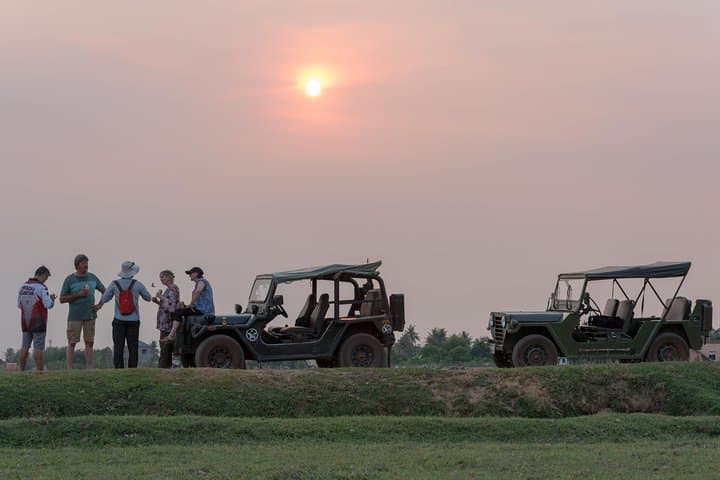
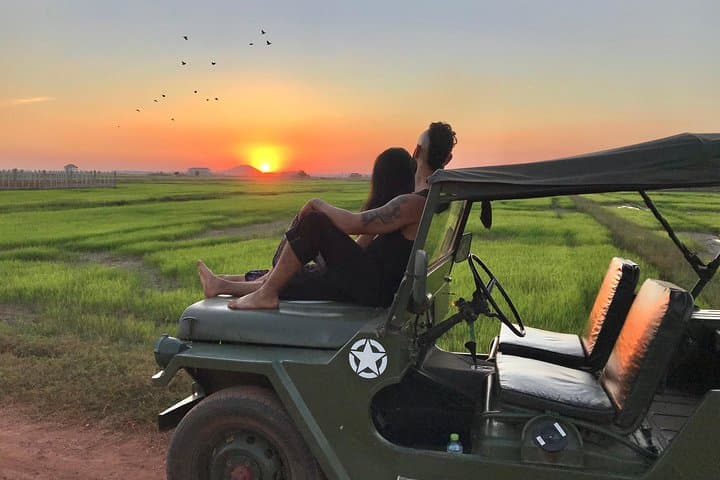
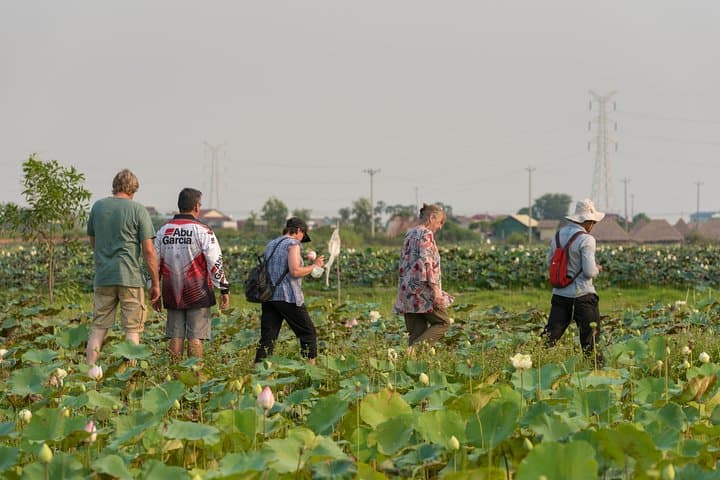
The sun leans low over a patchwork of flooded fields as a restored U.S. Army Jeep kicks up red dust and slows at a village crossroads. You feel the country expand — narrow dirt tracks, children waving from shaded verandas, and the steady, deliberate work of farmers guiding water buffalo through ankle-deep paddies.
The sun leans low over a patchwork of flooded fields as a restored U.S. Army Jeep kicks up red dust and slows at a village crossroads. You feel the country expand — narrow dirt tracks, children waving from shaded verandas, and the steady, deliberate work of farmers guiding water buffalo through ankle-deep paddies.
This short afternoon loop out of Phnom Penh traces the landscape that has shaped Khmer life for centuries: alluvial plains fed by the Tonle Sap system, thin layers of silt that make rice cultivation possible, and lotus ponds that figure prominently in local ritual and cuisine. Monasteries you visit are active spiritual centers where novices chant and villagers bring offerings; markets brim with live ducks, sticky rice and fresh vegetables sold the way they have been for generations.
The drive itself is uncomplicated but sensory — clanking Jeep, sudden smells of wet earth and frying fish, and wide views that open as roads fall away. Wildlife is common in the margins: water buffalo graze, kingfishers flash, and marsh birds watch from reed beds.
Practical details: the tour runs about 3–4 hours with local English-speaking guide, door-to-door pickup from Phnom Penh, and brief stops at a monastery, market, farming sites and a sunset viewpoint. Wear closed-toe shoes for walking through muddy sections, cover shoulders at religious sites, bring insect repellent and a reusable water bottle. Expect bumpy backroads and short walks — not strenuous, but a full sensory immersion in rural Cambodia best timed for late afternoon light.