THE ADVENTURE COLLECTIVE® · Independent discovery and booking for outdoor travel

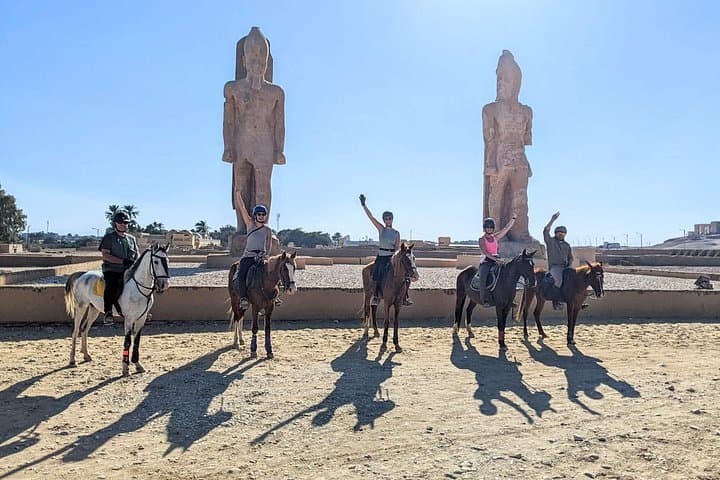
Ride through sugarcane fields and along Nile canals to watch sunset at Habu Temple. This private horseback tour reveals rural life, local wildlife and desert views on the West Bank of Luxor.
Ride through sugarcane fields and along Nile canals to watch sunset at Habu Temple. This private horseback tour reveals rural life, local wildlife and desert views on the West Bank of Luxor.
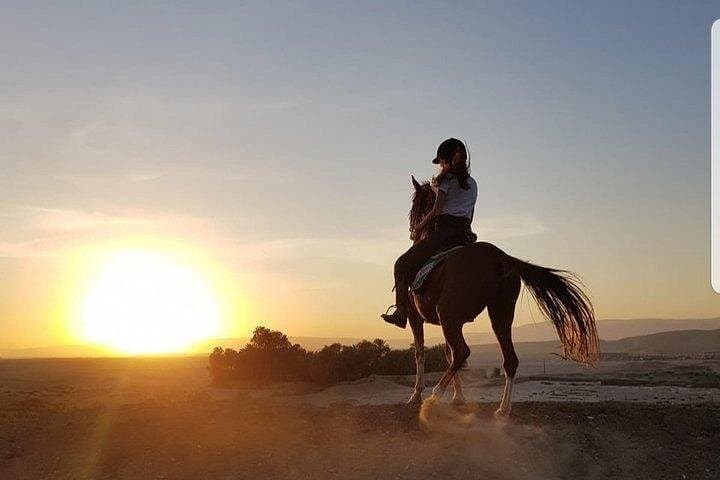
The sun slides low behind the stone silhouette of Habu Temple and the West Bank opens like a stage — reeds along the irrigation canals whispering, horses padding through sugarcane rows, and small villages where women still shape flatbread by hand.
Verified experiences and guided adventures in the surrounding area.
Operated by Adam's Tours · Luxor, Luxor Governorate
The sun slides low behind the stone silhouette of Habu Temple and the West Bank opens like a stage — reeds along the irrigation canals whispering, horses padding through sugarcane rows, and small villages where women still shape flatbread by hand.
This private horseback tour threads quiet dirt tracks through farmland and along the Nile's edge, offering a close look at contemporary rural life near ancient Thebes. The West Bank of Luxor holds layers of history: funerary temples and tombs built on limestone outcrops that rise from the floodplain, and the desert plateau that begins only a short ride from irrigated fields.
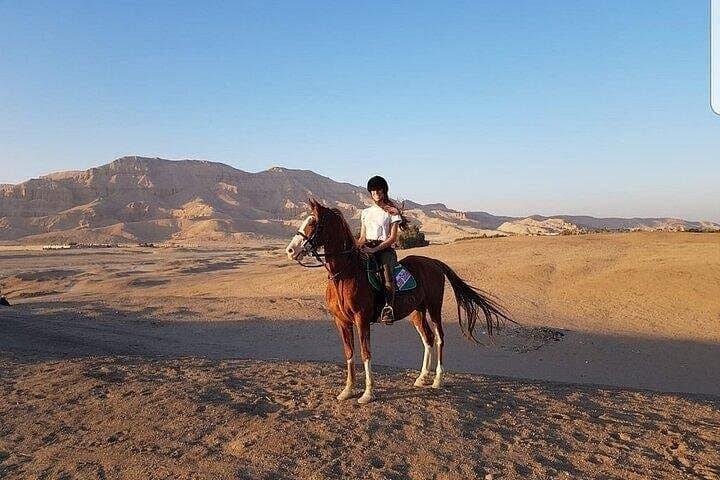
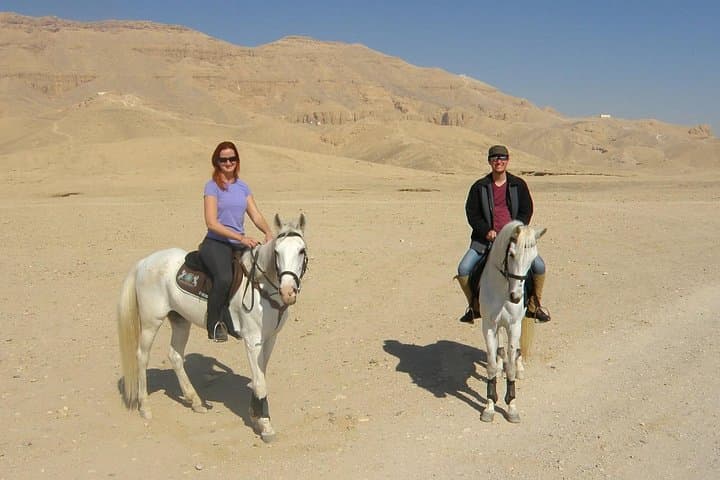
Geology is simple and visible — a narrow green ribbon of alluvial soil beside the Nile, then pale limestone and wind-buffed sand. Culturally, expect to see farmers planting or harvesting depending on season, children waving from thresholds, and traditional bread ovens in village compounds.
Wildlife moves confidently here: kingfishers dart over irrigation canals, herons stalk the shallows, and mongoose may scurry near the brush. The ride typically lasts one to two hours and can be tailored for a relaxed stroll or a brisk canter toward the desert rim where sunset lighting makes the temples glow.
Practical notes: horses are forward-going and helmets are provided; trails are mostly flat but sandy in places, so closed shoes and sunscreen matter. Afternoon departures capture light and cooler air; early morning rides are a good alternative for steady temperatures. Guides arrange hotel pickup and know the safest lines along village roads — follow their lead, keep a respectful distance from working farmers, and carry water for the short ride.
easy.
1–2 hours.
Suitable for most fitness levels; you should be able to mount, sit independently for up to two hours, and walk short distances when needed.
Yes — hard hats are provided for all riders and chaps are available if requested; guides brief riders on safety before departure.
No — rides are suitable for beginners and all fitness levels; guides match pace to rider ability and can provide basic instruction.
Yes — private pickup and drop-off from most Luxor hotels is included in the tour price.
You can expect to see canal and river birds such as herons and kingfishers, and occasionally small mammals near brushy edges; large wildlife is uncommon in cultivated areas.
Luxor's West Bank was the necropolis for ancient Thebes; nearby Medinet Habu (Habu Temple) and other mortuary complexes date to the New Kingdom and line the desert edge.
Respect irrigation channels and village lands by staying on trails, disposing of waste properly, and following guide instructions to minimize disturbance to wildlife and farmland.
Adam's Tours operates guided outdoor trips and adventures with an emphasis on safety, stewardship, and memorable experiences.
The sun slides low behind the stone silhouette of Habu Temple and the West Bank opens like a stage — reeds along the irrigation canals whispering, horses padding through sugarcane rows, and small villages where women still shape flatbread by hand.
The sun slides low behind the stone silhouette of Habu Temple and the West Bank opens like a stage — reeds along the irrigation canals whispering, horses padding through sugarcane rows, and small villages where women still shape flatbread by hand.
This private horseback tour threads quiet dirt tracks through farmland and along the Nile's edge, offering a close look at contemporary rural life near ancient Thebes. The West Bank of Luxor holds layers of history: funerary temples and tombs built on limestone outcrops that rise from the floodplain, and the desert plateau that begins only a short ride from irrigated fields.
Geology is simple and visible — a narrow green ribbon of alluvial soil beside the Nile, then pale limestone and wind-buffed sand. Culturally, expect to see farmers planting or harvesting depending on season, children waving from thresholds, and traditional bread ovens in village compounds.
Wildlife moves confidently here: kingfishers dart over irrigation canals, herons stalk the shallows, and mongoose may scurry near the brush. The ride typically lasts one to two hours and can be tailored for a relaxed stroll or a brisk canter toward the desert rim where sunset lighting makes the temples glow.
Practical notes: horses are forward-going and helmets are provided; trails are mostly flat but sandy in places, so closed shoes and sunscreen matter. Afternoon departures capture light and cooler air; early morning rides are a good alternative for steady temperatures. Guides arrange hotel pickup and know the safest lines along village roads — follow their lead, keep a respectful distance from working farmers, and carry water for the short ride.