THE ADVENTURE COLLECTIVE® · Independent discovery and booking for outdoor travel

Ride along Red Sea sands at sunset, swap horse for camel, then settle by a Bedouin-style barbecue with a live belly-dance and tanoura show. This five‑hour outing pairs desert riding with stargazing and local hospitality.
Ride along Red Sea sands at sunset, swap horse for camel, then settle by a Bedouin-style barbecue with a live belly-dance and tanoura show. This five‑hour outing pairs desert riding with stargazing and local hospitality.
The last light drips orange across the Red Sea as you swing into the saddle — hooves whisper on packed sand, and a cool breeze off the water pushes the caravan forward. Riding here feels elemental: flat coastal plains give way to low dunes and scrubby outcrops, and when night falls the sky opens into an engine of stars.
Verified experiences and guided adventures in the surrounding area.
The last light drips orange across the Red Sea as you swing into the saddle — hooves whisper on packed sand, and a cool breeze off the water pushes the caravan forward. Riding here feels elemental: flat coastal plains give way to low dunes and scrubby outcrops, and when night falls the sky opens into an engine of stars.
This experience folds natural history and local culture. The Red Sea coastline near Hurghada formed as the Arabian and African plates pulled apart, creating the shallow, clear waters and the rocky ridges that frame the shoreline. Camels and horses have long been part of regional travel; modern Bedouin hospitality is reflected in the evening’s barbecue and traditional performances — belly dance and the tanoura spinning dance — that evolved from Sufi and folk traditions.
Expect about 5 hours total: a ride of roughly 5–10 km across sandy and occasionally rocky terrain with negligible elevation gain (under 100 m). Guides provide basic instruction, and the route mixes beach tracks and small dunes rather than steep climbs. The evening is timed for sunset and stargazing, so bring layers for cooling night air.
Practical notes: hydrate and carry a headlamp for the return; wear closed-toe shoes and long pants to reduce chafing; sunscreen and a wide-brim hat protect in daytime; follow handlers’ instructions around animals. This outing blends easy-to-moderate riding with cultural ceremony — a convenient way to sample Red Sea scenery, traditional music and a grill-smoke dinner under a big desert sky.
moderate.
5 hours.
Suitable for people in average physical condition who can sit in a saddle for up to 1–2 hours; balance and basic mobility needed for mounting/dismounting.
No—most tours accommodate beginners with basic instruction and a calm horse; tell the operator about experience and comfort level so they match you appropriately.
Yes, many tours feature a short camel segment alongside horseback riding as part of the desert experience and photo opportunities.
Wear long pants and closed-toe shoes for riding; bring a light jacket for the cooler night and modest attire for cultural sensitivity during performances.
Generally suitable for older children who can safely ride and follow instructions; operators may have age and weight limits—check when booking.
The Red Sea coast sits along an ancient trade corridor; Bedouin groups historically used camels for inland travel and trade, and hospitality remains a regional hallmark.
Tours should minimize off-track riding to protect fragile desert crust and native vegetation; follow guides’ directions and avoid leaving litter or disturbing wildlife.
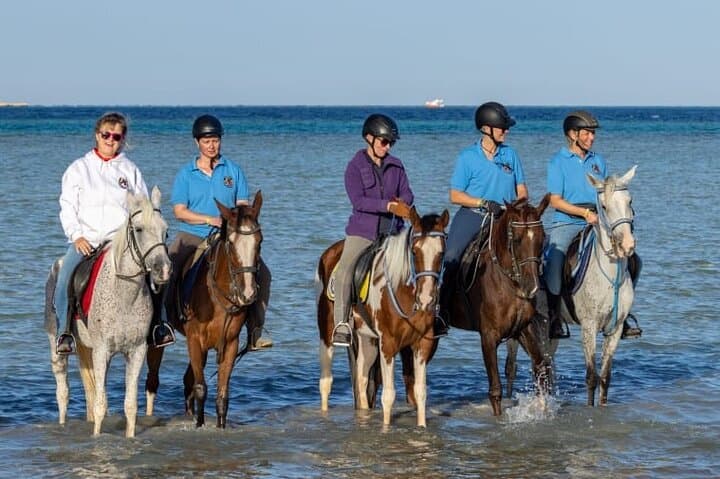
The last light drips orange across the Red Sea as you swing into the saddle — hooves whisper on packed sand, and a cool breeze off the water pushes the caravan forward. Riding here feels elemental: flat coastal plains give way to low dunes and scrubby outcrops, and when night falls the sky opens into an engine of stars.
The last light drips orange across the Red Sea as you swing into the saddle — hooves whisper on packed sand, and a cool breeze off the water pushes the caravan forward. Riding here feels elemental: flat coastal plains give way to low dunes and scrubby outcrops, and when night falls the sky opens into an engine of stars.
This experience folds natural history and local culture. The Red Sea coastline near Hurghada formed as the Arabian and African plates pulled apart, creating the shallow, clear waters and the rocky ridges that frame the shoreline. Camels and horses have long been part of regional travel; modern Bedouin hospitality is reflected in the evening’s barbecue and traditional performances — belly dance and the tanoura spinning dance — that evolved from Sufi and folk traditions.
Expect about 5 hours total: a ride of roughly 5–10 km across sandy and occasionally rocky terrain with negligible elevation gain (under 100 m). Guides provide basic instruction, and the route mixes beach tracks and small dunes rather than steep climbs. The evening is timed for sunset and stargazing, so bring layers for cooling night air.
Practical notes: hydrate and carry a headlamp for the return; wear closed-toe shoes and long pants to reduce chafing; sunscreen and a wide-brim hat protect in daytime; follow handlers’ instructions around animals. This outing blends easy-to-moderate riding with cultural ceremony — a convenient way to sample Red Sea scenery, traditional music and a grill-smoke dinner under a big desert sky.