THE ADVENTURE COLLECTIVE® · Independent discovery and booking for outdoor travel

Saddle up in Megalochori for a 60‑minute sunset ride that traces vineyards, volcanic tracks and white cliffs en route to Santorini’s dramatic caldera and black sand shore. Practical route notes and timing tips help you make the most of golden-hour views.
Saddle up in Megalochori for a 60‑minute sunset ride that traces vineyards, volcanic tracks and white cliffs en route to Santorini’s dramatic caldera and black sand shore. Practical route notes and timing tips help you make the most of golden-hour views.
The last light of day slides along volcanic cliffs as your horse picks its way past low stone walls and sunbrowned vineyards. Starting in Megalochori, a compact village of whitewashed houses and narrow lanes, the ride eases from cobbled streets onto dirt tracks that run toward the island’s southern rim. The air tastes faintly of salt and ancient lava; behind you the caldera’s enormity hangs like a bruised sky.
Verified experiences and guided adventures in the surrounding area.
Operated by Santorini Mule Horse Riding · Megalochori, South Aegean
The last light of day slides along volcanic cliffs as your horse picks its way past low stone walls and sunbrowned vineyards. Starting in Megalochori, a compact village of whitewashed houses and narrow lanes, the ride eases from cobbled streets onto dirt tracks that run toward the island’s southern rim. The air tastes faintly of salt and ancient lava; behind you the caldera’s enormity hangs like a bruised sky.
Santorini’s caldera is the remnant of a massive Minoan eruption — its cliffs reveal stacked layers of pumice, ash and basalt. Riding out from a 100‑year‑old stable, you pass working vineyards that still rely on the island’s porous volcanic soils and twisted vine training methods. The route skirts fields, moves past the lunar white cliffs near Vlychada and approaches the black sand beaches where volcanic sand and sheer white faces create sharp contrast.
Culturally, Megalochori retains old Cycladic rhythms: local families run small farms and the stable owner often leads tours, sharing island stories. Geologically the ground remembers fire — footing alternates between packed dirt, pebbled tracks and short sandy sections.
Practical guidance: the ride is about 60 minutes on mostly flat to gently rolling terrain, suitable for riders with basic balance and no severe medical restrictions. Helmets are provided; wear closed-toe shoes, bring water, and time your booking 45–60 minutes before sunset to catch the light. Cameras on secure straps are a must; the approach to the caldera and the black‑sand coast offer some of Santorini’s best off-the-beaten-view photos.
easy.
1 hour.
Suitable for most fitness levels; requires basic balance and ability to mount and sit for an hour.
The organized ride is approximately 60 minutes, covering cobbled village lanes, dirt and pebbled tracks, short sandy sections and gentle inclines toward the caldera.
Yes—helmets and basic riding equipment are provided by the stable and staff give a short safety briefing before departure.
Yes; the tour is rated easy and suitable for beginners, though riders should be able to mount and sit comfortably for an hour and follow basic instructions.
Full refund is typically available if canceled at least 24 hours prior; the operator advises against participation for pregnant travelers and those with serious spinal or cardiovascular conditions.
The caldera formed after a major volcanic eruption in the Bronze Age; local settlements like Megalochori grew around sheltered agricultural terraces that exploit volcanic soils.
Stick to established tracks to protect fragile volcanic soils and dry‑steppe plants; support local family-run stables that prioritize animal care and limited group sizes.
Santorini Mule Horse Riding operates guided outdoor trips and adventures with an emphasis on safety, stewardship, and memorable experiences.
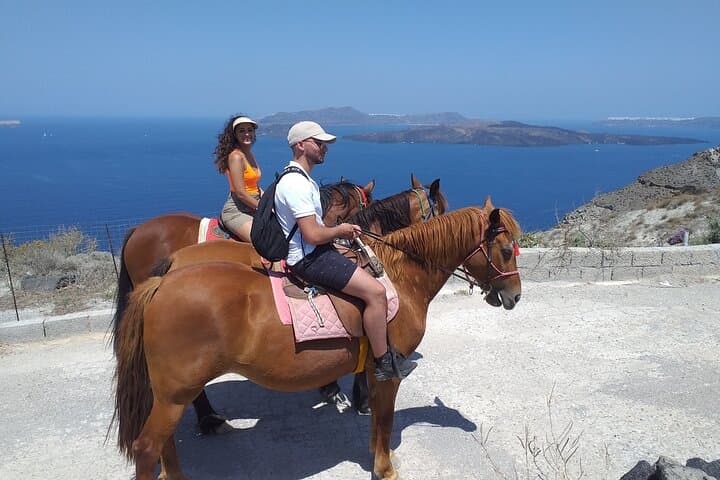
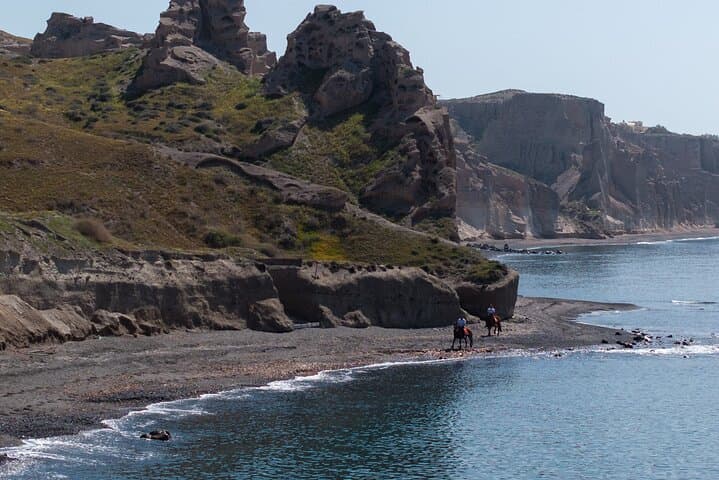
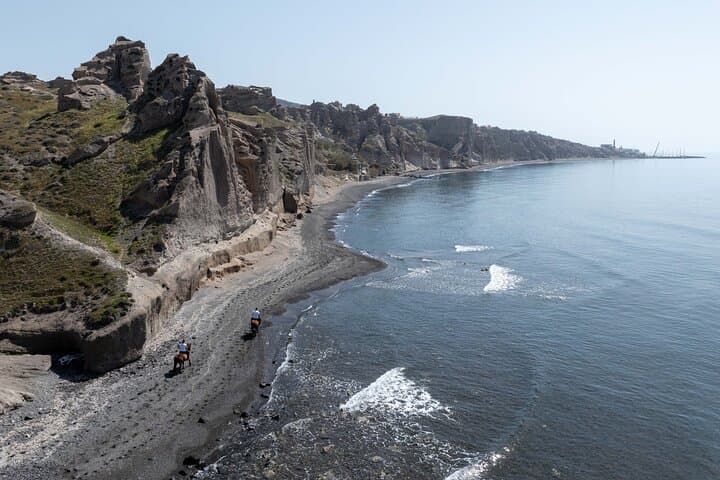
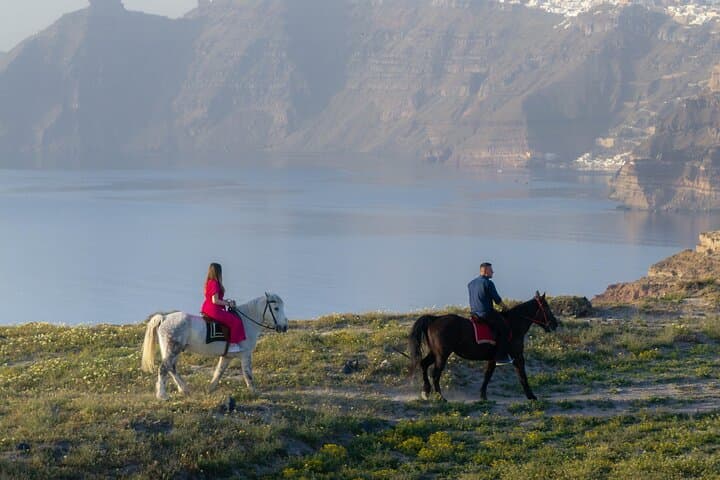
The last light of day slides along volcanic cliffs as your horse picks its way past low stone walls and sunbrowned vineyards. Starting in Megalochori, a compact village of whitewashed houses and narrow lanes, the ride eases from cobbled streets onto dirt tracks that run toward the island’s southern rim. The air tastes faintly of salt and ancient lava; behind you the caldera’s enormity hangs like a bruised sky.
The last light of day slides along volcanic cliffs as your horse picks its way past low stone walls and sunbrowned vineyards. Starting in Megalochori, a compact village of whitewashed houses and narrow lanes, the ride eases from cobbled streets onto dirt tracks that run toward the island’s southern rim. The air tastes faintly of salt and ancient lava; behind you the caldera’s enormity hangs like a bruised sky.
Santorini’s caldera is the remnant of a massive Minoan eruption — its cliffs reveal stacked layers of pumice, ash and basalt. Riding out from a 100‑year‑old stable, you pass working vineyards that still rely on the island’s porous volcanic soils and twisted vine training methods. The route skirts fields, moves past the lunar white cliffs near Vlychada and approaches the black sand beaches where volcanic sand and sheer white faces create sharp contrast.
Culturally, Megalochori retains old Cycladic rhythms: local families run small farms and the stable owner often leads tours, sharing island stories. Geologically the ground remembers fire — footing alternates between packed dirt, pebbled tracks and short sandy sections.
Practical guidance: the ride is about 60 minutes on mostly flat to gently rolling terrain, suitable for riders with basic balance and no severe medical restrictions. Helmets are provided; wear closed-toe shoes, bring water, and time your booking 45–60 minutes before sunset to catch the light. Cameras on secure straps are a must; the approach to the caldera and the black‑sand coast offer some of Santorini’s best off-the-beaten-view photos.