THE ADVENTURE COLLECTIVE® · Independent discovery and booking for outdoor travel

Timing and terrain meet spectacle on Stromboli: a guided sunset ascent to a 400‑m observation point above the Sciara del Fuoco. Expect volcanic scree, sea panoramas and a front‑row view of nightly eruptions — with practical guidance on gear and safety.
Timing and terrain meet spectacle on Stromboli: a guided sunset ascent to a 400‑m observation point above the Sciara del Fuoco. Expect volcanic scree, sea panoramas and a front‑row view of nightly eruptions — with practical guidance on gear and safety.
The path narrows, the air takes on a mineral tang, and the sea falls away to a band of dark blue — you arrive on Stromboli as the island prepares its evening performance.
Verified experiences and guided adventures in the surrounding area.
Operated by EtnaTribe · Stromboli, Sicily
The path narrows, the air takes on a mineral tang, and the sea falls away to a band of dark blue — you arrive on Stromboli as the island prepares its evening performance.
This guided ascent follows the Sentiero Paesistico through scrubby Mediterranean vegetation and old lava flows. The first section is a short 250‑metre stretch that opens into terraces with relics of the island’s human past: simple tombs and shepherd tracks. As the trail climbs toward Belvedere Point, the ground changes from soil to volcanic scree; the Sciara del Fuoco, a steep talus chute where recent lava runs have carved black scars, dominates the view.
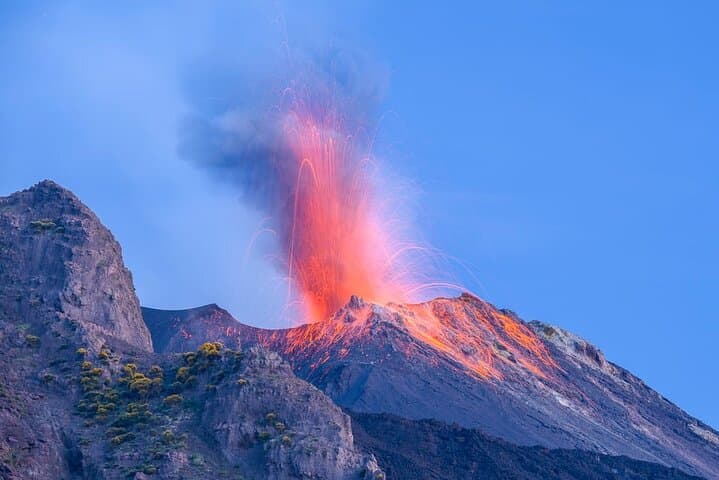
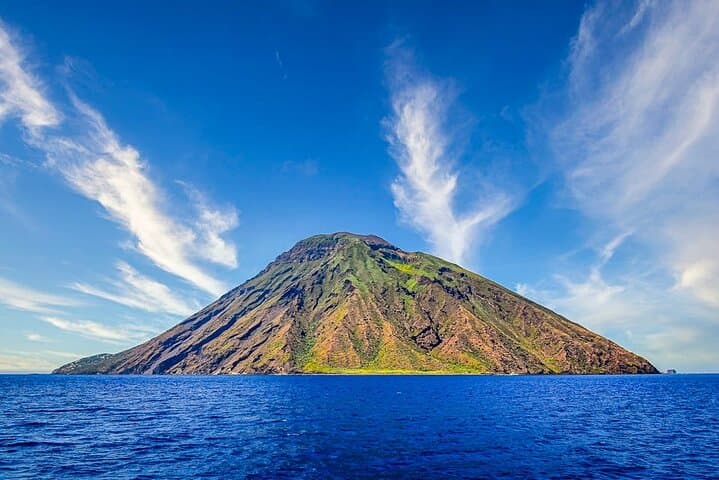
Stromboli’s eruptions have paced life here for millennia — fishermen and villagers developed settlement patterns that respect the volcano’s moods. Geologically, the island is one of the Aeolian archipelago’s most active cones, with persistent Strombolian activity that produces regular incandescent bursts visible from the observation points.
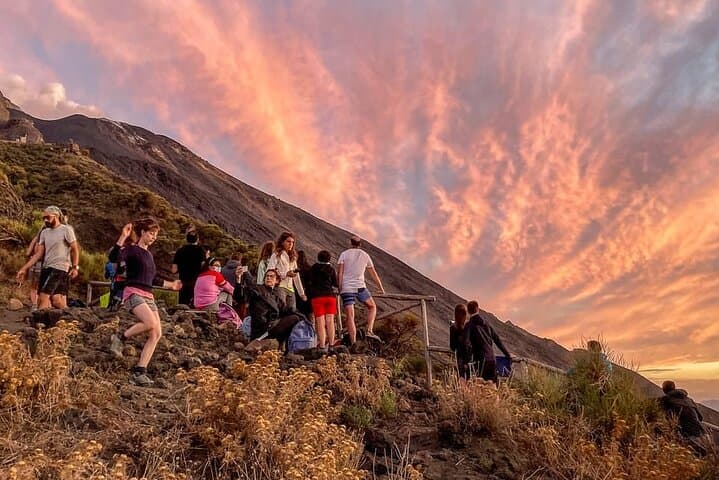
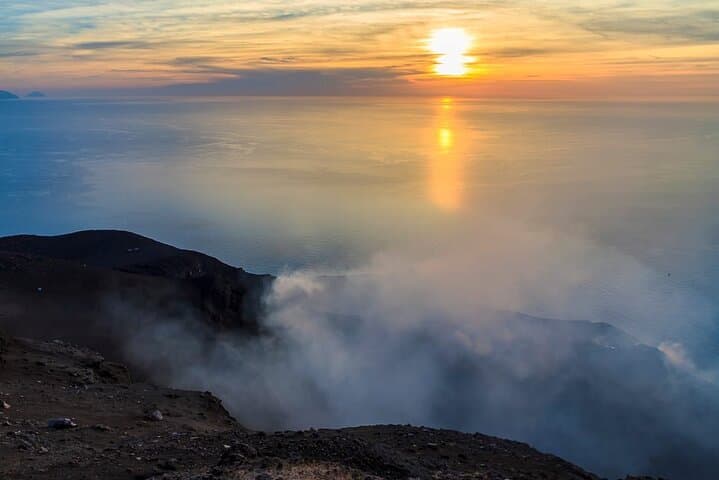
Expect a mix of loose rock, packed dirt, and short steep pitches; guides provide helmets, flashlights and local interpretation. The walk to the main observation takes about 20 minutes from the Belvedere and times with sunset to give a safe, dramatic vantage of evening explosions.
Practical edge: wear stiff-soled boots for scree, carry 1–2 liters of water, and layer for wind shortly after sunset. Flashlights are useful for the return; follow your guide’s route to avoid fragile vegetation and unstable slopes. Weather and volcanic activity can change plans, so leave extra time in your schedule and book a guided slot that briefs you 30 minutes before departure.
moderate.
5 hours.
Suitable for people with basic fitness—expect uphill walking, short steep sections, and uneven volcanic terrain; occasional scrambling not required.
The tour runs about 5 hours total with the guided ascent to roughly 400 m; expect moderate exertion with uneven terrain and short steep sections.
Stromboli is active and monitored; guided routes use observation points at safe distances, but operators may alter or cancel hikes depending on volcanic activity and weather.
The tour notes it’s suitable for most fitness levels but is not recommended for people with serious heart or spinal conditions; check with the operator if in doubt.
Yes—guides supply protective helmets and flashlights; still bring your own headlamp for the return if you prefer personal gear.
Stromboli’s eruptions have shaped local settlement patterns for centuries; fishing and small‑scale agriculture adapted to periodic ash falls and lava flows.
Trails pass fragile vegetation and recent lava fields—stick to marked paths, avoid disturbing rock surfaces and follow guide instructions to limit erosion and habitat impact.
EtnaTribe operates guided outdoor trips and adventures with an emphasis on safety, stewardship, and memorable experiences.
The path narrows, the air takes on a mineral tang, and the sea falls away to a band of dark blue — you arrive on Stromboli as the island prepares its evening performance.
The path narrows, the air takes on a mineral tang, and the sea falls away to a band of dark blue — you arrive on Stromboli as the island prepares its evening performance.
This guided ascent follows the Sentiero Paesistico through scrubby Mediterranean vegetation and old lava flows. The first section is a short 250‑metre stretch that opens into terraces with relics of the island’s human past: simple tombs and shepherd tracks. As the trail climbs toward Belvedere Point, the ground changes from soil to volcanic scree; the Sciara del Fuoco, a steep talus chute where recent lava runs have carved black scars, dominates the view.
Stromboli’s eruptions have paced life here for millennia — fishermen and villagers developed settlement patterns that respect the volcano’s moods. Geologically, the island is one of the Aeolian archipelago’s most active cones, with persistent Strombolian activity that produces regular incandescent bursts visible from the observation points.
Expect a mix of loose rock, packed dirt, and short steep pitches; guides provide helmets, flashlights and local interpretation. The walk to the main observation takes about 20 minutes from the Belvedere and times with sunset to give a safe, dramatic vantage of evening explosions.
Practical edge: wear stiff-soled boots for scree, carry 1–2 liters of water, and layer for wind shortly after sunset. Flashlights are useful for the return; follow your guide’s route to avoid fragile vegetation and unstable slopes. Weather and volcanic activity can change plans, so leave extra time in your schedule and book a guided slot that briefs you 30 minutes before departure.