THE ADVENTURE COLLECTIVE® · Independent discovery and booking for outdoor travel

Hike from Kastraki toward hidden hermit caves as Meteora’s rock pillars ignite at sunset. This guided, moderately paced trail blends geology, monastic history and dramatic cliff-top views in a compact 3-hour outing.
Hike from Kastraki toward hidden hermit caves as Meteora’s rock pillars ignite at sunset. This guided, moderately paced trail blends geology, monastic history and dramatic cliff-top views in a compact 3-hour outing.
Late afternoon light throws the sandstone pillars of Meteora into sharp relief as a small group slips away from Kastraki and climbs toward the hermit caves—an hour of steady ascent that trades village rooftops for ragged rock and distant monastery silhouettes.
Verified experiences and guided adventures in the surrounding area.
Operated by Visit Meteora · Kastraki, Thessaly
Late afternoon light throws the sandstone pillars of Meteora into sharp relief as a small group slips away from Kastraki and climbs toward the hermit caves—an hour of steady ascent that trades village rooftops for ragged rock and distant monastery silhouettes.
The route follows old shepherd paths cut into conglomerate sandstone, rising roughly 250 m over about 5–7 km round-trip. Trails switchback past juniper scrub and stone steps hewn by monks; underfoot is packed dirt, carved rock, and occasional loose scree that demands steady footing. As the sun lowers, the rocks take on ochre and rust tones while the wind seems to push the scent of thyme and pine down the gullies.
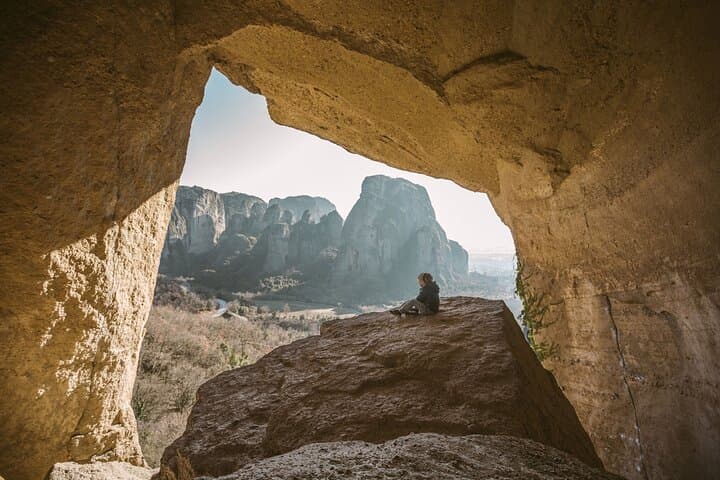
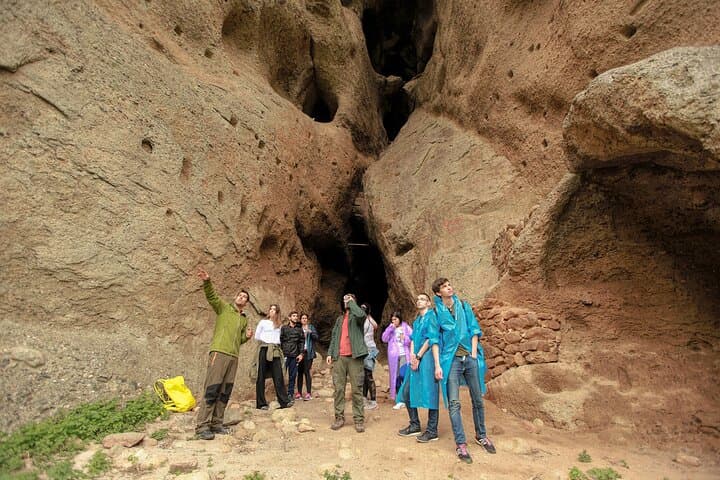
Meteora’s formations are the result of millions of years of river and tectonic action; by the 11th–14th centuries, hermits and monks carved niches and small cells into these cliffs. Guides often point out faint fresco fragments and narrow niches where ascetics once lived in near solitude.
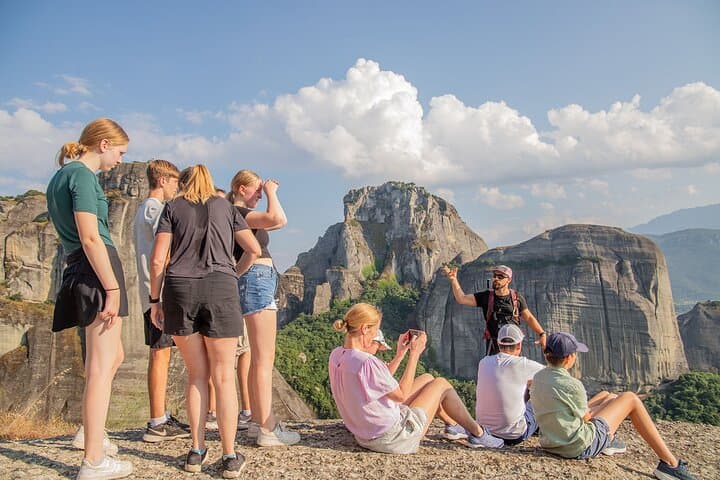
Expect a culturally rich hike—history woven through geology—and a view dominated by cliff-top monasteries. Practical notes: bring a headlamp if you linger past sunset, wear grippy shoes for loose scree, and plan for 2.5–3 hours total on moderate terrain. Hydrate and layer for rapidly cooling temperatures after sundown. Groups are usually small, led by English-speaking mountain guides who provide local context and route safety tips.
This trail rewards patience: quiet caves, cliff-edge views and a sunset that paints the rocks in unforgettable light.
moderate.
2.5–3 hours.
Suitable for hikers with moderate fitness able to sustain steady uphill walking and short sections of uneven terrain
The tour lasts about 3 hours total and is moderate: expect roughly 5–7 km round-trip with about 200–300 m elevation gain on uneven, rocky trails.
No technical experience is required, but participants should have moderate fitness and be comfortable on uneven ground and short steep sections.
This hike focuses on hermit caves and viewpoints; visits inside active monasteries require separate entry arrangements and dress-code compliance.
Yes—professional English-speaking mountain guides lead the tour and bottled water is typically included with the booking.
Hermit caves near Meteora were occupied by Orthodox ascetics from the Byzantine era onward; the nearby cliff-top monasteries grew from these early solitary practices in the 11th–14th centuries.
Meteora’s sandstone is fragile—stay on marked trails, avoid touching frescoes, and pack out all trash; small guided groups help reduce erosion and visitor impact.
Visit Meteora operates guided outdoor trips and adventures with an emphasis on safety, stewardship, and memorable experiences.
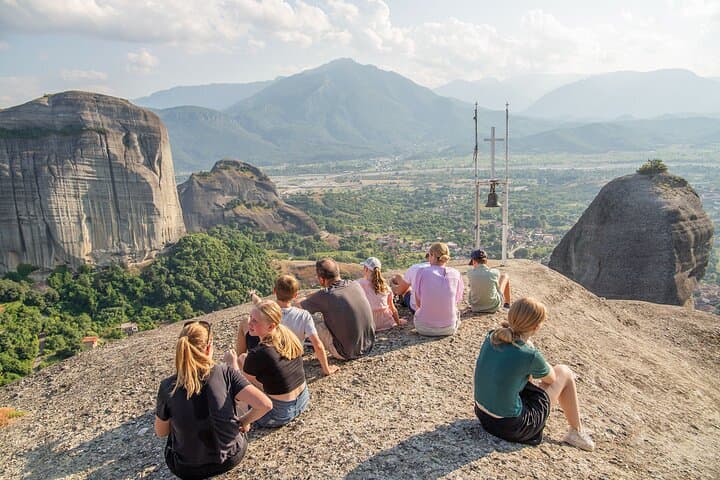
Late afternoon light throws the sandstone pillars of Meteora into sharp relief as a small group slips away from Kastraki and climbs toward the hermit caves—an hour of steady ascent that trades village rooftops for ragged rock and distant monastery silhouettes.
Late afternoon light throws the sandstone pillars of Meteora into sharp relief as a small group slips away from Kastraki and climbs toward the hermit caves—an hour of steady ascent that trades village rooftops for ragged rock and distant monastery silhouettes.
The route follows old shepherd paths cut into conglomerate sandstone, rising roughly 250 m over about 5–7 km round-trip. Trails switchback past juniper scrub and stone steps hewn by monks; underfoot is packed dirt, carved rock, and occasional loose scree that demands steady footing. As the sun lowers, the rocks take on ochre and rust tones while the wind seems to push the scent of thyme and pine down the gullies.
Meteora’s formations are the result of millions of years of river and tectonic action; by the 11th–14th centuries, hermits and monks carved niches and small cells into these cliffs. Guides often point out faint fresco fragments and narrow niches where ascetics once lived in near solitude.
Expect a culturally rich hike—history woven through geology—and a view dominated by cliff-top monasteries. Practical notes: bring a headlamp if you linger past sunset, wear grippy shoes for loose scree, and plan for 2.5–3 hours total on moderate terrain. Hydrate and layer for rapidly cooling temperatures after sundown. Groups are usually small, led by English-speaking mountain guides who provide local context and route safety tips.
This trail rewards patience: quiet caves, cliff-edge views and a sunset that paints the rocks in unforgettable light.