THE ADVENTURE COLLECTIVE® · Independent discovery and booking for outdoor travel

Walk 7 km across Etna’s quieter west slope with a volcanologist guide—explore lava tunnels, recent craters and watch sunset spill into the Simeto valley. Small groups and a night return under the stars make this a focused, intimate volcano experience.
Walk 7 km across Etna’s quieter west slope with a volcanologist guide—explore lava tunnels, recent craters and watch sunset spill into the Simeto valley. Small groups and a night return under the stars make this a focused, intimate volcano experience.
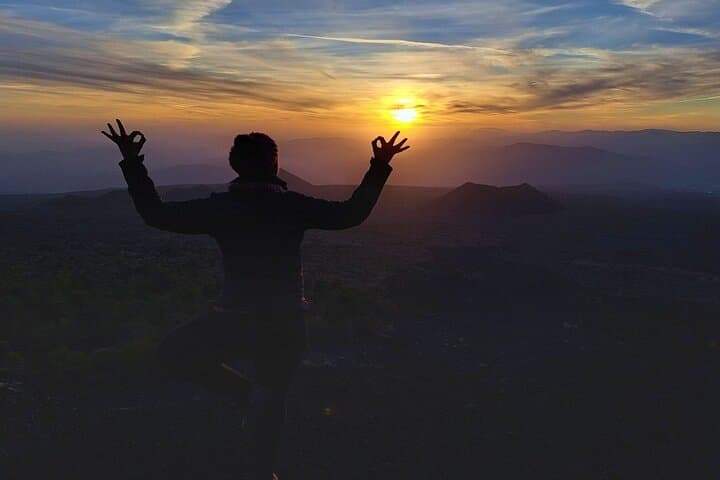
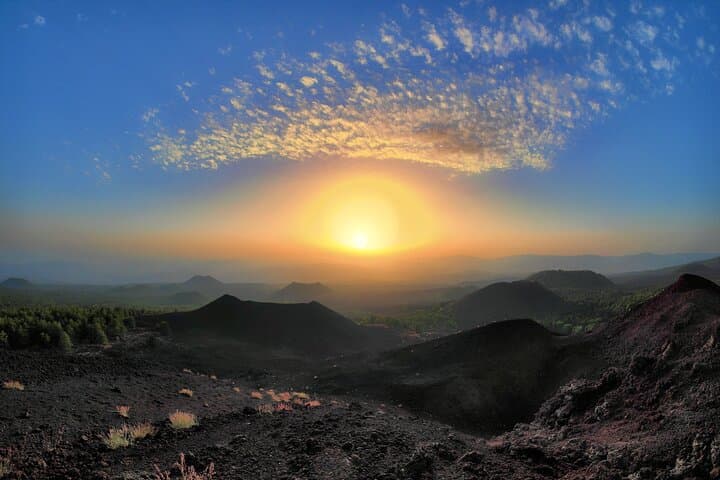
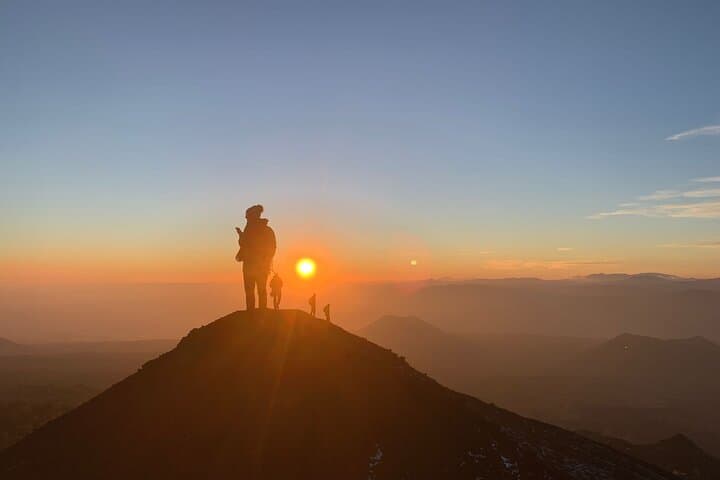
The sun slides low behind blackened ridges as you climb the west flank of Mount Etna, the sky turning from blue to bruised orange while the volcano’s recent craters silhouette the horizon.
Verified experiences and guided adventures in the surrounding area.
Operated by Etna3340 · Catania, Sicily
The sun slides low behind blackened ridges as you climb the west flank of Mount Etna, the sky turning from blue to bruised orange while the volcano’s recent craters silhouette the horizon.
This guided sunset hike follows a 7 km loop with roughly 300 m of ascent across the wild western slope—one of the quieter faces of Etna. A French volcanologist leads small groups (max 10), pointing out cooled aa and pahoehoe flows, the structure of lava tubes you can walk through, and the dark scars of recent eruptions. Below, the Simeto valley widens and the coast of Sicily shimmers on clear evenings.
Etna’s history is written in layers: frequent eruptions over millennia have built the cone and shaped local agriculture and settlement. The terrain alternates between denser Etna pine forest and open volcanic desert; wind-polished scoria gives way to basalt steps where lichen and sparse shrubs eke out an existence.
Practicalities are straightforward but important: expect 3–4 hours total, start points require your own vehicle and there are no fuel stations near Piano Fiera, and the route returns in darkness under a starry sky, so headlamps and steady boots are essential. The operator provides helmets, poles, and headlamps, but dress in warm layers and carry water—temperatures drop quickly after sunset. Suitable from age 8 for people in moderate physical condition; not recommended for those with heart, respiratory, or spinal issues.
This hike is a compact, sensory slice of Etna: volcanic geometry under changing light, close-up geological features, and a nightfall that turns the volcano into a study in shadow and stars.
moderate.
4 hours.
Moderate fitness — able to sustain a steady uphill for 300 m and walk on uneven volcanic rock
Children from about 8 years old can participate if they are used to walking several kilometers and uneven terrain; parents should supervise and the guide will assess readiness.
Guides are volcanologists who monitor conditions and the tour is canceled if safety cannot be guaranteed; always follow the guide’s instructions and keep to marked paths.
Participants meet near the western Etna access points (Piano Fiera area) and must use their own vehicle to reach the meeting location; organizers note no fuel stations nearby.
The operator supplies helmets, poles, headlamps and some protective clothing like k-way, but you should bring personal boots, layers, and water.
Etna is one of the world’s most active volcanoes; its repeated eruptions have shaped local agriculture, settlements, and a long volcanic research tradition.
Stay on designated routes to protect fragile lichens and slow-growing vegetation; pack out all waste and avoid disturbing geological features.
Etna3340 operates guided outdoor trips and adventures with an emphasis on safety, stewardship, and memorable experiences.
The sun slides low behind blackened ridges as you climb the west flank of Mount Etna, the sky turning from blue to bruised orange while the volcano’s recent craters silhouette the horizon.
The sun slides low behind blackened ridges as you climb the west flank of Mount Etna, the sky turning from blue to bruised orange while the volcano’s recent craters silhouette the horizon.
This guided sunset hike follows a 7 km loop with roughly 300 m of ascent across the wild western slope—one of the quieter faces of Etna. A French volcanologist leads small groups (max 10), pointing out cooled aa and pahoehoe flows, the structure of lava tubes you can walk through, and the dark scars of recent eruptions. Below, the Simeto valley widens and the coast of Sicily shimmers on clear evenings.
Etna’s history is written in layers: frequent eruptions over millennia have built the cone and shaped local agriculture and settlement. The terrain alternates between denser Etna pine forest and open volcanic desert; wind-polished scoria gives way to basalt steps where lichen and sparse shrubs eke out an existence.
Practicalities are straightforward but important: expect 3–4 hours total, start points require your own vehicle and there are no fuel stations near Piano Fiera, and the route returns in darkness under a starry sky, so headlamps and steady boots are essential. The operator provides helmets, poles, and headlamps, but dress in warm layers and carry water—temperatures drop quickly after sunset. Suitable from age 8 for people in moderate physical condition; not recommended for those with heart, respiratory, or spinal issues.
This hike is a compact, sensory slice of Etna: volcanic geometry under changing light, close-up geological features, and a nightfall that turns the volcano into a study in shadow and stars.