THE ADVENTURE COLLECTIVE® · Independent discovery and booking for outdoor travel

Walk among lava flows and extinct craters as Etna drops into golden light. This 6‑hour small‑group sunset hike from Taormina blends geology, short cave exploration and a panoramic viewpoint at altitude.
Walk among lava flows and extinct craters as Etna drops into golden light. This 6‑hour small‑group sunset hike from Taormina blends geology, short cave exploration and a panoramic viewpoint at altitude.
The sun leans west and the black slopes of Etna take on copper — you are walking through a skeleton of lava and low, wind-hardened shrubs as the day thins. Trails crest and fall over old craters, the ground a mix of compacted ash, clinker and sharp, scoriaceous rock. A small group moves deliberately, helmets tapping lightly, flashlights already in pockets for the descent.
Verified experiences and guided adventures in the surrounding area.
Operated by Etna People s.n.c. · Taormina, Sicily
The sun leans west and the black slopes of Etna take on copper — you are walking through a skeleton of lava and low, wind-hardened shrubs as the day thins. Trails crest and fall over old craters, the ground a mix of compacted ash, clinker and sharp, scoriaceous rock. A small group moves deliberately, helmets tapping lightly, flashlights already in pockets for the descent.
Etna is Europe’s most active stratovolcano; its flanks are a palimpsest of recent flows and far older layers that record centuries of eruptions. The area around 1,600–1,800 m where this sunset trek operates offers intact lava fields, extinct craters and, nearby, one of Etna’s accessible lava caves. Culturally, the volcano shapes local agriculture and lore — villages on its lower slopes grow citrus and vines in mineral-rich soils and celebrate eruptions as part of life here.
Expect a 6‑hour excursion that mixes woodland paths and lunar-like volcanic ridges with a final panoramic viewpoint for sunset over the Ionian Sea. Terrain includes loose gravel, rocky steps and short steeper pitches; elevation on the walk is around 1,600–1,800 m so evenings are noticeably cooler and windier.
Practical guidance: bring sturdy boots, wind- and water-resistant layers, a headlamp or flashlight even though one is provided, and 1–2 liters of water. Pace yourself on loose surfaces and follow the guide for safe approaches to fragile fumaroles and crater rims. Weather can change quickly; tours are weather-dependent and require moderate fitness. Arrive with camera and a respect for an active landscape that continues to shape Sicilian life.
moderate.
6 hours.
Moderately fit—able to hike on uneven ground and tolerate short, steep sections at altitude.
The tour requires moderate fitness—expect uneven volcanic terrain and short climbs around 1,600–1,800 m; it’s not technical but can be tiring.
Yes; the tour includes pickup and drop‑off nearby accommodations or an agreed meeting point in Taormina.
Yes—helmets and flashlights are provided, but carrying your own headlamp is recommended for convenience.
The excursion is weather‑dependent; if canceled due to conditions you’ll be offered rescheduling or a full refund.
Mount Etna’s eruptions have shaped local settlement and agriculture for millennia; ancient Greeks and Romans recorded major events and communities adapted to its cycles.
Stay on marked trails to protect fragile pioneer vegetation on lava flows; local guides follow rules to minimize disturbance to fumaroles and nesting birds.
Etna People s.n.c. operates guided outdoor trips and adventures with an emphasis on safety, stewardship, and memorable experiences.
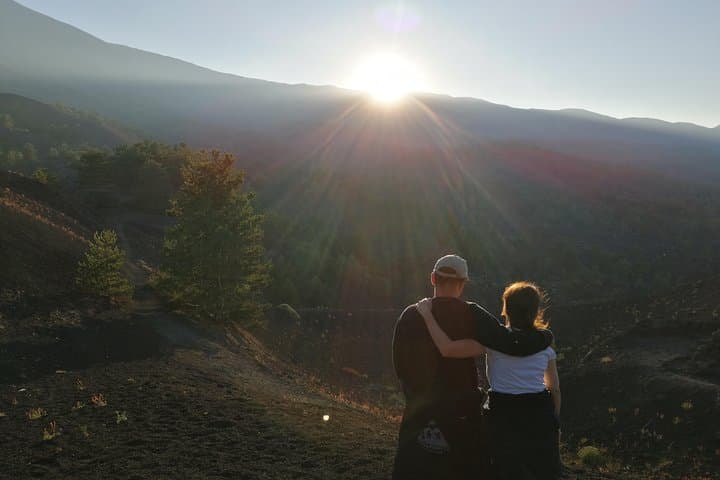
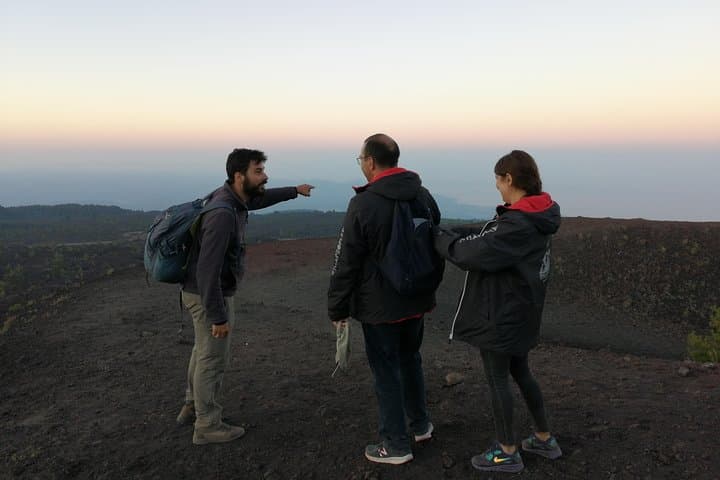
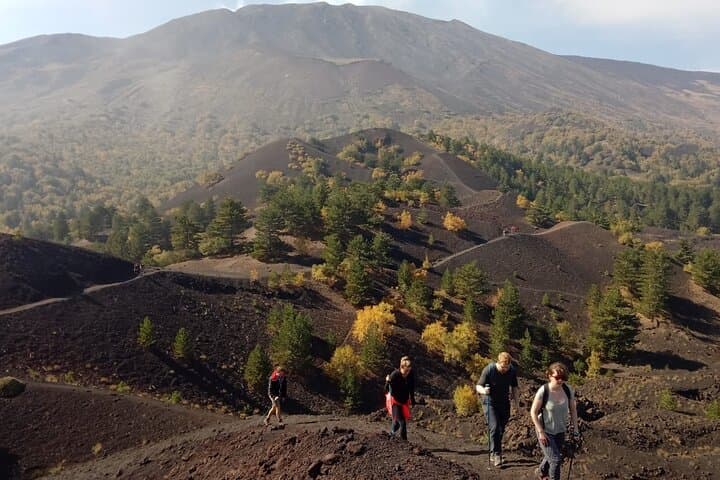
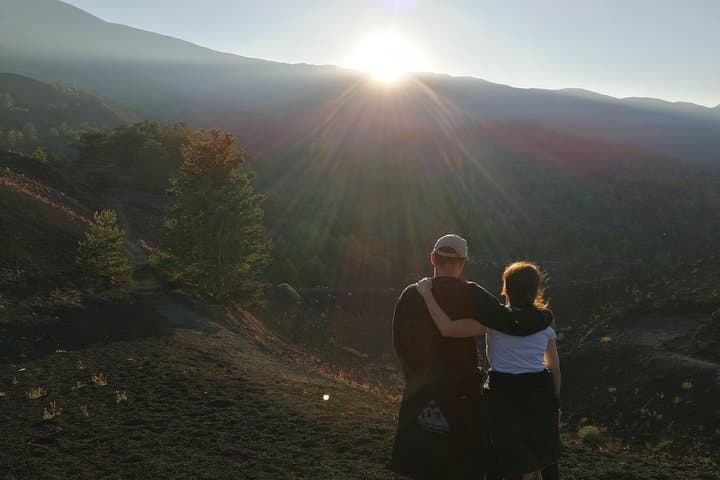
The sun leans west and the black slopes of Etna take on copper — you are walking through a skeleton of lava and low, wind-hardened shrubs as the day thins. Trails crest and fall over old craters, the ground a mix of compacted ash, clinker and sharp, scoriaceous rock. A small group moves deliberately, helmets tapping lightly, flashlights already in pockets for the descent.
The sun leans west and the black slopes of Etna take on copper — you are walking through a skeleton of lava and low, wind-hardened shrubs as the day thins. Trails crest and fall over old craters, the ground a mix of compacted ash, clinker and sharp, scoriaceous rock. A small group moves deliberately, helmets tapping lightly, flashlights already in pockets for the descent.
Etna is Europe’s most active stratovolcano; its flanks are a palimpsest of recent flows and far older layers that record centuries of eruptions. The area around 1,600–1,800 m where this sunset trek operates offers intact lava fields, extinct craters and, nearby, one of Etna’s accessible lava caves. Culturally, the volcano shapes local agriculture and lore — villages on its lower slopes grow citrus and vines in mineral-rich soils and celebrate eruptions as part of life here.
Expect a 6‑hour excursion that mixes woodland paths and lunar-like volcanic ridges with a final panoramic viewpoint for sunset over the Ionian Sea. Terrain includes loose gravel, rocky steps and short steeper pitches; elevation on the walk is around 1,600–1,800 m so evenings are noticeably cooler and windier.
Practical guidance: bring sturdy boots, wind- and water-resistant layers, a headlamp or flashlight even though one is provided, and 1–2 liters of water. Pace yourself on loose surfaces and follow the guide for safe approaches to fragile fumaroles and crater rims. Weather can change quickly; tours are weather-dependent and require moderate fitness. Arrive with camera and a respect for an active landscape that continues to shape Sicilian life.