THE ADVENTURE COLLECTIVE® · Independent discovery and booking for outdoor travel

Experience White Pocket’s otherworldly white and gray sandstone under sunset light on a guided small‑group hike from Kanab. This off‑road tour combines 1–2 hours of driving with 3–4 hours of hiking across sculpted, fragile terrain.
Experience White Pocket’s otherworldly white and gray sandstone under sunset light on a guided small‑group hike from Kanab. This off‑road tour combines 1–2 hours of driving with 3–4 hours of hiking across sculpted, fragile terrain.
Late afternoon light drips across a moonscape of chalky swirls and corrugated ridges as your vehicle grinds onto the sandy approach — White Pocket’s pale layers seem to shift under the sun, daring you to find the next perfect frame.
Verified experiences and guided adventures in the surrounding area.
Operated by Coral Cliffs Tours of Kanab · Kanab, Utah
Late afternoon light drips across a moonscape of chalky swirls and corrugated ridges as your vehicle grinds onto the sandy approach — White Pocket’s pale layers seem to shift under the sun, daring you to find the next perfect frame.
This compact one‑square‑mile outcrop sits within Vermilion Cliffs National Monument, six miles southeast of famed Coyote Buttes. The banded rocks are Permian to Jurassic in age, wind‑sculpted cross‑beds of sandstone that reveal ancient dunes and shifting shorelines. Paiute and Pai pavi peoples have long known these lands; modern visitors come for the unusual light and patterning that set White Pocket apart from the region’s red cliffs.
On a sunset guided hike you’ll spend 3–4 hours moving across sandy flats and low, eroded fins, punctuated by shallow alcoves and photogenic pockets. Guides point out geological layers, seasonal wildflowers, and signs of kit fox or raven activity as the sky cools.
Practical details shape the day: expect 1 hour of highway and roughly 1 hour off‑road driving each way from Kanab, Utah, and moderate walking over uneven, often loose sandstone. Bring sun protection, at least 2–3 liters of water, and a headlamp if your exit approaches dusk. Footing can be slick after rain; shoes with grippy soles help.
This is a sensory hike — wind whispering through veins of stone, the land pushing you to move slowly and frame carefully. With planning and respect for fragile surfaces, a sunset at White Pocket can be a quietly dramatic highlight of a Southwest itinerary.
moderate.
8 hours (3–4 hours hiking).
Participants should have moderate fitness: able to hike 3–5 miles over uneven terrain with some loose sand and short scrambles.
The operator drives about two hours round‑trip each way (roughly 1 hour highway, 1 hour off‑road access) from their Kanab office.
Families are allowed but parents must sign waivers and bring appropriate car seats; the terrain can be challenging for very young children.
White Pocket itself does not require a lottery permit like The Wave, but access can be difficult; many visitors use guided tours with suitable vehicles and navigation experience.
Tours may be canceled for bad weather due to road and safety concerns; if caught in a storm, avoid low washes and seek higher, stable ground and follow guide instructions.
White Pocket’s banded sandstones record ancient aeolian dunes and shallow marine incursions; the broader Vermilion Cliffs area is part of ancestral lands of Southern Paiute peoples.
Fragile crusts and thin layers of sandstone can be damaged by foot traffic; follow established routes, avoid climbing fragile formations, and pack out all waste to protect the site.
Coral Cliffs Tours of Kanab operates guided outdoor trips and adventures with an emphasis on safety, stewardship, and memorable experiences.
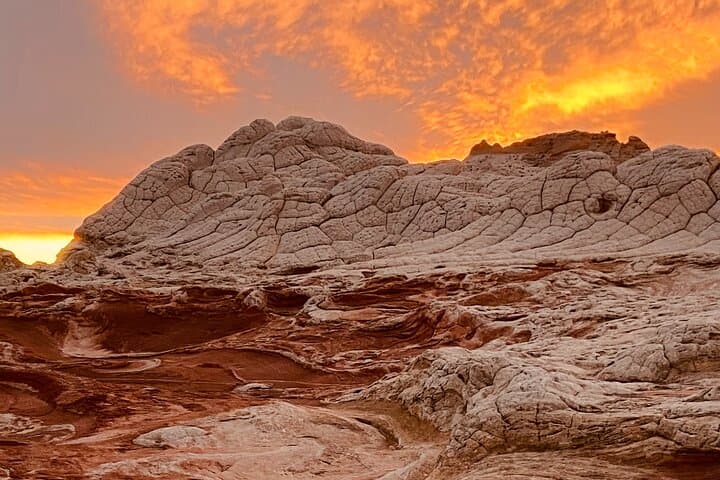
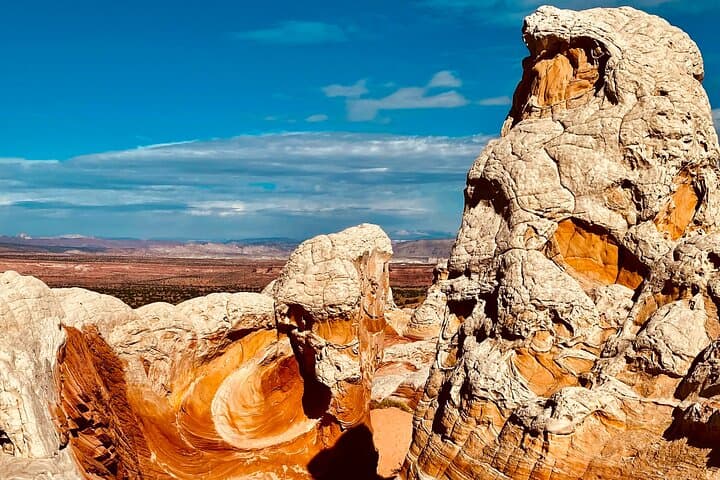
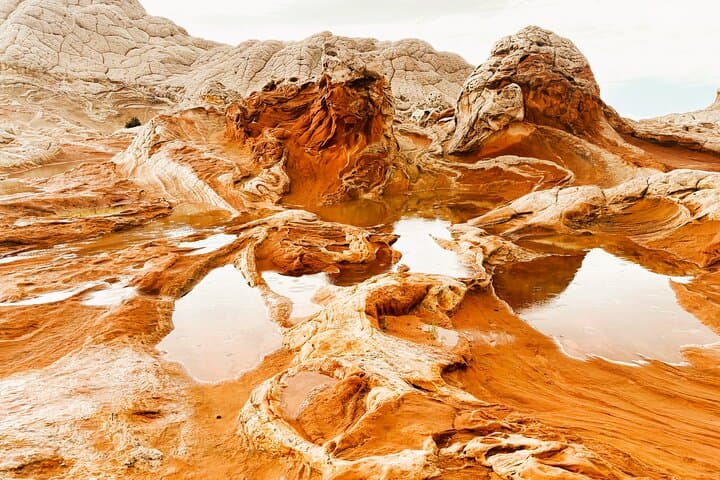
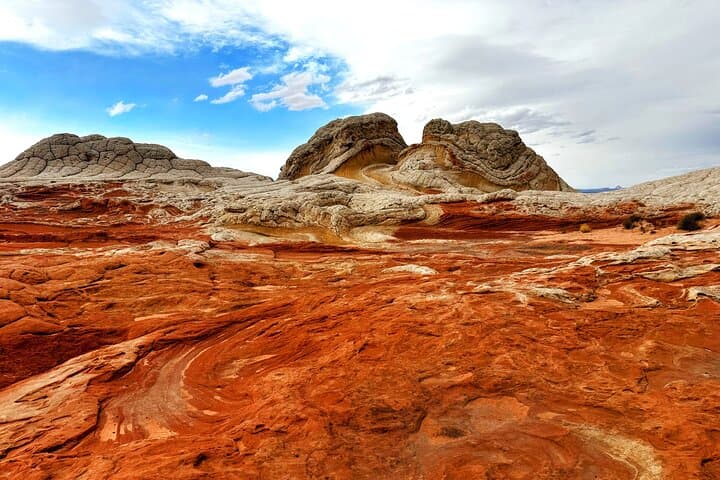
Late afternoon light drips across a moonscape of chalky swirls and corrugated ridges as your vehicle grinds onto the sandy approach — White Pocket’s pale layers seem to shift under the sun, daring you to find the next perfect frame.
Late afternoon light drips across a moonscape of chalky swirls and corrugated ridges as your vehicle grinds onto the sandy approach — White Pocket’s pale layers seem to shift under the sun, daring you to find the next perfect frame.
This compact one‑square‑mile outcrop sits within Vermilion Cliffs National Monument, six miles southeast of famed Coyote Buttes. The banded rocks are Permian to Jurassic in age, wind‑sculpted cross‑beds of sandstone that reveal ancient dunes and shifting shorelines. Paiute and Pai pavi peoples have long known these lands; modern visitors come for the unusual light and patterning that set White Pocket apart from the region’s red cliffs.
On a sunset guided hike you’ll spend 3–4 hours moving across sandy flats and low, eroded fins, punctuated by shallow alcoves and photogenic pockets. Guides point out geological layers, seasonal wildflowers, and signs of kit fox or raven activity as the sky cools.
Practical details shape the day: expect 1 hour of highway and roughly 1 hour off‑road driving each way from Kanab, Utah, and moderate walking over uneven, often loose sandstone. Bring sun protection, at least 2–3 liters of water, and a headlamp if your exit approaches dusk. Footing can be slick after rain; shoes with grippy soles help.
This is a sensory hike — wind whispering through veins of stone, the land pushing you to move slowly and frame carefully. With planning and respect for fragile surfaces, a sunset at White Pocket can be a quietly dramatic highlight of a Southwest itinerary.