THE ADVENTURE COLLECTIVE® · Independent discovery and booking for outdoor travel

Drive from Guangzhou into an ecological canyon and ascend by cable car to Huangteng Gorge’s glass skywalk. Arrive for sunset and an illuminated music-and-water light show on a dramatic glass corridor that projects over the valley.
Drive from Guangzhou into an ecological canyon and ascend by cable car to Huangteng Gorge’s glass skywalk. Arrive for sunset and an illuminated music-and-water light show on a dramatic glass corridor that projects over the valley.
You arrive as late afternoon light thins, the road loosening the city’s edge into terraced fields and dense green. The gorge widens beneath a cable car that climbs through humid air; below, the river dares you with sudden white drops while forested cliffs lean in close. At the summit a glass corridor unfurls — a long, slightly bowed walkway known locally as the “big badminton racket” — and the scene shifts again as LEDs and water features stitch the canyon into a living stage.
Verified experiences and guided adventures in the surrounding area.
Operated by Guangzhou Local Tours · Qingyuan, Guangdong
You arrive as late afternoon light thins, the road loosening the city’s edge into terraced fields and dense green. The gorge widens beneath a cable car that climbs through humid air; below, the river dares you with sudden white drops while forested cliffs lean in close. At the summit a glass corridor unfurls — a long, slightly bowed walkway known locally as the “big badminton racket” — and the scene shifts again as LEDs and water features stitch the canyon into a living stage.
Huangteng Gorge sits in the greater Qingyuan region northwest of Guangzhou. The canyon’s narrow walls and falls are the product of persistent river erosion against hard rock, creating steep steps and viewpoints rather than long alpine ridgelines. The area’s modern visitor infrastructure — cable cars, sightseeing lifts, shuttle buses — was built to channel visitors through a compact set of overlooks and the dramatic illuminated skywalk.
Culturally, the route traces rural Guangdong life: small villages, tea plots, and roadside stalls. The glass corridor’s evening light show blends engineered spectacle with the valley’s nighttime hush; music and waterfalls amplify the canyon’s presence rather than mask it.
Practical guidance: plan for a late-afternoon departure from Guangzhou so you reach the bridge at sunset, bring a midlayer for wind on exposed sections, and wear grippy shoes for stone steps and potential spray from waterfalls. Admission is commonly purchased on-site or through tour operators; the return offers a choice between shuttle buses or an optional mountain slide car for a quick, recreational descent.
easy.
4–6 hours.
Suitable for most fitness levels; expect short stair sections and standing during overlooks
Admission policies vary by operator; many private transfers bring you to the site while entrance fees may be paid on arrival or handled as an add-on when booking—confirm with your provider beforehand.
Expect roughly 1.5 hours each way depending on traffic; late-afternoon schedules can add time during peak travel periods.
The structure meets local safety standards and is open to families, but the transparent walkway can be unsettling—children should be supervised and those with acrophobia may find some sections challenging.
Yes—scenic shuttle buses are standard, and an optional mountain slide car offers a faster, recreational descent for an extra fee.
The gorge area developed as a local scenic attraction in recent decades, with infrastructure added to open natural viewpoints while concentrating visitor flow on built overlooks.
The scenic area manages foot traffic with designated paths and shuttle services to reduce erosion; visitors are encouraged to stay on trails and avoid littering to protect fragile riparian habitats.
Guangzhou Local Tours operates guided outdoor trips and adventures with an emphasis on safety, stewardship, and memorable experiences.

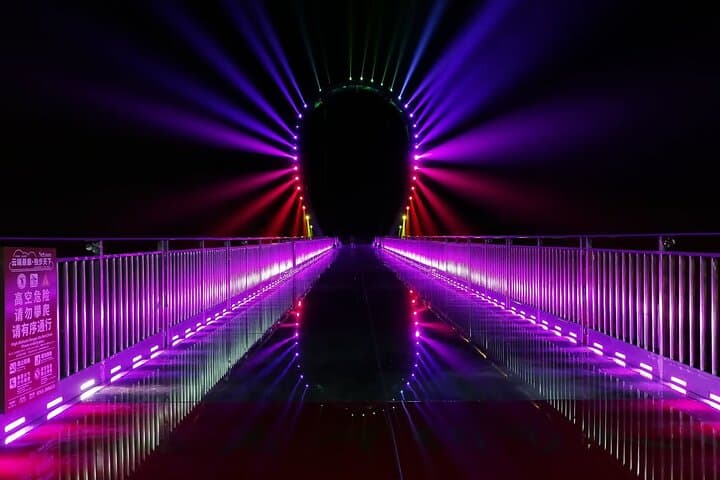


You arrive as late afternoon light thins, the road loosening the city’s edge into terraced fields and dense green. The gorge widens beneath a cable car that climbs through humid air; below, the river dares you with sudden white drops while forested cliffs lean in close. At the summit a glass corridor unfurls — a long, slightly bowed walkway known locally as the “big badminton racket” — and the scene shifts again as LEDs and water features stitch the canyon into a living stage.
You arrive as late afternoon light thins, the road loosening the city’s edge into terraced fields and dense green. The gorge widens beneath a cable car that climbs through humid air; below, the river dares you with sudden white drops while forested cliffs lean in close. At the summit a glass corridor unfurls — a long, slightly bowed walkway known locally as the “big badminton racket” — and the scene shifts again as LEDs and water features stitch the canyon into a living stage.
Huangteng Gorge sits in the greater Qingyuan region northwest of Guangzhou. The canyon’s narrow walls and falls are the product of persistent river erosion against hard rock, creating steep steps and viewpoints rather than long alpine ridgelines. The area’s modern visitor infrastructure — cable cars, sightseeing lifts, shuttle buses — was built to channel visitors through a compact set of overlooks and the dramatic illuminated skywalk.
Culturally, the route traces rural Guangdong life: small villages, tea plots, and roadside stalls. The glass corridor’s evening light show blends engineered spectacle with the valley’s nighttime hush; music and waterfalls amplify the canyon’s presence rather than mask it.
Practical guidance: plan for a late-afternoon departure from Guangzhou so you reach the bridge at sunset, bring a midlayer for wind on exposed sections, and wear grippy shoes for stone steps and potential spray from waterfalls. Admission is commonly purchased on-site or through tour operators; the return offers a choice between shuttle buses or an optional mountain slide car for a quick, recreational descent.