THE ADVENTURE COLLECTIVE® · Independent discovery and booking for outdoor travel

Ride fat tires from Grootbos down 185 m of dunes to a Walker Bay beach at sunset. This guided 2.5-hour tour mixes fynbos trails, steep sand descents and possible whale sightings during season.
Ride fat tires from Grootbos down 185 m of dunes to a Walker Bay beach at sunset. This guided 2.5-hour tour mixes fynbos trails, steep sand descents and possible whale sightings during season.
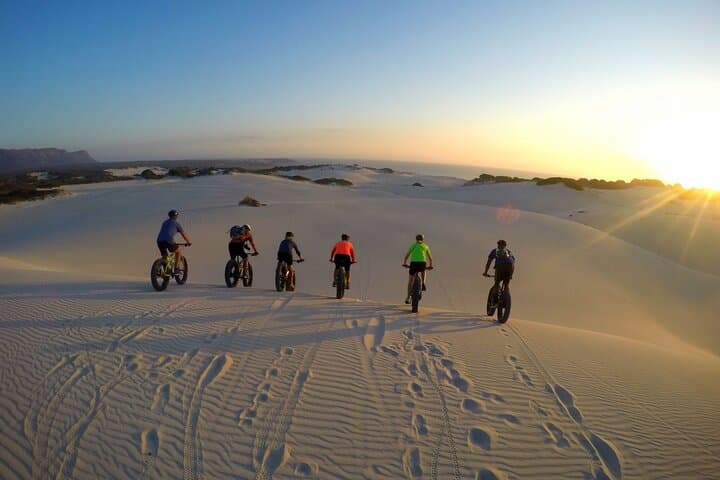
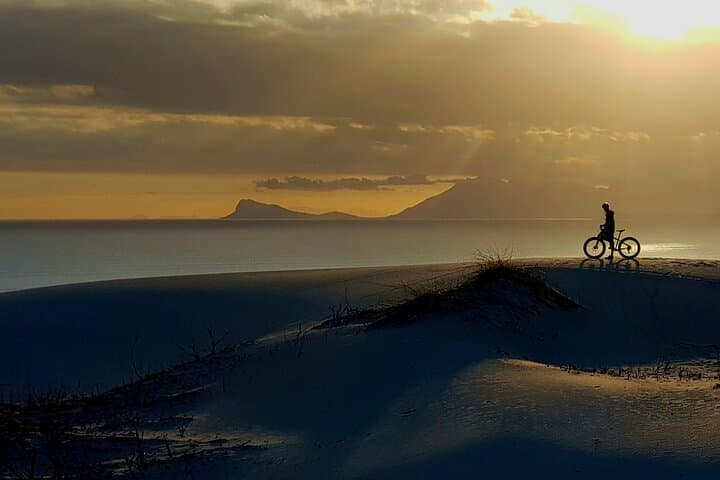
The ride begins with the wind on your face and the high dunes catching late light — a narrow sandy horse track through fynbos leads you from the mountain saddle down toward Walker Bay. As the sun drops, the dunes throw long shadows and the sand seems to shift under the fat tires, slowing and steadying the bike as you lean into each slalom turn.
Verified experiences and guided adventures in the surrounding area.
Operated by Fatbike Tours Cape Town · Gansbaai, Western Cape
The ride begins with the wind on your face and the high dunes catching late light — a narrow sandy horse track through fynbos leads you from the mountain saddle down toward Walker Bay. As the sun drops, the dunes throw long shadows and the sand seems to shift under the fat tires, slowing and steadying the bike as you lean into each slalom turn.
Geology here is fresh and readable: coastal sand deposited by longshore drift forms steep dune faces that give way to a broad beach fronting the Atlantic. The vegetation — Cape fynbos — evolved to hold fragile soils and shelters a unique assemblage of plants. Culturally, the shoreline has long supported small fishing settlements and modern conservation efforts; the bay is also famous for shore-based sightings of southern right whales during the winter months.
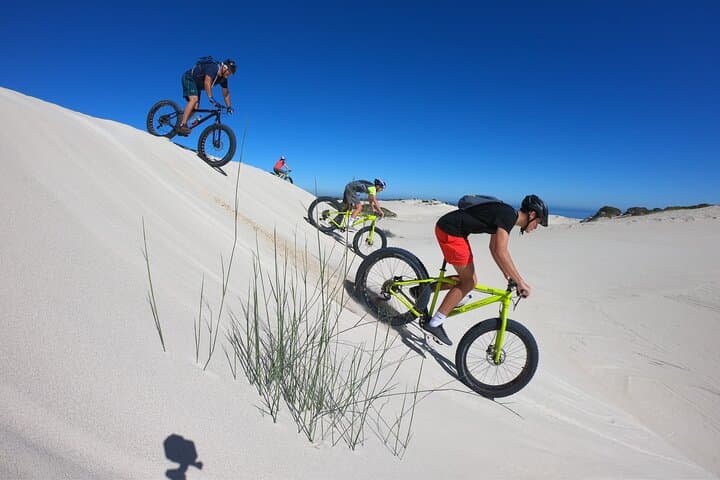
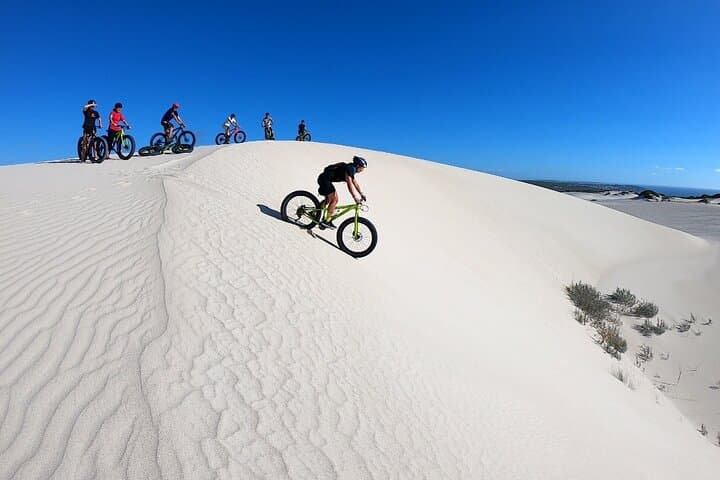
Expect 6 km of mixed terrain with roughly 185 m of downhill relief, a blend of narrow sandy track, open dune faces and a final 4x4 path to the beach. Guides brief riding technique for controlled descents; sand provides natural braking, and there are easier lines if you want them. Groups are small and the tour includes fat bikes, water on-board, transport to the dune summit, and photos.
Practical notes: book around sunset for light and whale sightings (June–October peak). Wear closed shoes with good grip, bring layered wind protection and a headlamp for return transit. Moderate fitness and basic bike handling make this achievable — the dunes will test your nerves more than your legs, and reward you with wide ocean views and quiet beach time at the finish.
moderate.
2–3 hours.
Moderate fitness: you should be comfortable riding a bike on uneven surfaces and walking short sandy stretches.
Dune faces look steep but sand slows the bike; guides teach slalom technique and offer easier bypass lines for less confident riders.
Southern right whales are most commonly seen in Walker Bay from June through October, with peak sightings in July–September.
No advanced skills required—if you can ride a bike on uneven ground and have moderate fitness you’ll manage, and guides adapt routes to group ability.
Fat tire bike, water on the bike, transport to the dune top, entrance fees to the reserve, an English-speaking guide, plus photos and videos.
Walker Bay’s shores have supported fishing communities for centuries and today form part of a network of protected coastal reserves around Gansbaai.
Tours operate within protected areas so stick to guide routes, avoid trampling fynbos, and follow leave-no-trace practices to limit erosion and disturbance.
Fatbike Tours Cape Town operates guided outdoor trips and adventures with an emphasis on safety, stewardship, and memorable experiences.
The ride begins with the wind on your face and the high dunes catching late light — a narrow sandy horse track through fynbos leads you from the mountain saddle down toward Walker Bay. As the sun drops, the dunes throw long shadows and the sand seems to shift under the fat tires, slowing and steadying the bike as you lean into each slalom turn.
The ride begins with the wind on your face and the high dunes catching late light — a narrow sandy horse track through fynbos leads you from the mountain saddle down toward Walker Bay. As the sun drops, the dunes throw long shadows and the sand seems to shift under the fat tires, slowing and steadying the bike as you lean into each slalom turn.
Geology here is fresh and readable: coastal sand deposited by longshore drift forms steep dune faces that give way to a broad beach fronting the Atlantic. The vegetation — Cape fynbos — evolved to hold fragile soils and shelters a unique assemblage of plants. Culturally, the shoreline has long supported small fishing settlements and modern conservation efforts; the bay is also famous for shore-based sightings of southern right whales during the winter months.
Expect 6 km of mixed terrain with roughly 185 m of downhill relief, a blend of narrow sandy track, open dune faces and a final 4x4 path to the beach. Guides brief riding technique for controlled descents; sand provides natural braking, and there are easier lines if you want them. Groups are small and the tour includes fat bikes, water on-board, transport to the dune summit, and photos.
Practical notes: book around sunset for light and whale sightings (June–October peak). Wear closed shoes with good grip, bring layered wind protection and a headlamp for return transit. Moderate fitness and basic bike handling make this achievable — the dunes will test your nerves more than your legs, and reward you with wide ocean views and quiet beach time at the finish.