THE ADVENTURE COLLECTIVE® · Independent discovery and booking for outdoor travel

Drive deep into Turpan’s Silk Road landscape on a private 4WD tour that pairs Flaming Mountain’s fiery canyons and ancient Gaochang ruins with a sunset in the Kumtag Desert. Expect short walks, cultural sites, dune bashing and sand sliding in a single long day.
Drive deep into Turpan’s Silk Road landscape on a private 4WD tour that pairs Flaming Mountain’s fiery canyons and ancient Gaochang ruins with a sunset in the Kumtag Desert. Expect short walks, cultural sites, dune bashing and sand sliding in a single long day.
The sun leans low over Flaming Mountain and the world turns a furnace gold—your 4WD slides onto a ribbon of compact sand and the air tastes faintly of hot rock and grape dust. A private sedan collects you from Turpan North Railway Station or a downtown hotel, and the day unfolds like a stitched map: red sandstone canyons, ruined fortresses, frescoed grottoes, an ancient oasis village and, finally, the low, rippled sea of the Kumtag Desert for sunset and sand sliding.
Verified experiences and guided adventures in the surrounding area.
Operated by Wadi Rum Fire Camp · Turpan, Xinjiang
The sun leans low over Flaming Mountain and the world turns a furnace gold—your 4WD slides onto a ribbon of compact sand and the air tastes faintly of hot rock and grape dust. A private sedan collects you from Turpan North Railway Station or a downtown hotel, and the day unfolds like a stitched map: red sandstone canyons, ruined fortresses, frescoed grottoes, an ancient oasis village and, finally, the low, rippled sea of the Kumtag Desert for sunset and sand sliding.
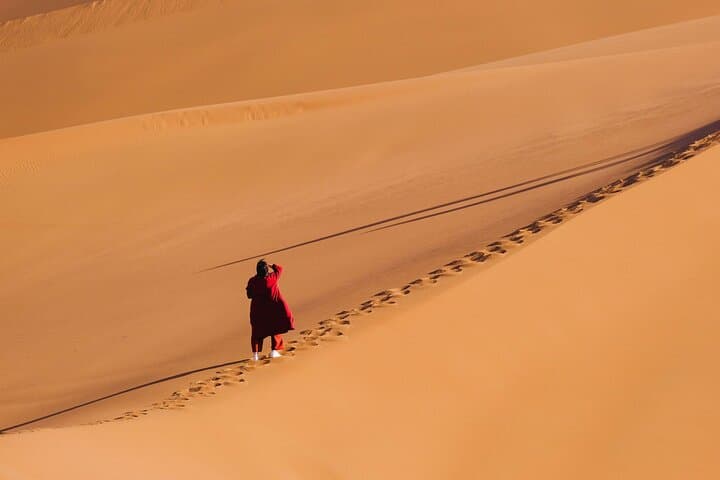
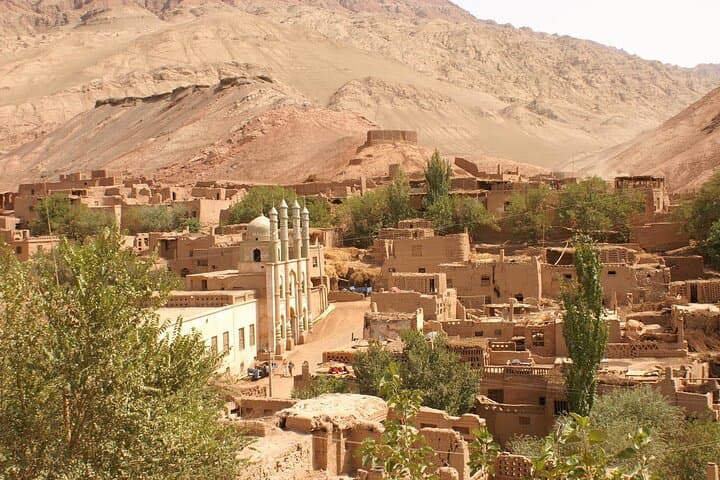
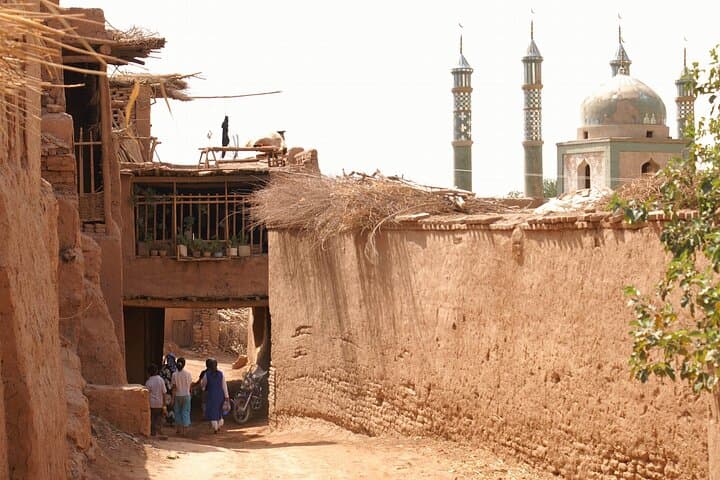
Geology here reads like a slow-motion fire: oxidized iron in the red beds of Flaming Mountain gives the cliffs their blaze, while wind and water carved Gaochang’s earthen walls over millennia. Cultural layers are equally tangible—Bezeklik’s grottoes hold murals from the Silk Road’s Buddhist heyday, and Tuyoq Valley still shows traditional Uighur adobe life fed by karez underground canals. The Kumtag’s sands are fine and varied in color; dune faces catch light in bands from yellow to rust.
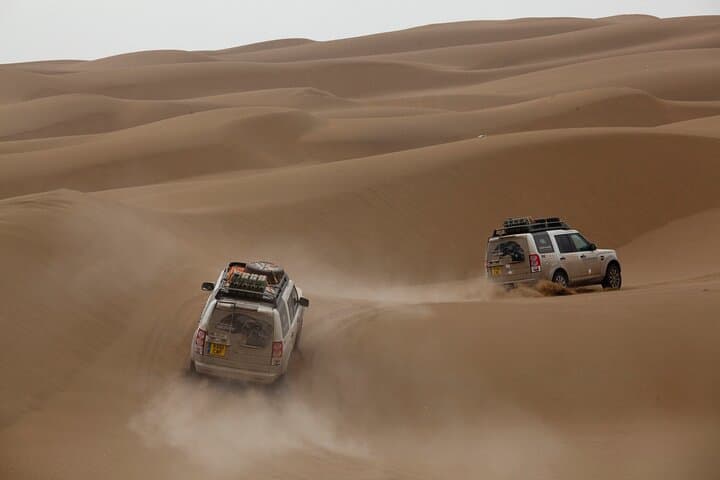
Practically: expect a long day (roughly 10–12 hours) with mostly short on-site walks and vehicle transfers. The tour includes private transport (up to five), English-speaking driver, dune bashing and a sand-surf session inside Kumtag National Park; site admissions may be extra. Time your visit around cooler hours—sunrise or sunset makes colors pop and keeps midday heat at bay. Bring sun protection, a refillable water bottle, sturdy shoes for rocky sections, and small cash for food or local vendors. Guides can adapt the route to your pace—ask about extra stops at karez wells or local vineyards if you want a quieter, more local perspective.
moderate.
10–12 hours.
Light to moderate fitness; most walking is short but the day is long and involves uneven terrain at ruins and dunes.
The tour runs about 10–12 hours and includes private transport (up to 5), driver-guide, pickup/drop-off in Turpan, dune bashing and sand sliding; some site admissions and lunch are usually extra.
Yes—this is a private tour so stops can be shortened or extended, and extra requests (karez wells, vineyard stops) can be arranged when you book.
The vehicle experience is suitable for most ages, but dune bashing can be bumpy; inform the operator of mobility concerns or very young children when booking.
Spring and autumn offer milder temperatures; sunrise or sunset visits give the best light for Flaming Mountain and Kumtag’s dunes while avoiding midday heat.
This corridor was a Silk Road artery; Gaochang served as a Han and Tang-era fortress city and Bezeklik’s murals reflect centuries of Buddhist art exchange across Central Asia.
Stick to marked tracks in the desert to protect fragile crust and prevent erosion; pack out all trash and avoid climbing on ancient earthen walls to preserve archaeological fabric.
Wadi Rum Fire Camp operates guided outdoor trips and adventures with an emphasis on safety, stewardship, and memorable experiences.
The sun leans low over Flaming Mountain and the world turns a furnace gold—your 4WD slides onto a ribbon of compact sand and the air tastes faintly of hot rock and grape dust. A private sedan collects you from Turpan North Railway Station or a downtown hotel, and the day unfolds like a stitched map: red sandstone canyons, ruined fortresses, frescoed grottoes, an ancient oasis village and, finally, the low, rippled sea of the Kumtag Desert for sunset and sand sliding.
The sun leans low over Flaming Mountain and the world turns a furnace gold—your 4WD slides onto a ribbon of compact sand and the air tastes faintly of hot rock and grape dust. A private sedan collects you from Turpan North Railway Station or a downtown hotel, and the day unfolds like a stitched map: red sandstone canyons, ruined fortresses, frescoed grottoes, an ancient oasis village and, finally, the low, rippled sea of the Kumtag Desert for sunset and sand sliding.
Geology here reads like a slow-motion fire: oxidized iron in the red beds of Flaming Mountain gives the cliffs their blaze, while wind and water carved Gaochang’s earthen walls over millennia. Cultural layers are equally tangible—Bezeklik’s grottoes hold murals from the Silk Road’s Buddhist heyday, and Tuyoq Valley still shows traditional Uighur adobe life fed by karez underground canals. The Kumtag’s sands are fine and varied in color; dune faces catch light in bands from yellow to rust.
Practically: expect a long day (roughly 10–12 hours) with mostly short on-site walks and vehicle transfers. The tour includes private transport (up to five), English-speaking driver, dune bashing and a sand-surf session inside Kumtag National Park; site admissions may be extra. Time your visit around cooler hours—sunrise or sunset makes colors pop and keeps midday heat at bay. Bring sun protection, a refillable water bottle, sturdy shoes for rocky sections, and small cash for food or local vendors. Guides can adapt the route to your pace—ask about extra stops at karez wells or local vineyards if you want a quieter, more local perspective.