THE ADVENTURE COLLECTIVE® · Independent discovery and booking for outdoor travel

Race over golden ridges, ride a camel at dusk and settle into a Bedouin-style camp for music and a barbecue under the stars. This six-hour evening safari balances dune-bashing thrills with cultural immersion and practical logistics.
Race over golden ridges, ride a camel at dusk and settle into a Bedouin-style camp for music and a barbecue under the stars. This six-hour evening safari balances dune-bashing thrills with cultural immersion and practical logistics.
The Land Cruiser noses over the lip of a dune and the city skyline slips behind you—only wind and the long, orange curve of sand ahead. As the sun drops, the dunes throw long shadows and the air cools; drivers throttle for an adrenaline surge of dune bashing before the caravan slows toward a low-lit Bedouin-style camp.
Verified experiences and guided adventures in the surrounding area.
Operated by Desert Voyagers Tourism · Abu Dhabi, Abu Dhabi
The Land Cruiser noses over the lip of a dune and the city skyline slips behind you—only wind and the long, orange curve of sand ahead. As the sun drops, the dunes throw long shadows and the air cools; drivers throttle for an adrenaline surge of dune bashing before the caravan slows toward a low-lit Bedouin-style camp.
This stretch of Arabian Desert has been shaped by winds that migrated coastal sands inland for millennia; nomadic Bedouin once used these margins as seasonal routes, and camels remained the reliable highway. Modern safaris borrow those rhythms—camel rides, sand-boarding, and evenings centered on storytelling and performance. Cultural touchpoints arrive in the camp: Tanoura and belly-dance performances, henna artists, and a buffet-style barbecue that leans local in flavor.
Expect a structured six-hour experience: pickup in a Land Cruiser, high-speed dune runs guided by trained drivers, a short camel ride, optional sand-boarding or quad biking, then an evening at the camp with food and shows. The desert’s geology is tactile—fine quartz and shell fragments that shift underfoot—so closed shoes and long trousers matter. Respect local customs: during Ramadan entertainment and alcohol are restricted.
Practical side: bring sun protection, at least 1–2 liters of water, and a lightweight layer for after sunset. If you have back, heart, or pregnancy concerns, skip dune bashing and stick to the camp program. For photographers, plan to arrive before golden hour for the most dramatic light; for families, supervise young children around animals and vehicles. The result is part thrill ride, part cultural evening—an accessible slice of Arabia’s desert life with clear logistics and vivid contrasts between speed and stillness.
moderate.
4–6 hours.
Moderate fitness—able to climb in/out of vehicles, manage short camel rides and walking on soft sand.
Yes—round-trip transfers from Abu Dhabi are provided, typically in a shared Land Cruiser; pickup point is confirmed after booking.
Children are welcome but must be supervised—children under four require parental supervision; some high-speed activities are not recommended for very young kids.
Sand-boarding is typically included; quad biking is often offered as an optional extra—closed shoes and trousers are advised for quad use.
Not recommended for pregnant travelers or those with serious back or heart conditions; drivers are trained but dune-bashing can be physically jarring.
This landscape was traversed by Bedouin caravans and used seasonally for grazing; camels served as transport and cultural anchors for desert life.
Operators limit group sizes and encourage ‘leave no trace’ behavior; take all litter back to the camp and avoid feeding wildlife to reduce human-wildlife conflict.
Desert Voyagers Tourism operates guided outdoor trips and adventures with an emphasis on safety, stewardship, and memorable experiences.

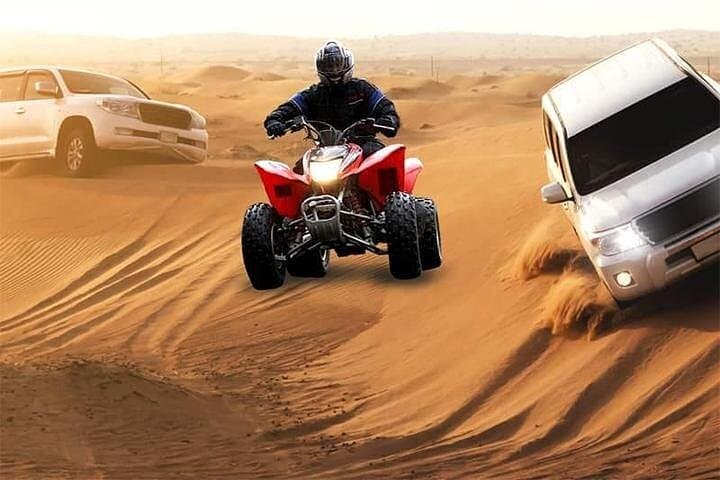


The Land Cruiser noses over the lip of a dune and the city skyline slips behind you—only wind and the long, orange curve of sand ahead. As the sun drops, the dunes throw long shadows and the air cools; drivers throttle for an adrenaline surge of dune bashing before the caravan slows toward a low-lit Bedouin-style camp.
The Land Cruiser noses over the lip of a dune and the city skyline slips behind you—only wind and the long, orange curve of sand ahead. As the sun drops, the dunes throw long shadows and the air cools; drivers throttle for an adrenaline surge of dune bashing before the caravan slows toward a low-lit Bedouin-style camp.
This stretch of Arabian Desert has been shaped by winds that migrated coastal sands inland for millennia; nomadic Bedouin once used these margins as seasonal routes, and camels remained the reliable highway. Modern safaris borrow those rhythms—camel rides, sand-boarding, and evenings centered on storytelling and performance. Cultural touchpoints arrive in the camp: Tanoura and belly-dance performances, henna artists, and a buffet-style barbecue that leans local in flavor.
Expect a structured six-hour experience: pickup in a Land Cruiser, high-speed dune runs guided by trained drivers, a short camel ride, optional sand-boarding or quad biking, then an evening at the camp with food and shows. The desert’s geology is tactile—fine quartz and shell fragments that shift underfoot—so closed shoes and long trousers matter. Respect local customs: during Ramadan entertainment and alcohol are restricted.
Practical side: bring sun protection, at least 1–2 liters of water, and a lightweight layer for after sunset. If you have back, heart, or pregnancy concerns, skip dune bashing and stick to the camp program. For photographers, plan to arrive before golden hour for the most dramatic light; for families, supervise young children around animals and vehicles. The result is part thrill ride, part cultural evening—an accessible slice of Arabia’s desert life with clear logistics and vivid contrasts between speed and stillness.