THE ADVENTURE COLLECTIVE® · Independent discovery and booking for outdoor travel

Trade Marrakech bustle for a stony desert evening: a transferred dinner show in Agafay offers multi-course Moroccan food, live entertainment and optional camel rides beneath wide-open skies. Learn what to expect and how to prepare for an effortless, atmospheric night out.
Trade Marrakech bustle for a stony desert evening: a transferred dinner show in Agafay offers multi-course Moroccan food, live entertainment and optional camel rides beneath wide-open skies. Learn what to expect and how to prepare for an effortless, atmospheric night out.
The sky over Agafay loosens into orange and then ink as your convoy leaves Marrakech behind, headlights cutting across a stony plain. You arrive at a low-profile desert camp where nomad-style tents sit against a bleached, rocky landscape and the High Atlas silhouette pins the horizon. The evening moves at a human pace: mint tea, a multi-course Moroccan dinner, live music and the kind of small theatrical moments—drumming, songs, storytelling—that feel practiced but generous.
Verified experiences and guided adventures in the surrounding area.
The sky over Agafay loosens into orange and then ink as your convoy leaves Marrakech behind, headlights cutting across a stony plain. You arrive at a low-profile desert camp where nomad-style tents sit against a bleached, rocky landscape and the High Atlas silhouette pins the horizon. The evening moves at a human pace: mint tea, a multi-course Moroccan dinner, live music and the kind of small theatrical moments—drumming, songs, storytelling—that feel practiced but generous.
Geologically Agafay is a reg: a pebble-and-rock desert rather than rolling Sahara dunes. The surface is compacted stone and gravel carved by wind and seasonal torrents, giving wide views and dramatic sunsets. Culturally this area sits in the orbit of Marrakech’s trading routes and local Amazigh (Berber) communities; many camps aim to showcase that hospitality through food and music.
Expect a social, low-effort experience rather than a wilderness expedition. Shared transfers from central Marrakech typically take about 30–45 minutes depending on traffic. Dinner is traditional—tagines, salads, flatbread—with vegetarian options common; a camel ride at sunset is a popular upgrade and lasts roughly 20–30 minutes.
Practical edge: bring a warm layer for post-sunset temperatures, carry water, and confirm pickup times with your operator. Respect camp rules around fires and photography during performances. The evening is designed to be comfortable and accessible—arrive ready to eat, listen, and watch the desert shift from gold to starlight.
easy.
4–5 hours.
Minimal fitness required; participants should be able to sit through a multi-course meal and short walks to and from tents.
Transfers typically take about 30–45 minutes depending on traffic and pickup location in Marrakech.
Yes—most desert camps and organized dinners offer vegetarian options; specify dietary needs when booking.
Camel rides are usually an optional paid upgrade at sunset and last around 20–30 minutes, but availability depends on the operator.
Camps range from basic to upscale; many have permanent or semi-permanent tents with shared restroom facilities—check the listing for amenities.
Agafay is a stony reg southwest of Marrakech long used by nomadic and semi-nomadic Amazigh communities; in recent decades it’s become popular for day trips and cultural camps tailored to city visitors.
Water is scarce and the landscape is fragile—avoid driving off established tracks, minimize single-use plastics, and support camps that employ local staff.
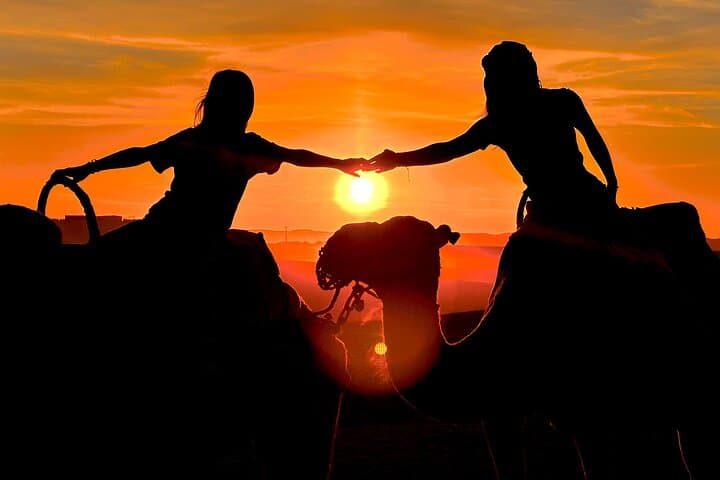
The sky over Agafay loosens into orange and then ink as your convoy leaves Marrakech behind, headlights cutting across a stony plain. You arrive at a low-profile desert camp where nomad-style tents sit against a bleached, rocky landscape and the High Atlas silhouette pins the horizon. The evening moves at a human pace: mint tea, a multi-course Moroccan dinner, live music and the kind of small theatrical moments—drumming, songs, storytelling—that feel practiced but generous.
The sky over Agafay loosens into orange and then ink as your convoy leaves Marrakech behind, headlights cutting across a stony plain. You arrive at a low-profile desert camp where nomad-style tents sit against a bleached, rocky landscape and the High Atlas silhouette pins the horizon. The evening moves at a human pace: mint tea, a multi-course Moroccan dinner, live music and the kind of small theatrical moments—drumming, songs, storytelling—that feel practiced but generous.
Geologically Agafay is a reg: a pebble-and-rock desert rather than rolling Sahara dunes. The surface is compacted stone and gravel carved by wind and seasonal torrents, giving wide views and dramatic sunsets. Culturally this area sits in the orbit of Marrakech’s trading routes and local Amazigh (Berber) communities; many camps aim to showcase that hospitality through food and music.
Expect a social, low-effort experience rather than a wilderness expedition. Shared transfers from central Marrakech typically take about 30–45 minutes depending on traffic. Dinner is traditional—tagines, salads, flatbread—with vegetarian options common; a camel ride at sunset is a popular upgrade and lasts roughly 20–30 minutes.
Practical edge: bring a warm layer for post-sunset temperatures, carry water, and confirm pickup times with your operator. Respect camp rules around fires and photography during performances. The evening is designed to be comfortable and accessible—arrive ready to eat, listen, and watch the desert shift from gold to starlight.