THE ADVENTURE COLLECTIVE® · Independent discovery and booking for outdoor travel

Watch the sun dip over the moonlike stone plains of Agafay, then settle into a Berber tent for tagine, mint tea, live music, and stargazing. This accessible evening combines local hospitality with a dramatic desert twilight—perfect for a memorable night outside Marrakech.
Watch the sun dip over the moonlike stone plains of Agafay, then settle into a Berber tent for tagine, mint tea, live music, and stargazing. This accessible evening combines local hospitality with a dramatic desert twilight—perfect for a memorable night outside Marrakech.
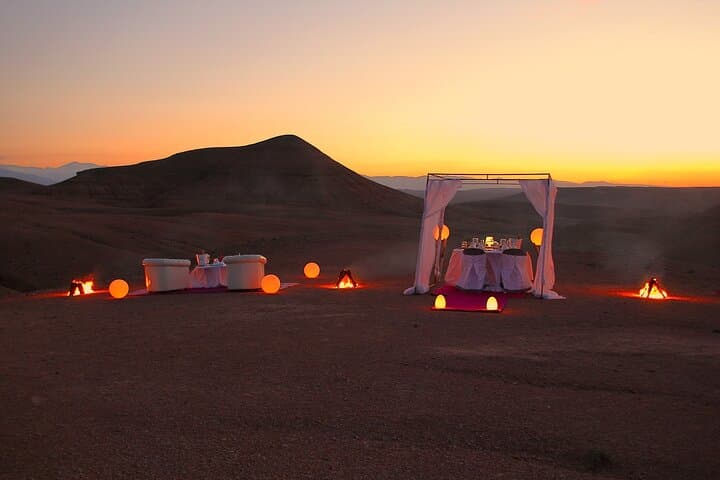
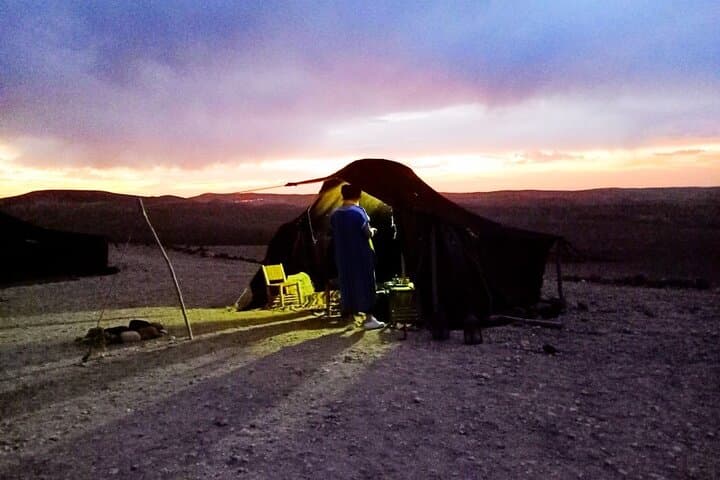
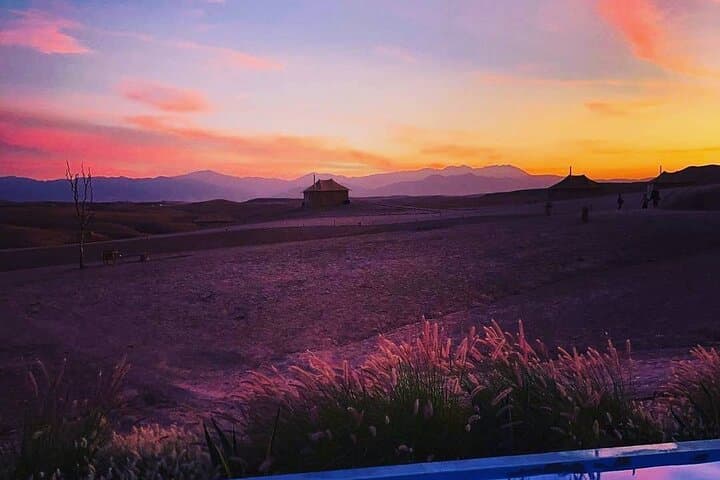
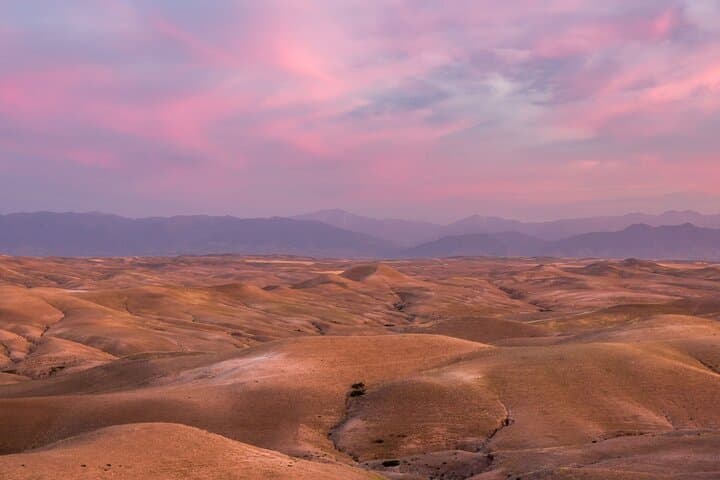
The horizon loosens as Marrakech shrinks behind you and the stone plains of Agafay open—low, moonlit mounds of compacted rock that catch the last gold of sunset. At the camp, a low Berber tent waits, lanterns flicker, and the air cools enough for the day’s heat to become a gentle presence rather than an obstacle.
Verified experiences and guided adventures in the surrounding area.
Operated by Palais Bahia · Marrakech, Marrakech-Safi
The horizon loosens as Marrakech shrinks behind you and the stone plains of Agafay open—low, moonlit mounds of compacted rock that catch the last gold of sunset. At the camp, a low Berber tent waits, lanterns flicker, and the air cools enough for the day’s heat to become a gentle presence rather than an obstacle.
Agafay isn’t a sand sea but a stony desert carved by millennia of Atlas erosion and occasional torrents that left bouldery plains instead of dunes. The region has long been part of local Berber grazing and trade routes, and modern camps here translate that hospitality into seated dinners around a fire, with music and mint tea as a throughline to Moroccan culture.
Expect a sensory, low-key evening: welcome pastries and mint tea, dinner of seasonal salad and a chicken or beef tagine cooked slowly over coals, then fruit and more tea as musicians play traditional rhythms under an expansive sky. The silence is notable; without city noise, the desert seems to breathe. Geologically the ground is compacted quartz and schist fragments—firm underfoot but irregular—so the camp setup favors low seating and short, unpaved paths between tents.
Practical guidance: pickup from Marrakech is standard, so plan for a 30–60 minute drive depending on traffic and the camp’s location. Bring layers for rapidly cooling nights, a headlamp or flashlight for the walk to toilets, and modest clothing respectful of local customs. Hydrate early—water is limited on-site—and confirm dietary needs ahead of booking. Arrive with time to watch the full sunset: that window is brief but dramatic.
easy.
4–5 hours.
Suitable for most fitness levels; involves minimal walking on uneven, rocky ground
Most operators include hotel or riad pickup in Marrakech; travel time is typically 30–60 minutes depending on traffic and the camp location.
Yes—many camps can accommodate vegetarian meals and children, but you should notify the operator at booking to ensure options are prepared.
Expect basic open-air restrooms, low seating around a fire, and limited lighting; restroom quality varies by camp so bring hand sanitizer and a headlamp.
Some operators list accessibility options and offer nearby parking, but terrain between vehicles and tents can be uneven—check with the provider about specific accessibility needs before booking.
Agafay’s stone desert formed from Atlas mountain erosion and alluvial deposits; historically it served as grazing and transit land for Berber communities near Marrakech.
The area is ecologically fragile—stick to paths, minimize campfire impact, and pack out waste; water is scarce so avoid unnecessary use.
Palais Bahia operates guided outdoor trips and adventures with an emphasis on safety, stewardship, and memorable experiences.
The horizon loosens as Marrakech shrinks behind you and the stone plains of Agafay open—low, moonlit mounds of compacted rock that catch the last gold of sunset. At the camp, a low Berber tent waits, lanterns flicker, and the air cools enough for the day’s heat to become a gentle presence rather than an obstacle.
The horizon loosens as Marrakech shrinks behind you and the stone plains of Agafay open—low, moonlit mounds of compacted rock that catch the last gold of sunset. At the camp, a low Berber tent waits, lanterns flicker, and the air cools enough for the day’s heat to become a gentle presence rather than an obstacle.
Agafay isn’t a sand sea but a stony desert carved by millennia of Atlas erosion and occasional torrents that left bouldery plains instead of dunes. The region has long been part of local Berber grazing and trade routes, and modern camps here translate that hospitality into seated dinners around a fire, with music and mint tea as a throughline to Moroccan culture.
Expect a sensory, low-key evening: welcome pastries and mint tea, dinner of seasonal salad and a chicken or beef tagine cooked slowly over coals, then fruit and more tea as musicians play traditional rhythms under an expansive sky. The silence is notable; without city noise, the desert seems to breathe. Geologically the ground is compacted quartz and schist fragments—firm underfoot but irregular—so the camp setup favors low seating and short, unpaved paths between tents.
Practical guidance: pickup from Marrakech is standard, so plan for a 30–60 minute drive depending on traffic and the camp’s location. Bring layers for rapidly cooling nights, a headlamp or flashlight for the walk to toilets, and modest clothing respectful of local customs. Hydrate early—water is limited on-site—and confirm dietary needs ahead of booking. Arrive with time to watch the full sunset: that window is brief but dramatic.