THE ADVENTURE COLLECTIVE® · Independent discovery and booking for outdoor travel

Drive from Salalah through frankincense groves to the rim of the Empty Quarter, end the day with a tented-camp dinner. This private sunset safari combines short walks, archaeology and Bedouin-style hospitality over an eight-hour circuit.
Drive from Salalah through frankincense groves to the rim of the Empty Quarter, end the day with a tented-camp dinner. This private sunset safari combines short walks, archaeology and Bedouin-style hospitality over an eight-hour circuit.
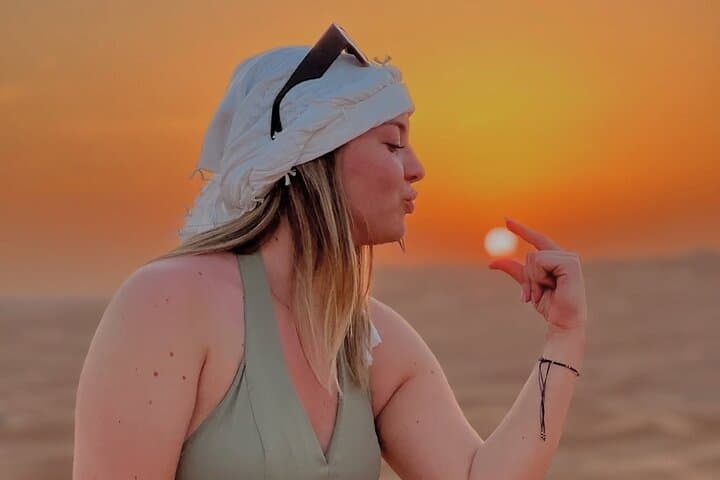
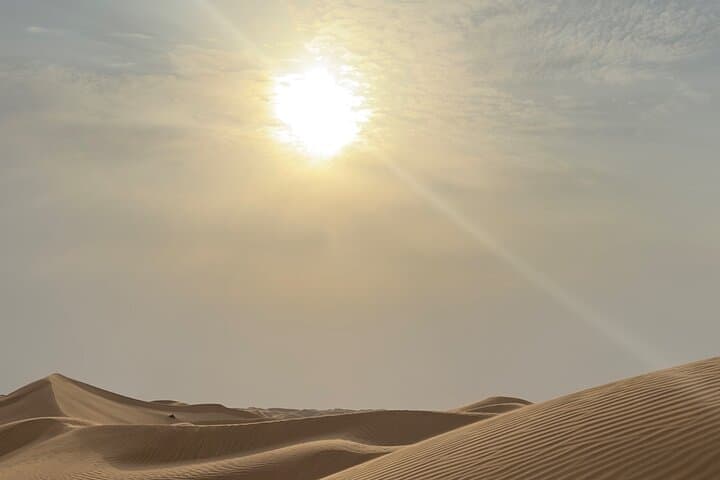
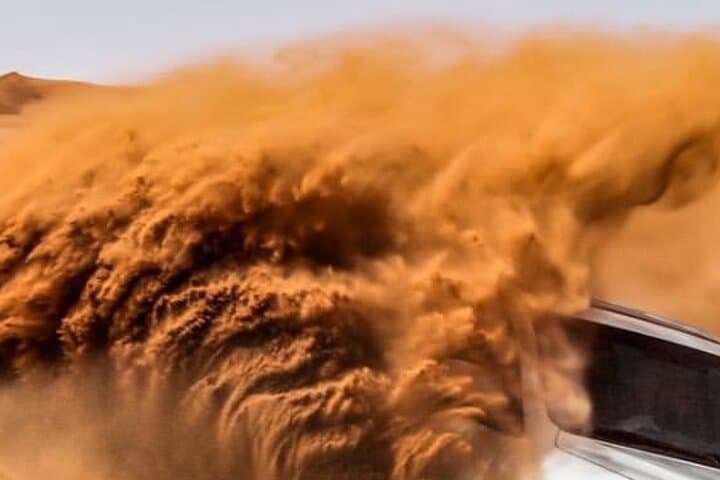
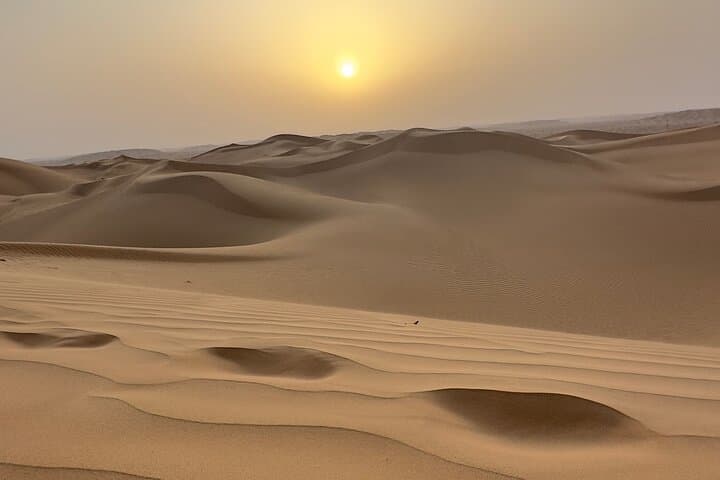
The sun leans low over Dhofar and the desert begins to change color—brassy gold at the dune crests, cool indigo in the wadi shadows. Your vehicle hums along gravel tracks while frankincense trees line a stony valley, their resin-scented bark pulling the eye toward a private tented camp parked where dunes give way to flat sand.
Verified experiences and guided adventures in the surrounding area.
Operated by Ciao Salalah · Salalah, Dhofar
The sun leans low over Dhofar and the desert begins to change color—brassy gold at the dune crests, cool indigo in the wadi shadows. Your vehicle hums along gravel tracks while frankincense trees line a stony valley, their resin-scented bark pulling the eye toward a private tented camp parked where dunes give way to flat sand.
This eight-hour private circuit links four distinct landscapes: Wadi Dawkah’s UNESCO frankincense groves (roughly 40 km north of Salalah), the agricultural and market town of Thumrait, the archaeological ruins of Wubar (the once-busy frankincense trading center), and the edge of the Empty Quarter where dunes can tower to several hundred meters. Geologically, Dhofar marks a transition from limestone plateaus to wind-sculpted sand; culturally it’s the cradle of the ancient frankincense trade and a living Bedouin hospitality tradition.
Expect short walks on uneven, stony ground in the wadi and softer, deeper sand among the dunes; elevation change is minimal but footing varies. At camp you'll sit on low cushions for local tea, coffee, snacks and a shared dinner—ask ahead about dietary needs and the small admission fee for Wubar (approx. 3 OMR).
Practical notes: plan for an 8-hour day with pickup from Salalah, bring 2–3 liters of water, sun protection, closed-toe shoes and a light layer for evening breeze. Respect frankincense trees and archaeological sites, follow guide instructions in dunes, and time your visit for sunset photography and clearer night skies—this is where the desert shows its most honest face.
moderate.
8 hours.
Light to moderate—suitable for most people who can handle short walks on uneven terrain and long vehicle drives.
Private tours typically include pickup and drop-off from Salalah hotels—confirm exact pickup location and time when booking.
Local options can be adapted; notify the operator ahead of time to arrange vegetarian or dietary-specific meals.
Infants and small children can ride in strollers and infant seats are available, but expect uneven ground at sites and in the wadi.
Public restroom facilities are limited; the tented camp will have basic amenities—plan accordingly and bring hand sanitizer.
Dhofar was the heart of the ancient frankincense trade that connected Arabia to Mediterranean and South Asian markets; Wubar and nearby caravan routes were key trading hubs.
Frankincense trees and archaeological sites are fragile—stay on marked paths, avoid carving or collecting resin, and pack out all trash.
Ciao Salalah operates guided outdoor trips and adventures with an emphasis on safety, stewardship, and memorable experiences.
The sun leans low over Dhofar and the desert begins to change color—brassy gold at the dune crests, cool indigo in the wadi shadows. Your vehicle hums along gravel tracks while frankincense trees line a stony valley, their resin-scented bark pulling the eye toward a private tented camp parked where dunes give way to flat sand.
The sun leans low over Dhofar and the desert begins to change color—brassy gold at the dune crests, cool indigo in the wadi shadows. Your vehicle hums along gravel tracks while frankincense trees line a stony valley, their resin-scented bark pulling the eye toward a private tented camp parked where dunes give way to flat sand.
This eight-hour private circuit links four distinct landscapes: Wadi Dawkah’s UNESCO frankincense groves (roughly 40 km north of Salalah), the agricultural and market town of Thumrait, the archaeological ruins of Wubar (the once-busy frankincense trading center), and the edge of the Empty Quarter where dunes can tower to several hundred meters. Geologically, Dhofar marks a transition from limestone plateaus to wind-sculpted sand; culturally it’s the cradle of the ancient frankincense trade and a living Bedouin hospitality tradition.
Expect short walks on uneven, stony ground in the wadi and softer, deeper sand among the dunes; elevation change is minimal but footing varies. At camp you'll sit on low cushions for local tea, coffee, snacks and a shared dinner—ask ahead about dietary needs and the small admission fee for Wubar (approx. 3 OMR).
Practical notes: plan for an 8-hour day with pickup from Salalah, bring 2–3 liters of water, sun protection, closed-toe shoes and a light layer for evening breeze. Respect frankincense trees and archaeological sites, follow guide instructions in dunes, and time your visit for sunset photography and clearer night skies—this is where the desert shows its most honest face.