THE ADVENTURE COLLECTIVE® · Independent discovery and booking for outdoor travel

Ride a camel around the Great Pyramids at sunset, then settle into a desert BBQ beneath the stars. This accessible 5‑hour outing pairs close-up pyramid views with local food and storytelling.
Ride a camel around the Great Pyramids at sunset, then settle into a desert BBQ beneath the stars. This accessible 5‑hour outing pairs close-up pyramid views with local food and storytelling.
Golden light pours across the Giza Plateau as camels step out onto ripple-sculpted sand and the three pyramids cut low and geometric against the sky. The tour places travelers on a slow, swaying seat—camelback—so they can circle the base of Khufu, Khafre and Menkaure and watch stone faces alter with the sun.
Verified experiences and guided adventures in the surrounding area.
Operated by Visitors Egypt Tours · Giza, Cairo Governorate
Golden light pours across the Giza Plateau as camels step out onto ripple-sculpted sand and the three pyramids cut low and geometric against the sky. The tour places travelers on a slow, swaying seat—camelback—so they can circle the base of Khufu, Khafre and Menkaure and watch stone faces alter with the sun.
These monuments date to roughly 4,500 years ago and were built as royal tombs atop the edge of the ancient Nile floodplain; the plateau’s limestone and bedrock give the pyramids their raw, stony profile. Local camel handlers and guides are part interpreter, part storyteller: they orient riders to pyramid orientation, point out the Sphinx and often lead to quieter viewing bluffs away from the busiest lookout.
After the ride, the experience shifts from motion to stillness—a small desert dinner camp where charcoal grills crackle and a simple barbecue of kofta, chicken and bread is served while the sky goes dark.
Practicalities: tours run about five hours door-to-door, with roughly 30–45 minutes of camel riding across mostly flat sandy terrain (minimal elevation gain). Wear closed-toe shoes for walking on grit, a hat and high-SPF sunscreen; bring at least 1–1.5 liters of water. Sunset bookings are best for photography and cooler temperatures; morning options avoid the crowds but can be hot.
Respect local customs: ask before photographing handlers or children and keep to designated paths to reduce erosion. The outing mixes archaeology, mild adventure and a convivial desert night—accessible to most travelers who can mount a camel and tolerate gentle movement.
easy.
5 hours.
Suitable for most travelers in average fitness; must be able to mount a camel and tolerate gentle motion for up to an hour.
Camel riding portions typically last about 30–45 minutes, woven into a 5‑hour door-to-door tour that includes transport and dinner.
The activity is family-friendly but not recommended for pregnant travelers or those with recent spinal injuries; follow operator restrictions.
Most operators offer basic grilled options and can often accommodate common requests if notified at booking—use the special requirements field.
Yes—private, air‑conditioned transport with hotel pickup and drop‑off is included in the advertised tour.
The Giza pyramids were constructed as Old Kingdom royal tombs around 2600–2500 BCE; Khufu’s pyramid was the tallest human-made structure for millennia.
High visitor numbers and erosion risk have prompted managed routes and restricted access—stick to paths and follow guides to minimize impact.
Visitors Egypt Tours operates guided outdoor trips and adventures with an emphasis on safety, stewardship, and memorable experiences.
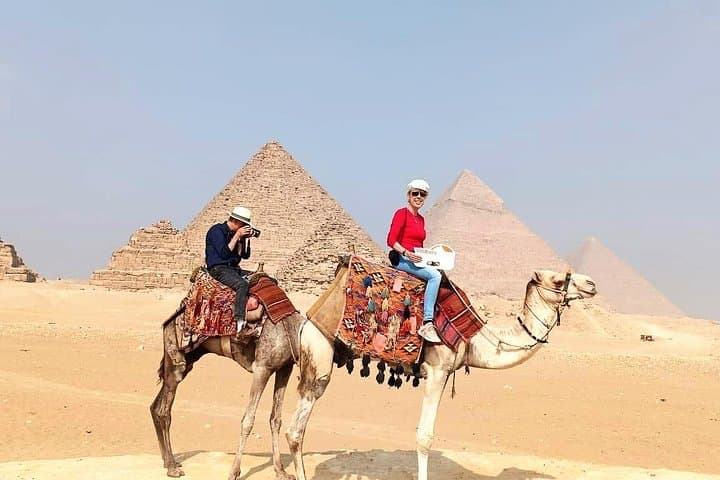
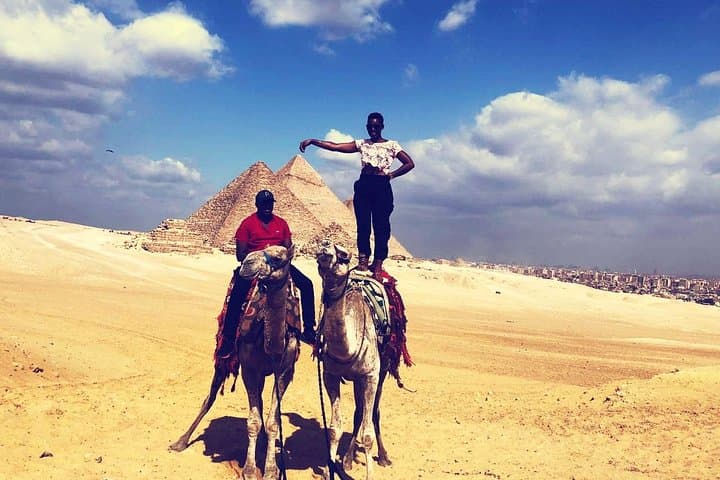
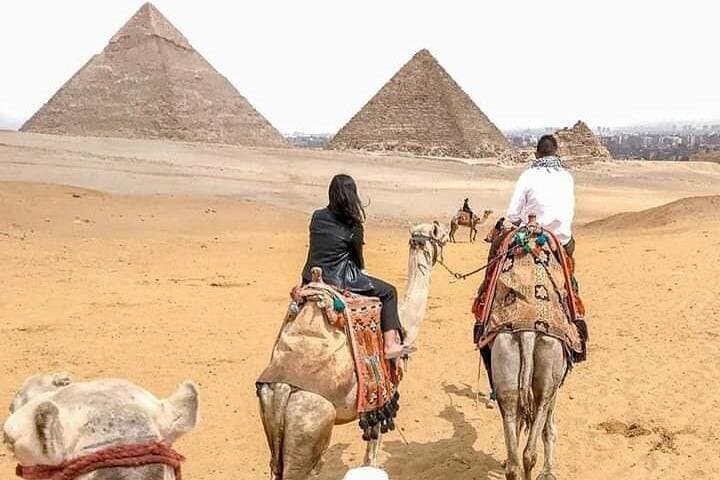
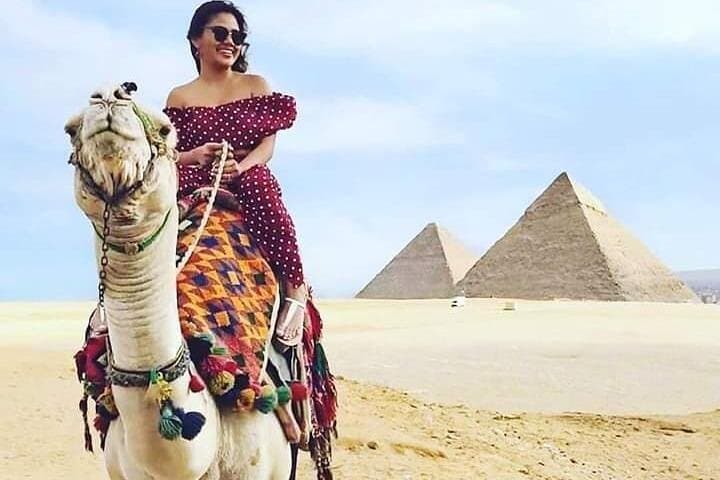
Golden light pours across the Giza Plateau as camels step out onto ripple-sculpted sand and the three pyramids cut low and geometric against the sky. The tour places travelers on a slow, swaying seat—camelback—so they can circle the base of Khufu, Khafre and Menkaure and watch stone faces alter with the sun.
Golden light pours across the Giza Plateau as camels step out onto ripple-sculpted sand and the three pyramids cut low and geometric against the sky. The tour places travelers on a slow, swaying seat—camelback—so they can circle the base of Khufu, Khafre and Menkaure and watch stone faces alter with the sun.
These monuments date to roughly 4,500 years ago and were built as royal tombs atop the edge of the ancient Nile floodplain; the plateau’s limestone and bedrock give the pyramids their raw, stony profile. Local camel handlers and guides are part interpreter, part storyteller: they orient riders to pyramid orientation, point out the Sphinx and often lead to quieter viewing bluffs away from the busiest lookout.
After the ride, the experience shifts from motion to stillness—a small desert dinner camp where charcoal grills crackle and a simple barbecue of kofta, chicken and bread is served while the sky goes dark.
Practicalities: tours run about five hours door-to-door, with roughly 30–45 minutes of camel riding across mostly flat sandy terrain (minimal elevation gain). Wear closed-toe shoes for walking on grit, a hat and high-SPF sunscreen; bring at least 1–1.5 liters of water. Sunset bookings are best for photography and cooler temperatures; morning options avoid the crowds but can be hot.
Respect local customs: ask before photographing handlers or children and keep to designated paths to reduce erosion. The outing mixes archaeology, mild adventure and a convivial desert night—accessible to most travelers who can mount a camel and tolerate gentle movement.