THE ADVENTURE COLLECTIVE® · Independent discovery and booking for outdoor travel

Ride a camel around the Giza Plateau at sunset, then linger over a desert BBQ as the pyramids silhouette the sky. An easy but sensory-rich evening that combines light riding, local stories, and grilled dinner under open air.
Ride a camel around the Giza Plateau at sunset, then linger over a desert BBQ as the pyramids silhouette the sky. An easy but sensory-rich evening that combines light riding, local stories, and grilled dinner under open air.
A low sun bleeds gold across the desert and the pyramids throw long, sharp silhouettes. You climb slowly onto a camel’s back; the animal rises with a careful, rhythmic heave that sets the evening’s pulse. Riding around the Giza Plateau at sunset feels like moving through a shifting map—sand drifts, stony causeways, and the three main pyramids framing the skyline like ancient guardians.
Verified experiences and guided adventures in the surrounding area.
Operated by Visitors Egypt Tours · Giza, Cairo Governorate
A low sun bleeds gold across the desert and the pyramids throw long, sharp silhouettes. You climb slowly onto a camel’s back; the animal rises with a careful, rhythmic heave that sets the evening’s pulse. Riding around the Giza Plateau at sunset feels like moving through a shifting map—sand drifts, stony causeways, and the three main pyramids framing the skyline like ancient guardians.
This route crosses layers of human history: the Fourth Dynasty’s massive stonework, the limestone ridges shaped by the Nile’s ancient floodplain, and the continuing Bedouin presence that has long read the desert for water and shelter. Geologically, you’re on a plateau of Eocene limestone capped by wind-swept sand; the ground can be firm near pathways and soft in open areas. Cultural notes: local guides share stories of Khufu and Khafre, and small roadside stalls often sell chai and grilled snacks.
Practically, expect 4–5 hours including hotel pickup, a guided camel circuit timed for sunset, and a barbecue dinner of grilled meats and salads. Temperatures drop quickly after dusk—bring layered clothing. Footwear should protect from sand and uneven footing; cameras need straps for stability. Respect signage: climbing pyramids is prohibited and damages both stone and the visitor experience.
This outing balances easy physical demand with heat and uneven terrain; it’s immersive, photogenic, and rooted in millennia of human presence. With a knowledgeable guide, it’s suitable for first-time camel riders who want a compact evening adventure outside central Cairo.
moderate.
4–5 hours.
Suitable for most travelers in light to moderate fitness; ability to mount a camel and manage short walks helps.
No. Guides brief guests on mounting and riding; the pace is gentle and suitable for beginners.
Yes, but infants must sit on an adult’s lap and operators may set age or weight limits for safety.
Vegetarian and poultry options are usually available—mention dietary needs when booking.
Absolutely; sunset provides excellent light and the tour includes stops for photos, but follow guide instructions for safety around camels.
The Giza Pyramids date to the Fourth Dynasty (circa 2600–2500 BCE), built as monumental tombs for pharaohs like Khufu, Khafre, and Menkaure.
The plateau is sensitive to foot and vehicle erosion; stick to designated paths, avoid climbing monuments, and follow guide instructions to reduce impact.
Visitors Egypt Tours operates guided outdoor trips and adventures with an emphasis on safety, stewardship, and memorable experiences.
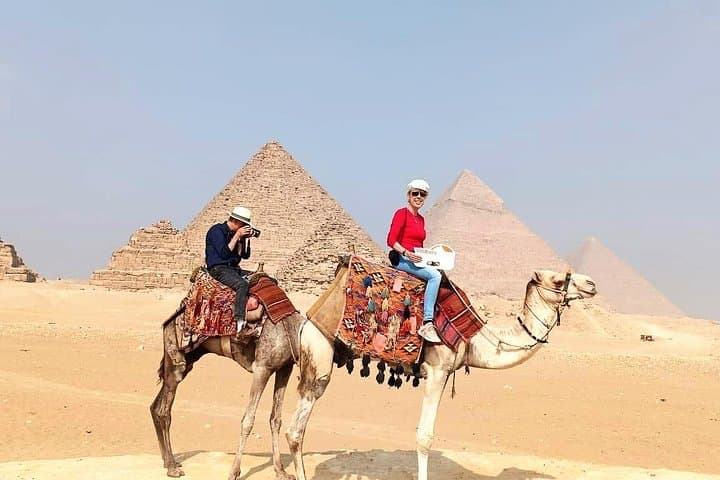
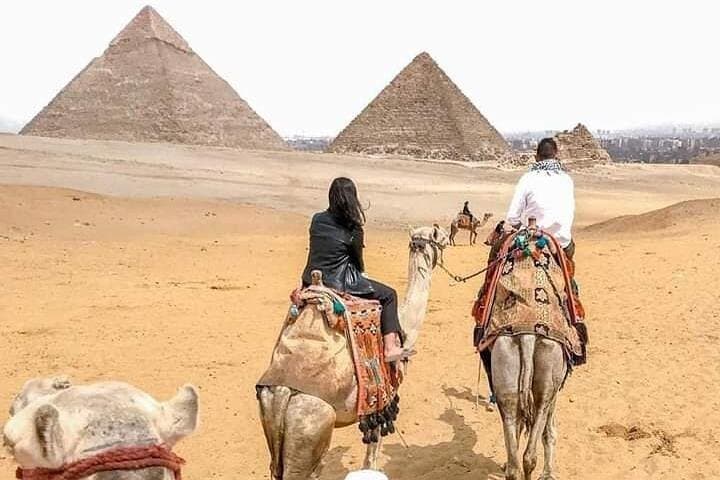
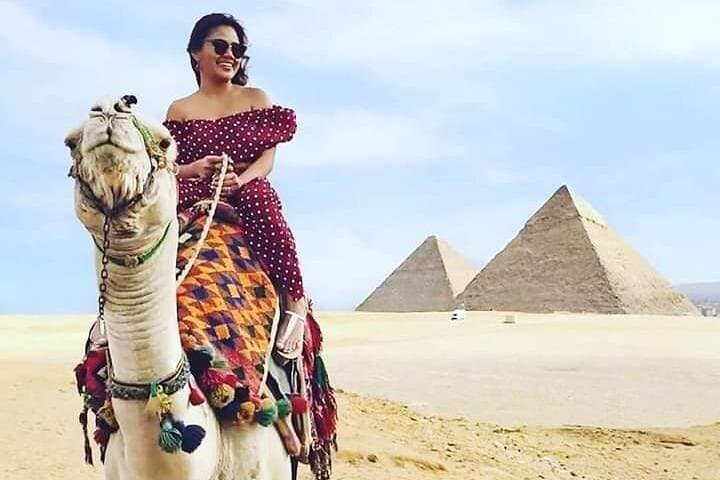
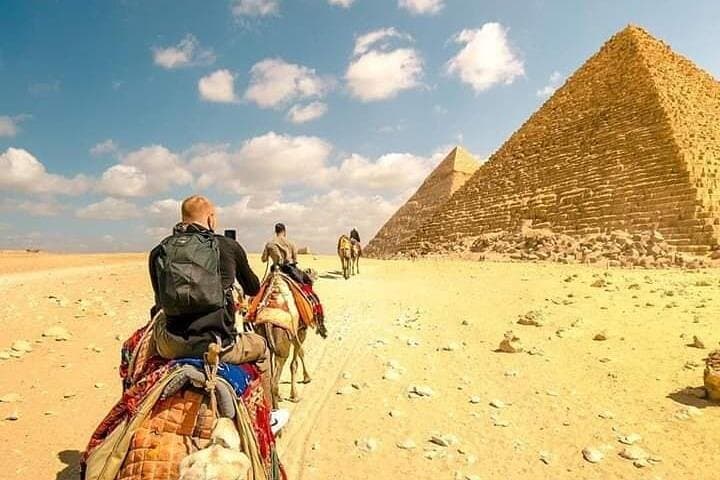
A low sun bleeds gold across the desert and the pyramids throw long, sharp silhouettes. You climb slowly onto a camel’s back; the animal rises with a careful, rhythmic heave that sets the evening’s pulse. Riding around the Giza Plateau at sunset feels like moving through a shifting map—sand drifts, stony causeways, and the three main pyramids framing the skyline like ancient guardians.
A low sun bleeds gold across the desert and the pyramids throw long, sharp silhouettes. You climb slowly onto a camel’s back; the animal rises with a careful, rhythmic heave that sets the evening’s pulse. Riding around the Giza Plateau at sunset feels like moving through a shifting map—sand drifts, stony causeways, and the three main pyramids framing the skyline like ancient guardians.
This route crosses layers of human history: the Fourth Dynasty’s massive stonework, the limestone ridges shaped by the Nile’s ancient floodplain, and the continuing Bedouin presence that has long read the desert for water and shelter. Geologically, you’re on a plateau of Eocene limestone capped by wind-swept sand; the ground can be firm near pathways and soft in open areas. Cultural notes: local guides share stories of Khufu and Khafre, and small roadside stalls often sell chai and grilled snacks.
Practically, expect 4–5 hours including hotel pickup, a guided camel circuit timed for sunset, and a barbecue dinner of grilled meats and salads. Temperatures drop quickly after dusk—bring layered clothing. Footwear should protect from sand and uneven footing; cameras need straps for stability. Respect signage: climbing pyramids is prohibited and damages both stone and the visitor experience.
This outing balances easy physical demand with heat and uneven terrain; it’s immersive, photogenic, and rooted in millennia of human presence. With a knowledgeable guide, it’s suitable for first-time camel riders who want a compact evening adventure outside central Cairo.