THE ADVENTURE COLLECTIVE® · Independent discovery and booking for outdoor travel

Ride a line of camels along Agadir’s broad Atlantic beach as the sun drops behind the distant Atlas foothills. This guided, roughly two-hour experience pairs coastal views with an accessible camel trek and included snacks—ideal for travelers seeking a relaxed sunset outing.
Ride a line of camels along Agadir’s broad Atlantic beach as the sun drops behind the distant Atlas foothills. This guided, roughly two-hour experience pairs coastal views with an accessible camel trek and included snacks—ideal for travelers seeking a relaxed sunset outing.
The sun slides low over the Atlantic and the long curve of Agadir Beach takes on a liquid gold edge. Riders mount patiently swaying camels on the wet sand as the sea, cool and insistent, nudges at the shoreline. Guides fit a novice into the saddle, give a few steadying cues, then the column ambles away from the promenade toward open beach and distant mountains.
Verified experiences and guided adventures in the surrounding area.
Operated by Marrakechandcasablancatours · Agadir, Souss-Massa
The sun slides low over the Atlantic and the long curve of Agadir Beach takes on a liquid gold edge. Riders mount patiently swaying camels on the wet sand as the sea, cool and insistent, nudges at the shoreline. Guides fit a novice into the saddle, give a few steadying cues, then the column ambles away from the promenade toward open beach and distant mountains.
Camels have been part of Morocco’s transport network for centuries — beasts of burden on Berber trade routes that adapted well to long, dry runs. Geologically the coast here is a broad, sandy littoral with backed dunes and a shallow continental shelf; the nearby Anti-Atlas throws a low, rocky silhouette when the light is right. Culturally, the beach is where Agadir’s fishing-town rhythms meet tourist gatherings: you’ll spot fishermen repairing nets, vendors near the marina, and the Kasbah viewpoint rising above the city’s rebuilt grid after the 1960 quake.
Practical guidance: the advertised experience runs about two hours, with roughly one hour in the saddle and transfers provided in air‑conditioned vehicles. It’s suitable for most people with moderate fitness but not recommended for pregnant travelers or those with spinal or serious cardiac issues. Bring closed-toe shoes for mounting, sun protection, and a small bottle of water; arrive in time to learn basic handling from the guide and to let the last light frame the ride. Respect the animals—follow the guides’ instructions, avoid sudden movements, and keep to the shoreline paths to limit dune erosion.
easy.
2 hours.
Expect light physical activity: mounting and staying balanced on a camel for roughly an hour; a moderate level of fitness is recommended.
The total activity lasts about two hours, with roughly one hour allocated to the camel ride itself; transfers and briefing make up the remainder.
Children can usually participate but must be supervised; age and weight limits may apply—check with the operator at booking.
The tour lists snacks as included and air‑conditioned transport; if a BBQ is part of the session it will be noted by the operator—confirm at booking.
Guides are experienced handlers and riders are taught how to mount and sit; follow the guides’ directions and avoid feeding or startling the animals.
Agadir was a key regional port; camels historically moved goods along Berber routes and remain a cultural icon in Moroccan coastal and desert communities.
Stay on established beach paths and avoid trampling dune vegetation; do not feed the camels and take all trash with you to reduce impacts on shoreline habitats.
Marrakechandcasablancatours operates guided outdoor trips and adventures with an emphasis on safety, stewardship, and memorable experiences.
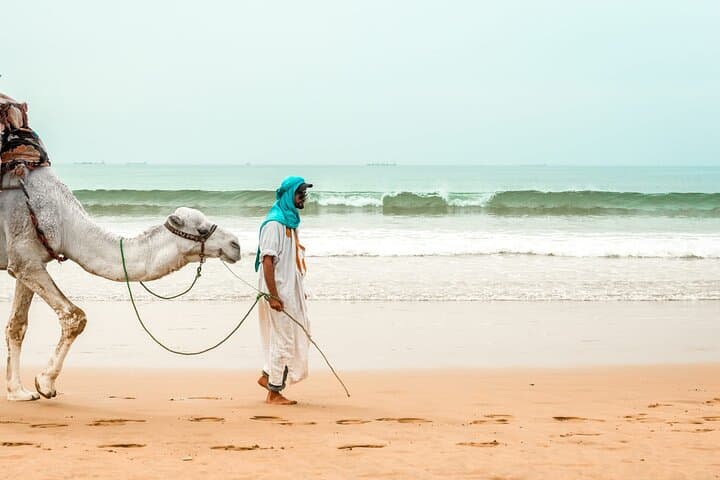
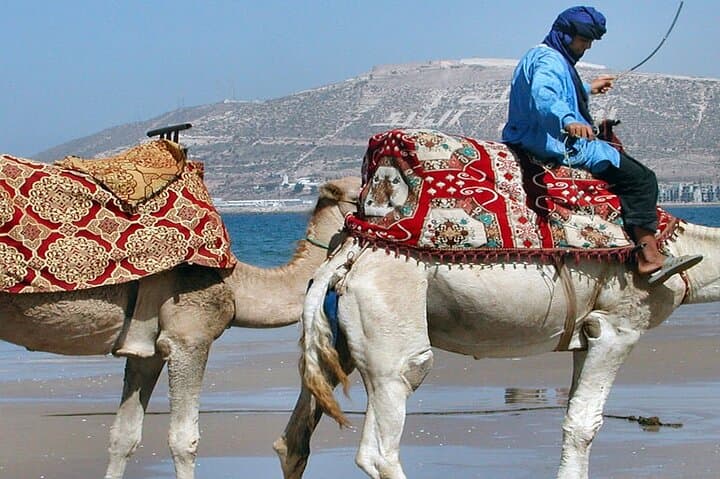
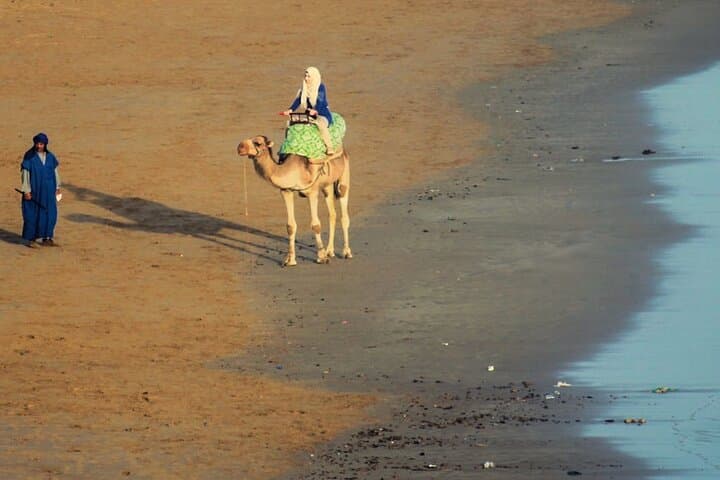
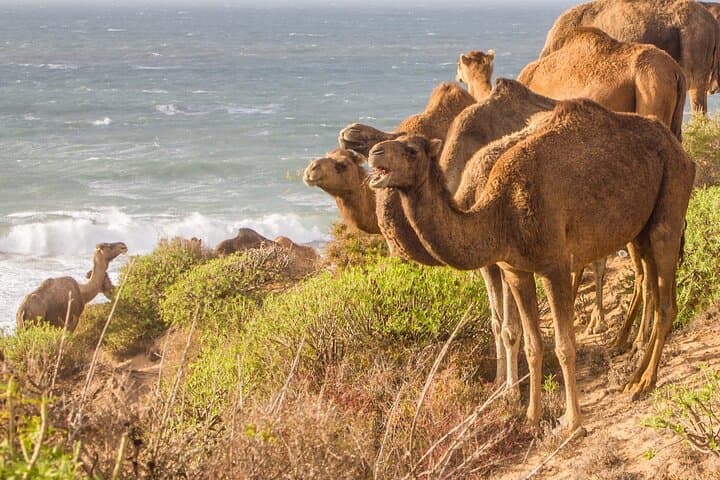
The sun slides low over the Atlantic and the long curve of Agadir Beach takes on a liquid gold edge. Riders mount patiently swaying camels on the wet sand as the sea, cool and insistent, nudges at the shoreline. Guides fit a novice into the saddle, give a few steadying cues, then the column ambles away from the promenade toward open beach and distant mountains.
The sun slides low over the Atlantic and the long curve of Agadir Beach takes on a liquid gold edge. Riders mount patiently swaying camels on the wet sand as the sea, cool and insistent, nudges at the shoreline. Guides fit a novice into the saddle, give a few steadying cues, then the column ambles away from the promenade toward open beach and distant mountains.
Camels have been part of Morocco’s transport network for centuries — beasts of burden on Berber trade routes that adapted well to long, dry runs. Geologically the coast here is a broad, sandy littoral with backed dunes and a shallow continental shelf; the nearby Anti-Atlas throws a low, rocky silhouette when the light is right. Culturally, the beach is where Agadir’s fishing-town rhythms meet tourist gatherings: you’ll spot fishermen repairing nets, vendors near the marina, and the Kasbah viewpoint rising above the city’s rebuilt grid after the 1960 quake.
Practical guidance: the advertised experience runs about two hours, with roughly one hour in the saddle and transfers provided in air‑conditioned vehicles. It’s suitable for most people with moderate fitness but not recommended for pregnant travelers or those with spinal or serious cardiac issues. Bring closed-toe shoes for mounting, sun protection, and a small bottle of water; arrive in time to learn basic handling from the guide and to let the last light frame the ride. Respect the animals—follow the guides’ instructions, avoid sudden movements, and keep to the shoreline paths to limit dune erosion.