THE ADVENTURE COLLECTIVE® · Independent discovery and booking for outdoor travel

Ride a dromedary through Marrakech’s Palmeraie at golden hour and watch the palm grove light up as the city’s heat softens. This two-hour, small-group tour blends cultural touches with easy terrain—ideal for first-timers and families.
Ride a dromedary through Marrakech’s Palmeraie at golden hour and watch the palm grove light up as the city’s heat softens. This two-hour, small-group tour blends cultural touches with easy terrain—ideal for first-timers and families.
The late-afternoon sun thins to gold as your guide leads a patient dromedary out between tall date palms; dust lifts in slow ribbons and the palm grove exhales heat that smells faintly of earth and fruit.
Verified experiences and guided adventures in the surrounding area.
Operated by Sun Quad Aventure · Marrakech, Marrakech-Safi
The late-afternoon sun thins to gold as your guide leads a patient dromedary out between tall date palms; dust lifts in slow ribbons and the palm grove exhales heat that smells faintly of earth and fruit.
The Palmeraie at Marrakech is an irrigated oasis on the city’s edge, grown over centuries with traditional wells and irrigation channels that supported local agriculture and the routes of desert travelers. Geologically the area is on the Haouz plain—a flat, fertile basin ringed by the High Atlas—so the trail is mostly sandy tracks and compacted earth, broken by the occasional dry rivulet.
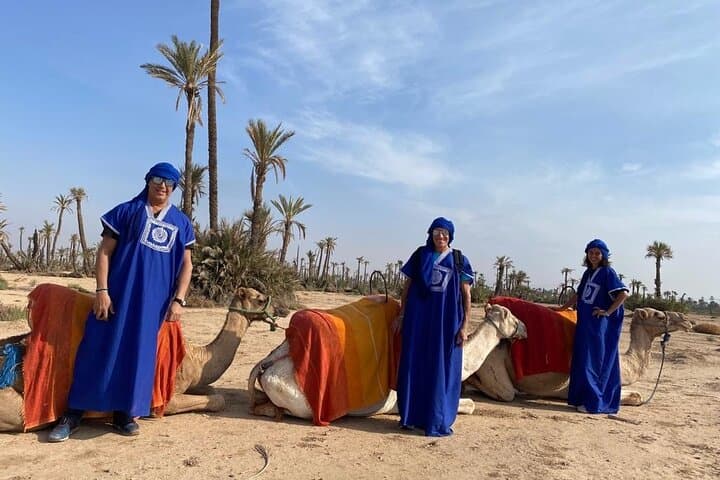
Culturally, camel riding evokes the Tuareg and Berber transport traditions: the animals are dromedaries, single-humped and adapted to slow, steady travel. Small-group private tours often include traditional dress (cheich and gandora) and short explanations of local Bedouin practices.
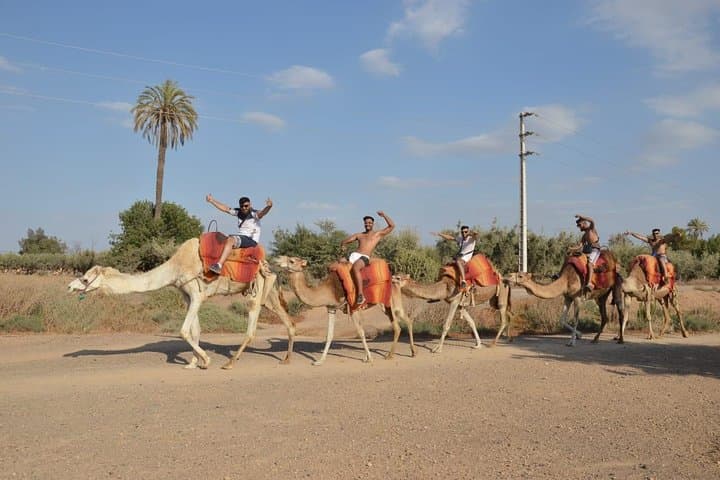
Practically, the route is easy terrain with minimal elevation change and a relaxed two-hour rhythm—suitable for families and first-time riders. Expect uneven footing when mounting and dismounting; sunscreen, a brimmed hat, and a light scarf help with dust and sun. Guides provide brief safety instruction and will pace the caravan for photos at sunset.
Respect for animals and cultural sensitivity matter: choose operators who treat camels humanely, avoid feeding or startling them, and follow local advice about where to walk. Timing around golden hour gives the best light and cooler temperatures; morning departures can be quieter. Whether you’re after a cultural snapshot or a soft desert silence, the Palmeraie camel ride is an accessible way to feel the slow, old pace of Moroccan desert travel.
easy.
2 hours.
Suitable for most fitness levels—able to mount/stand for short periods and walk on uneven ground.
The activity is typically two hours total, including transfer and a guided camel loop through the Palmeraie; riding time is about 45–75 minutes depending on the operator.
Children can usually ride with parental supervision, but camel riding is not recommended for pregnant travelers or those with serious back/heart conditions—check health guidelines before booking.
No prior camel-riding experience is required; guides offer basic instruction and lead the dromedaries at a slow, steady pace.
Late afternoon into sunset gives the best light and cooler temperatures; early morning is a good quieter option to avoid heat.
The Palmeraie developed as an irrigated palm oasis on the Haouz plain, sustained by traditional water channels and long-used by caravan routes and local agriculture.
Water use and overdevelopment strain the oasis; choose licensed operators that practice humane camel care and support local communities to reduce impact.
Sun Quad Aventure operates guided outdoor trips and adventures with an emphasis on safety, stewardship, and memorable experiences.
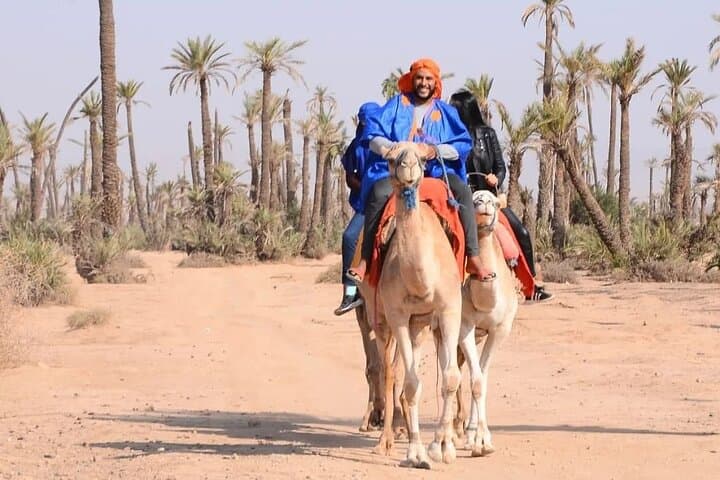
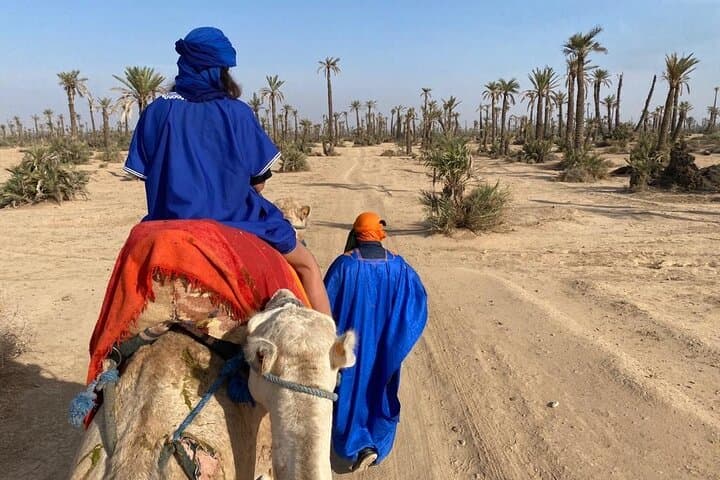
The late-afternoon sun thins to gold as your guide leads a patient dromedary out between tall date palms; dust lifts in slow ribbons and the palm grove exhales heat that smells faintly of earth and fruit.
The late-afternoon sun thins to gold as your guide leads a patient dromedary out between tall date palms; dust lifts in slow ribbons and the palm grove exhales heat that smells faintly of earth and fruit.
The Palmeraie at Marrakech is an irrigated oasis on the city’s edge, grown over centuries with traditional wells and irrigation channels that supported local agriculture and the routes of desert travelers. Geologically the area is on the Haouz plain—a flat, fertile basin ringed by the High Atlas—so the trail is mostly sandy tracks and compacted earth, broken by the occasional dry rivulet.
Culturally, camel riding evokes the Tuareg and Berber transport traditions: the animals are dromedaries, single-humped and adapted to slow, steady travel. Small-group private tours often include traditional dress (cheich and gandora) and short explanations of local Bedouin practices.
Practically, the route is easy terrain with minimal elevation change and a relaxed two-hour rhythm—suitable for families and first-time riders. Expect uneven footing when mounting and dismounting; sunscreen, a brimmed hat, and a light scarf help with dust and sun. Guides provide brief safety instruction and will pace the caravan for photos at sunset.
Respect for animals and cultural sensitivity matter: choose operators who treat camels humanely, avoid feeding or startling them, and follow local advice about where to walk. Timing around golden hour gives the best light and cooler temperatures; morning departures can be quieter. Whether you’re after a cultural snapshot or a soft desert silence, the Palmeraie camel ride is an accessible way to feel the slow, old pace of Moroccan desert travel.