THE ADVENTURE COLLECTIVE® · Independent discovery and booking for outdoor travel

Ride a camel through Marrakech’s Palmeraie at sunset and visit a Berber home for mint tea—an accessible 2-hour outing that pairs cultural insight with a calm, sunlit trek through one of Morocco’s largest palm oases.
Ride a camel through Marrakech’s Palmeraie at sunset and visit a Berber home for mint tea—an accessible 2-hour outing that pairs cultural insight with a calm, sunlit trek through one of Morocco’s largest palm oases.
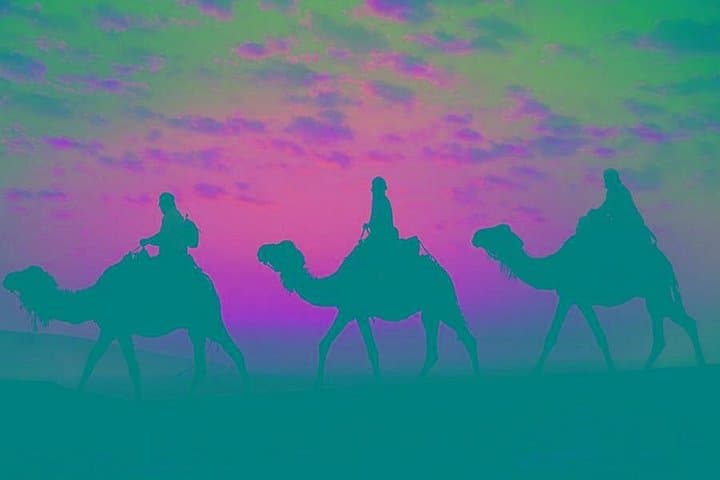
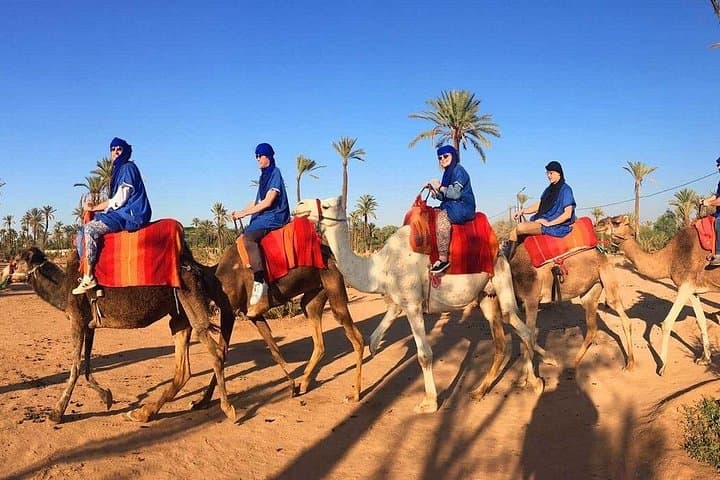
The sun leans low over the Palmeraie, and long shadows thread between rows of date palms as your camel rises and falls with a slow, disciplined rhythm. You leave the red city’s tile and market clamor behind for a quieter landscape—an irrigated palm grove that edges the Sahara’s reach and frames a sunset that burns the sky copper.
Verified experiences and guided adventures in the surrounding area.
Operated by Marrakech day trip · Marrakech, Marrakech-Safi
The sun leans low over the Palmeraie, and long shadows thread between rows of date palms as your camel rises and falls with a slow, disciplined rhythm. You leave the red city’s tile and market clamor behind for a quieter landscape—an irrigated palm grove that edges the Sahara’s reach and frames a sunset that burns the sky copper.
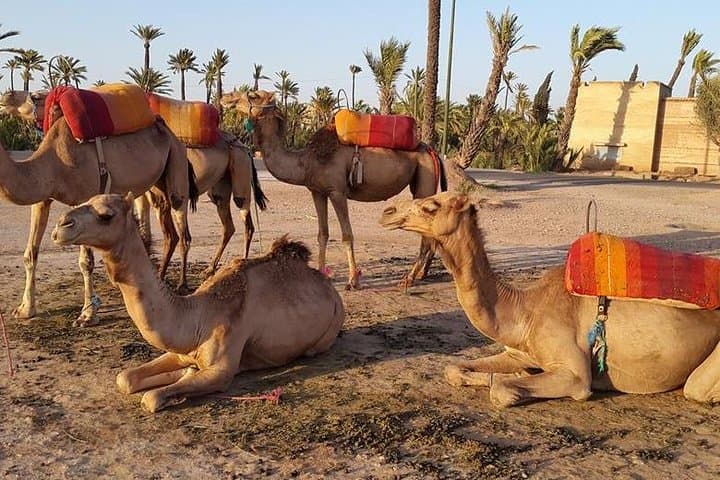
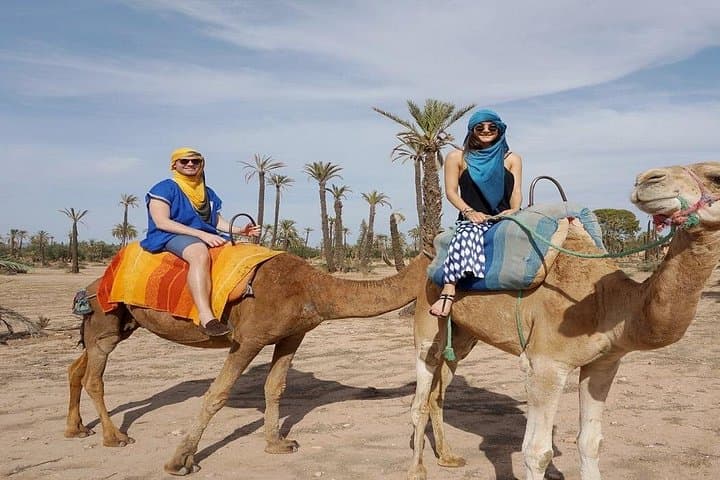
The Palmeraie is an ancient oasis shaped by human hands and groundwater: palms planted and tended for generations to supply shade, fruit and windbreaks. The camel—central to Moroccan trade and travel—carries you along sandy tracks and between scrubby dunes; guides will often explain local Berber customs and point out irrigation wells and the faint ruins of older kasbahs visible from the grove.
Before the ride, a visit to a Berber family home introduces local hospitality over steaming mint tea and conversation about daily life in Marrakech-Safi. Culturally, this pairing—home visit then ride—ties the city to its rural outskirts and underlines the region’s reliance on scarce water and traditional pastoralism.
Practical guidance: rides last roughly an hour and are approachable for most travelers—camel handlers brief riders on mounting and balance. Wear closed-toe shoes, bring 1–1.5 liters of water, sun protection and a lightweight layer for the cool post-sunset breeze. Cameras are encouraged, but keep straps secured: camel movement is deliberate but unpredictable.
Timing matters—arrive 45 minutes before sunset for best light and to meet the animals. Be mindful of local customs during the home visit, follow your guide’s instructions around animals, and pack out any trash to help preserve this fragile oasis.
easy.
2 hours.
Suitable for most fitness levels; must be able to climb onto a camel seat and hold balance for ~60 minutes.
The advertised camel ride is approximately one hour within a 2-hour total tour including hotel transfer and a Berber home visit.
Yes—operators state the ride is suitable for most ages, but children must be accompanied by an adult and those with serious back or mobility issues should avoid it.
Yes—hotel pickup and drop-off in Marrakech are included, typically by air-conditioned minivan; confirm exact pickup time when booking.
Dress modestly—cover shoulders and knees out of respect; remove shoes if requested and accept tea when offered.
The Palmeraie developed as a managed oasis over centuries, combining natural groundwater with human-planted date palms; camels have long linked Marrakech to trade routes and rural life.
Water is a limiting resource—choose operators who minimize waste, avoid single-use plastics, and respect animal welfare by using licensed, humane camel handlers.
Marrakech day trip operates guided outdoor trips and adventures with an emphasis on safety, stewardship, and memorable experiences.
The sun leans low over the Palmeraie, and long shadows thread between rows of date palms as your camel rises and falls with a slow, disciplined rhythm. You leave the red city’s tile and market clamor behind for a quieter landscape—an irrigated palm grove that edges the Sahara’s reach and frames a sunset that burns the sky copper.
The sun leans low over the Palmeraie, and long shadows thread between rows of date palms as your camel rises and falls with a slow, disciplined rhythm. You leave the red city’s tile and market clamor behind for a quieter landscape—an irrigated palm grove that edges the Sahara’s reach and frames a sunset that burns the sky copper.
The Palmeraie is an ancient oasis shaped by human hands and groundwater: palms planted and tended for generations to supply shade, fruit and windbreaks. The camel—central to Moroccan trade and travel—carries you along sandy tracks and between scrubby dunes; guides will often explain local Berber customs and point out irrigation wells and the faint ruins of older kasbahs visible from the grove.
Before the ride, a visit to a Berber family home introduces local hospitality over steaming mint tea and conversation about daily life in Marrakech-Safi. Culturally, this pairing—home visit then ride—ties the city to its rural outskirts and underlines the region’s reliance on scarce water and traditional pastoralism.
Practical guidance: rides last roughly an hour and are approachable for most travelers—camel handlers brief riders on mounting and balance. Wear closed-toe shoes, bring 1–1.5 liters of water, sun protection and a lightweight layer for the cool post-sunset breeze. Cameras are encouraged, but keep straps secured: camel movement is deliberate but unpredictable.
Timing matters—arrive 45 minutes before sunset for best light and to meet the animals. Be mindful of local customs during the home visit, follow your guide’s instructions around animals, and pack out any trash to help preserve this fragile oasis.