THE ADVENTURE COLLECTIVE® · Independent discovery and booking for outdoor travel

Ride a camel into the Wadi Rum sunset with a private Bedouin guide—two hours of red dunes, rock arches and evening tea. This intimate tour pairs easy riding with cultural insight and dramatic golden-hour photography.
Ride a camel into the Wadi Rum sunset with a private Bedouin guide—two hours of red dunes, rock arches and evening tea. This intimate tour pairs easy riding with cultural insight and dramatic golden-hour photography.
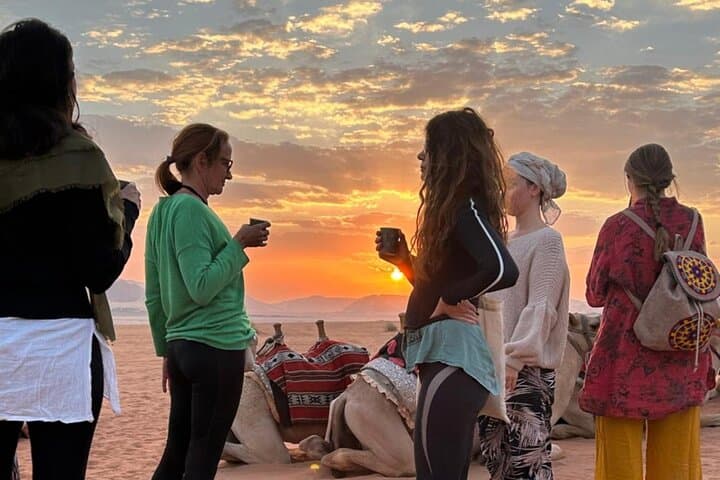
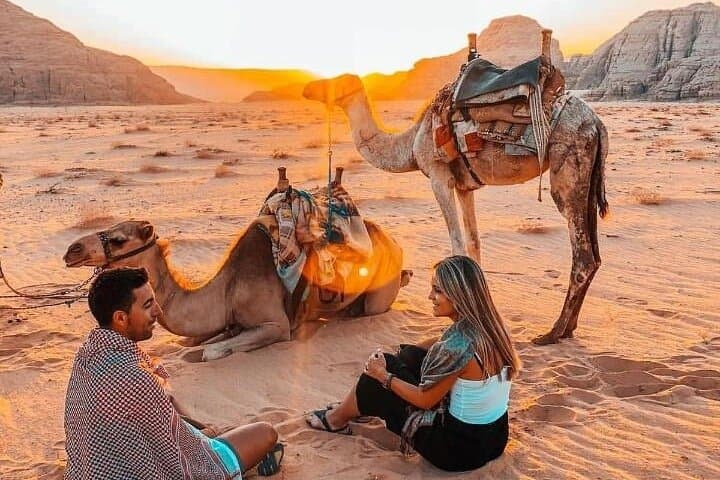
The sun hangs low and molten over the eastern horizon, and the sand answers in long, burnished strokes of orange and red. You climb into the slow, rhythmic world of the camel—its breath steady, its gait a patient metronome—and fall into line behind your Bedouin guide. For two hours the desert sets the pace: stony ridgelines, sculpted sandstone towers and broad, wind-polished flats that seem to breathe as the light changes.
Verified experiences and guided adventures in the surrounding area.
Operated by Enjoy Wadi Rum Bedouin Tours · Wadi Rum Village, Aqaba Governorate
The sun hangs low and molten over the eastern horizon, and the sand answers in long, burnished strokes of orange and red. You climb into the slow, rhythmic world of the camel—its breath steady, its gait a patient metronome—and fall into line behind your Bedouin guide. For two hours the desert sets the pace: stony ridgelines, sculpted sandstone towers and broad, wind-polished flats that seem to breathe as the light changes.
Wadi Rum is geography made visible. Its steep sandstone and granite shoulders were carved across eons—ripples of ancient seas, then tectonic lifts—so that every valley shows a different chapter of time. The area has been traversed by Nabatean traders, shepherds, and, in more modern lore, by T.E. Lawrence, whose journey here cemented Wadi Rum’s cinematic reputation: the rocks, often mistaken for another planet, framed Hollywood productions long before Instagram found them.
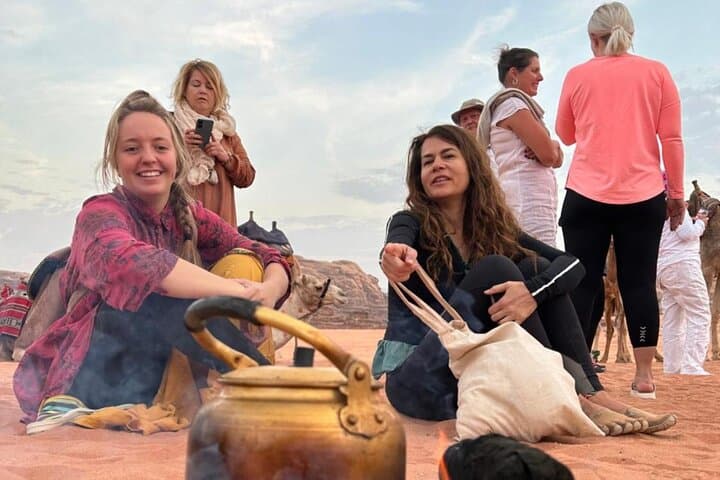
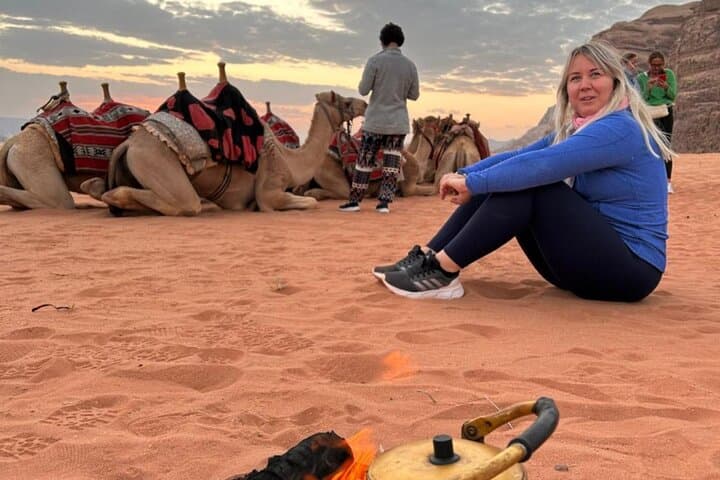
The camel itself is part of that human story. For Bedouin communities the animal is an old-fashioned utility and companion—“the ship of the desert”—able to carry visitors across soft dunes and between rocky outcrops with a quiet reliability that motorized transport cannot match. Your private guide won’t just lead the camels; he’ll point out faded inscriptions, explain seasonal wells, and pour steaming Bedouin tea as the light goes thin and blue.
Practicalities that keep the moment real: tours start roughly two hours before sunset, when temperatures dip and the desert’s palette deepens. The meeting point is Wadi Rum Village parking—accessible by private car or arranged airport transfer from Aqaba or Amman. The ride itself is low-impact: suitable for nearly all fitness levels, though mounting and dismounting a camel take a moment of balance. Bring layered clothing—the temperature drops quickly after sundown—plus sun protection, plenty of water, and a camera with a fast lens for silhouette shots.
Respect matters here. Stick to your guide’s route to protect fragile crust and archaeological sites; avoid leaving litter or taking rock samples. A modest tip and attention to local etiquette—follow the guide’s lead when offered tea, ask before photographing people—go a long way.
This is a short, elemental encounter with Wadi Rum: a private window onto desert rhythms, Bedouin hospitality, and geology that reads like a slow-motion story. Two hours of walking camels, a shared cup of tea, and the sky closing in with color—none of it flashy, but all of it exacting in the way only true landscapes can be.
easy.
2 hours.
Minimal fitness required; you should be comfortable mounting/dismounting a camel and walking short distances on uneven sand.
The tour runs approximately two hours, beginning about two hours before local sunset and ending back at Wadi Rum Village or your booked camp.
No—this tour is suitable for all fitness levels and the Bedouin guide assists with mounting and handling the camel.
Children are allowed but should be able to safely mount and sit on the camel; notify the operator when booking so they can prepare a suitable camel and guide.
Small backpacks are fine; large gear can be cumbersome on a camel—use a compact tripod or leave bulky equipment at your vehicle or camp.
Traditional Bedouin tea and snacks are provided after the ride as part of the experience.
Pickup can be arranged—confirm transfer details at booking; otherwise meet at the Wadi Rum Village parking lot where the ride begins.
Wadi Rum has long been a corridor for desert peoples; Bedouin clans have shaped local customs and guide traditions, and ancient rock inscriptions mark early occupants and traders.
The desert’s crust and archaeological features are fragile—stick to your guide’s path, pack out trash, and avoid disturbing rock art or vegetation.
Enjoy Wadi Rum Bedouin Tours operates guided outdoor trips and adventures with an emphasis on safety, stewardship, and memorable experiences.
The sun hangs low and molten over the eastern horizon, and the sand answers in long, burnished strokes of orange and red. You climb into the slow, rhythmic world of the camel—its breath steady, its gait a patient metronome—and fall into line behind your Bedouin guide. For two hours the desert sets the pace: stony ridgelines, sculpted sandstone towers and broad, wind-polished flats that seem to breathe as the light changes.
The sun hangs low and molten over the eastern horizon, and the sand answers in long, burnished strokes of orange and red. You climb into the slow, rhythmic world of the camel—its breath steady, its gait a patient metronome—and fall into line behind your Bedouin guide. For two hours the desert sets the pace: stony ridgelines, sculpted sandstone towers and broad, wind-polished flats that seem to breathe as the light changes.
Wadi Rum is geography made visible. Its steep sandstone and granite shoulders were carved across eons—ripples of ancient seas, then tectonic lifts—so that every valley shows a different chapter of time. The area has been traversed by Nabatean traders, shepherds, and, in more modern lore, by T.E. Lawrence, whose journey here cemented Wadi Rum’s cinematic reputation: the rocks, often mistaken for another planet, framed Hollywood productions long before Instagram found them.
The camel itself is part of that human story. For Bedouin communities the animal is an old-fashioned utility and companion—“the ship of the desert”—able to carry visitors across soft dunes and between rocky outcrops with a quiet reliability that motorized transport cannot match. Your private guide won’t just lead the camels; he’ll point out faded inscriptions, explain seasonal wells, and pour steaming Bedouin tea as the light goes thin and blue.
Practicalities that keep the moment real: tours start roughly two hours before sunset, when temperatures dip and the desert’s palette deepens. The meeting point is Wadi Rum Village parking—accessible by private car or arranged airport transfer from Aqaba or Amman. The ride itself is low-impact: suitable for nearly all fitness levels, though mounting and dismounting a camel take a moment of balance. Bring layered clothing—the temperature drops quickly after sundown—plus sun protection, plenty of water, and a camera with a fast lens for silhouette shots.
Respect matters here. Stick to your guide’s route to protect fragile crust and archaeological sites; avoid leaving litter or taking rock samples. A modest tip and attention to local etiquette—follow the guide’s lead when offered tea, ask before photographing people—go a long way.
This is a short, elemental encounter with Wadi Rum: a private window onto desert rhythms, Bedouin hospitality, and geology that reads like a slow-motion story. Two hours of walking camels, a shared cup of tea, and the sky closing in with color—none of it flashy, but all of it exacting in the way only true landscapes can be.