THE ADVENTURE COLLECTIVE® · Independent discovery and booking for outdoor travel

Swap Marrakech’s frenetic streets for the Agafay Desert’s stony plateaus on a guided sunset camel trek. Expect slow-paced riding, village stops, and a traditional tea break with views of the Atlas Mountains.
Swap Marrakech’s frenetic streets for the Agafay Desert’s stony plateaus on a guided sunset camel trek. Expect slow-paced riding, village stops, and a traditional tea break with views of the Atlas Mountains.
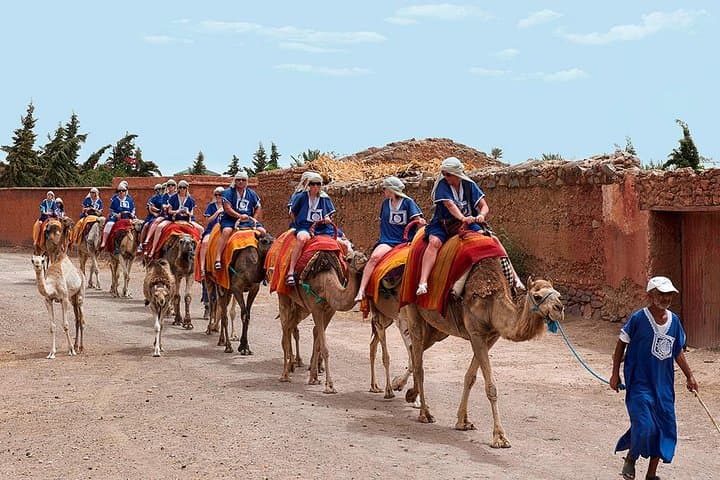
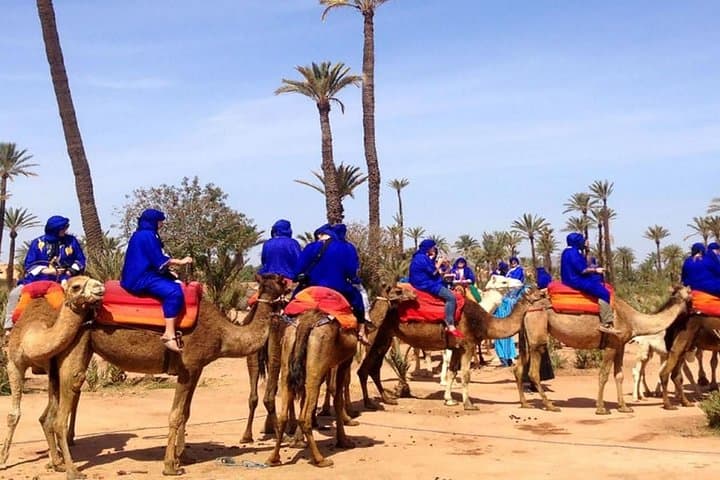
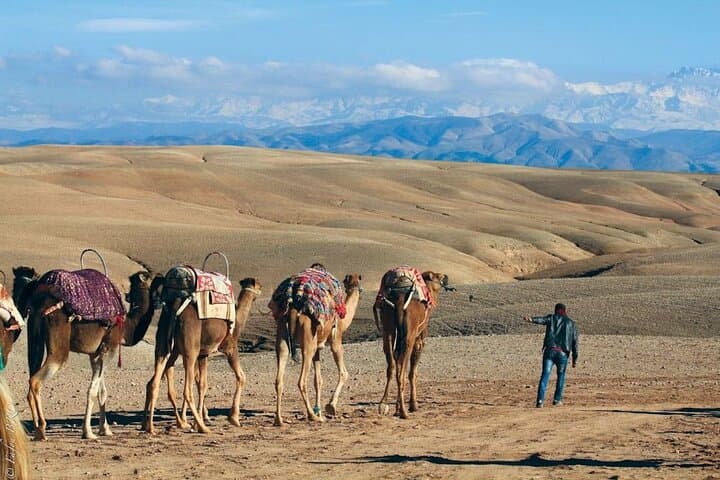
A late-afternoon drive peels you away from Marrakech’s bustle into orchards and scrub; the road gives up to rough tracks and the horizon simplifies into low, ochre plateaus. On arrival, camels wait like patient puzzles, saddles creak, and the Atlas Mountains stand watch as the sun slides low, throwing long, clean shadows across the stone-strewn ground.
Verified experiences and guided adventures in the surrounding area.
Operated by Fes Tours Guide · Marrakech, Marrakech-Safi
A late-afternoon drive peels you away from Marrakech’s bustle into orchards and scrub; the road gives up to rough tracks and the horizon simplifies into low, ochre plateaus. On arrival, camels wait like patient puzzles, saddles creak, and the Atlas Mountains stand watch as the sun slides low, throwing long, clean shadows across the stone-strewn ground.
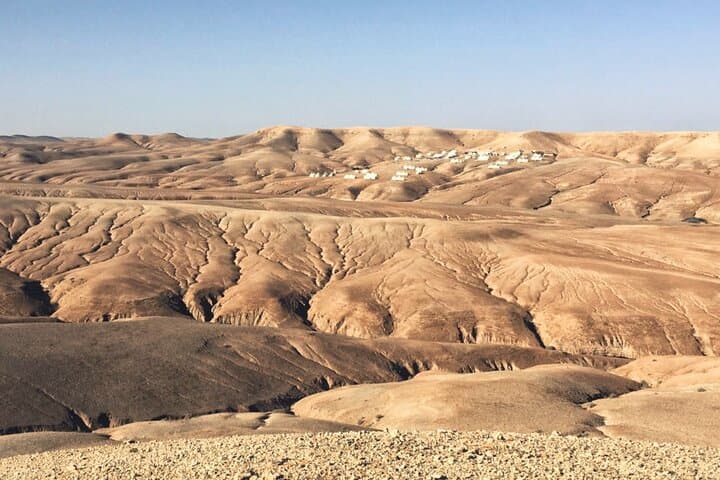
Geologically the Agafay is a stony plateau—weathered limestone and sandstone carved by seasonal torrents rather than wind-blown dunes. The landscape has supported Berber and rural farming communities for centuries; you’ll pass mud-built hamlets and dry riverbeds that bloom in spring. The camel trek is short and deliberate, an hour of slow sway that offers time to observe village life and to learn the ritual of Moroccan tea and pancakes from your hosts.
Culturally this is an accessible slice of desert life, not the Sahara’s endless dunes but a landscape with its own character: sparse vegetation punctuated by irrigated plots and grazing goats. The experience is as much about timing—sunset transforms the color palette—as it is about the ride itself.
Practical guidance: tours typically include hotel pickup around 5 p.m. Wear closed-toe shoes for rocky footing, bring sun protection and a light layer for the drop in temperature after sunset. The camels move slowly and handlers assist mounting and dismounting, but avoid this if you have serious back problems. Carry water, keep movements calm around animals, and consider tipping the guide. Photographers should plan for warm, directional light and quick changes in contrast as the sun sets.
easy.
2–3 hours.
Suitable for most travelers with basic mobility; mounting a camel requires bending and brief balance.
The guided camel trek typically lasts about one hour as part of a 2–3 hour excursion that includes hotel pickup and a tea stop.
Children can usually ride, often sharing a camel with an adult; however, the activity is not recommended for people with serious spinal or mobility issues due to the camel’s motion.
Traditional Moroccan tea and pancakes are included during the break; bring additional water if you expect to be thirsty.
Tipping is customary for good service—small cash tips for the handler and driver are appreciated but discretionary.
The Agafay plateau has long been used by Berber agricultural and pastoral communities and sits on trade corridors that linked Marrakech to southern plains; its stony flats contrast with the dune landscapes farther southeast.
Water is scarce—respect local resources by minimizing single-use plastic and staying on established routes; choose operators who engage and fairly compensate local communities.
Fes Tours Guide operates guided outdoor trips and adventures with an emphasis on safety, stewardship, and memorable experiences.
A late-afternoon drive peels you away from Marrakech’s bustle into orchards and scrub; the road gives up to rough tracks and the horizon simplifies into low, ochre plateaus. On arrival, camels wait like patient puzzles, saddles creak, and the Atlas Mountains stand watch as the sun slides low, throwing long, clean shadows across the stone-strewn ground.
A late-afternoon drive peels you away from Marrakech’s bustle into orchards and scrub; the road gives up to rough tracks and the horizon simplifies into low, ochre plateaus. On arrival, camels wait like patient puzzles, saddles creak, and the Atlas Mountains stand watch as the sun slides low, throwing long, clean shadows across the stone-strewn ground.
Geologically the Agafay is a stony plateau—weathered limestone and sandstone carved by seasonal torrents rather than wind-blown dunes. The landscape has supported Berber and rural farming communities for centuries; you’ll pass mud-built hamlets and dry riverbeds that bloom in spring. The camel trek is short and deliberate, an hour of slow sway that offers time to observe village life and to learn the ritual of Moroccan tea and pancakes from your hosts.
Culturally this is an accessible slice of desert life, not the Sahara’s endless dunes but a landscape with its own character: sparse vegetation punctuated by irrigated plots and grazing goats. The experience is as much about timing—sunset transforms the color palette—as it is about the ride itself.
Practical guidance: tours typically include hotel pickup around 5 p.m. Wear closed-toe shoes for rocky footing, bring sun protection and a light layer for the drop in temperature after sunset. The camels move slowly and handlers assist mounting and dismounting, but avoid this if you have serious back problems. Carry water, keep movements calm around animals, and consider tipping the guide. Photographers should plan for warm, directional light and quick changes in contrast as the sun sets.