THE ADVENTURE COLLECTIVE® · Independent discovery and booking for outdoor travel

Watch the Sahara change color from the back of a camel on a two‑hour Merzouga excursion. This guided ride delivers high-dune views, local Berber hospitality, and a short hike to the dune crests for sunset photography.
Watch the Sahara change color from the back of a camel on a two‑hour Merzouga excursion. This guided ride delivers high-dune views, local Berber hospitality, and a short hike to the dune crests for sunset photography.
The sky over the Erg Chebbi rolls from blue to bruised orange as a line of camels moves across wind-sculpted sand. The animals tread with slow, deliberate patience; the dunes push and fold beneath them, and the desert seems to breathe with the coming night.
Verified experiences and guided adventures in the surrounding area.
Operated by Quiet Merzouga Desert- Day Tours · Merzouga, Errachidia
The sky over the Erg Chebbi rolls from blue to bruised orange as a line of camels moves across wind-sculpted sand. The animals tread with slow, deliberate patience; the dunes push and fold beneath them, and the desert seems to breathe with the coming night.
Centuries of caravan traffic shaped this landscape—trade routes that carried salt, dates and cultural exchange across the Sahara. The dunes of Merzouga are starved of rock and rich in wind-formed ridges; their soft grains are quartz and silica, warmed by long days and quick to cool after sunset. Local Amazigh (Berber) guides carry traditions of hospitality and navigation, and small seasonal camps reflect a living desert culture.
On this short excursion you typically ride one hour out to a high dune, dismount to climb to the crest, watch the sun lower, then return. The terrain is deep sand—expect gradual ascents, loose footing and the quiet that comes when wind drops.
Practical notes: departures are mid- to late-afternoon and the experience runs about two hours. Wear closed shoes that won’t fill with sand, layer for a rapid temperature drop after sunset, and carry water and sunscreen. Motion on camels can be swaying; if you have back issues or heart concerns, consult a doctor.
For photographers the light is immediate and changing—arrive early to pick your angle. Respect camp spaces, tip guides who share oral history, and leave no trace: desert plants and fragile dune surfaces recover slowly.
easy.
2 hours.
Suitable for most fitness levels; participants should be able to mount a camel and walk short distances on sand.
The tour runs about two hours total—roughly one hour out to the dunes, time at the crest for sunset, then one hour back.
Children can ride but infants are required to sit on an adult’s lap; check provider policies for age limits and safety seating.
No experience required; guides handle the camels and provide basic instructions for mounting and riding.
Yes—lightweight camera gear is fine; secure it against wind and sand and avoid large tripods that sink in soft sand.
Merzouga sits near old trans-Saharan caravan routes; local Amazigh communities have guided and hosted travelers here for generations.
Dune ecosystems recover slowly from disturbance—stay on established paths and avoid driving on fragile dune faces; support local guides who practice low-impact camping.
Quiet Merzouga Desert- Day Tours operates guided outdoor trips and adventures with an emphasis on safety, stewardship, and memorable experiences.
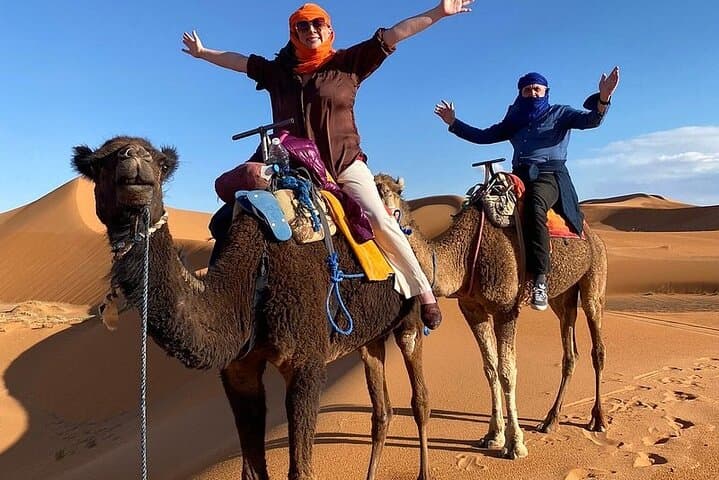
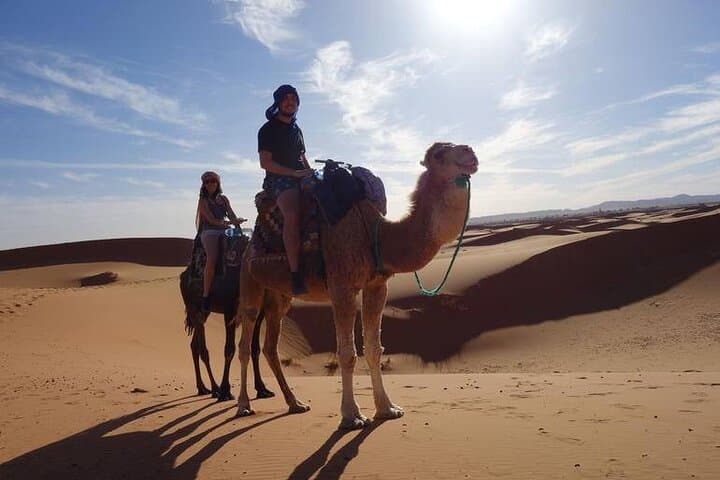
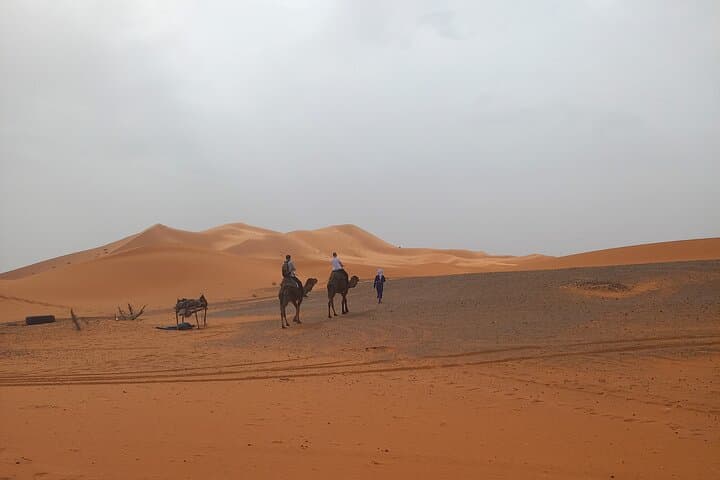
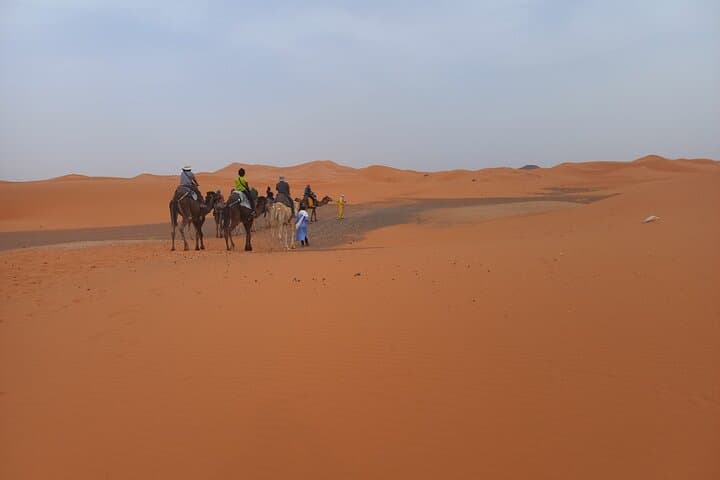
The sky over the Erg Chebbi rolls from blue to bruised orange as a line of camels moves across wind-sculpted sand. The animals tread with slow, deliberate patience; the dunes push and fold beneath them, and the desert seems to breathe with the coming night.
The sky over the Erg Chebbi rolls from blue to bruised orange as a line of camels moves across wind-sculpted sand. The animals tread with slow, deliberate patience; the dunes push and fold beneath them, and the desert seems to breathe with the coming night.
Centuries of caravan traffic shaped this landscape—trade routes that carried salt, dates and cultural exchange across the Sahara. The dunes of Merzouga are starved of rock and rich in wind-formed ridges; their soft grains are quartz and silica, warmed by long days and quick to cool after sunset. Local Amazigh (Berber) guides carry traditions of hospitality and navigation, and small seasonal camps reflect a living desert culture.
On this short excursion you typically ride one hour out to a high dune, dismount to climb to the crest, watch the sun lower, then return. The terrain is deep sand—expect gradual ascents, loose footing and the quiet that comes when wind drops.
Practical notes: departures are mid- to late-afternoon and the experience runs about two hours. Wear closed shoes that won’t fill with sand, layer for a rapid temperature drop after sunset, and carry water and sunscreen. Motion on camels can be swaying; if you have back issues or heart concerns, consult a doctor.
For photographers the light is immediate and changing—arrive early to pick your angle. Respect camp spaces, tip guides who share oral history, and leave no trace: desert plants and fragile dune surfaces recover slowly.