THE ADVENTURE COLLECTIVE® · Independent discovery and booking for outdoor travel

Ride a camel through Marrakech’s Palmeraie at sunset, visit a Berber house for mint tea, and capture golden-hour photos beneath towering palms. This easy, 3‑hour tour pairs simple desert riding with cultural insight close to the city.
Ride a camel through Marrakech’s Palmeraie at sunset, visit a Berber house for mint tea, and capture golden-hour photos beneath towering palms. This easy, 3‑hour tour pairs simple desert riding with cultural insight close to the city.
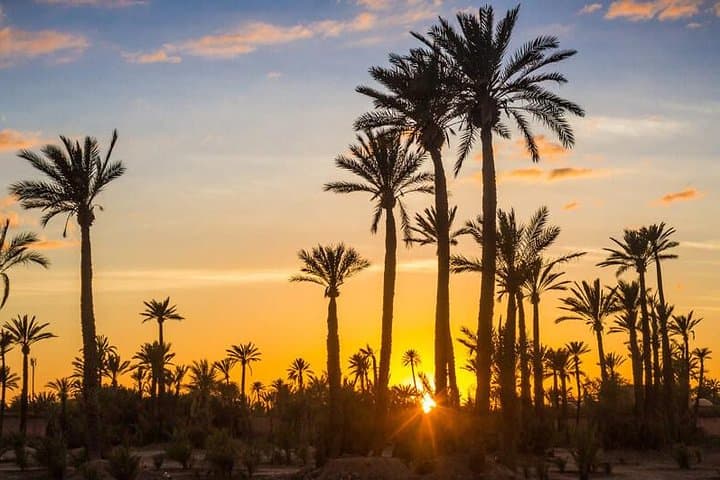
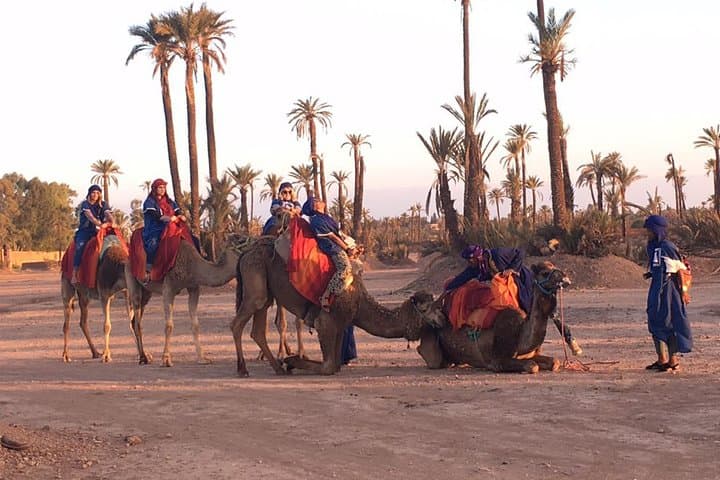
The last light slides through a forest of tall date palms as camels rise and fall in a slow, practiced rhythm beneath the sky. Riders leave Marrakech’s traffic behind for the Palmeraie — a broad palm grove at the city’s edge — where the air cools, shadowed trunks lengthen, and the afternoon turns to gold.
Verified experiences and guided adventures in the surrounding area.
Operated by Toubkal Guide · Marrakech, Marrakech-Safi
The last light slides through a forest of tall date palms as camels rise and fall in a slow, practiced rhythm beneath the sky. Riders leave Marrakech’s traffic behind for the Palmeraie — a broad palm grove at the city’s edge — where the air cools, shadowed trunks lengthen, and the afternoon turns to gold.
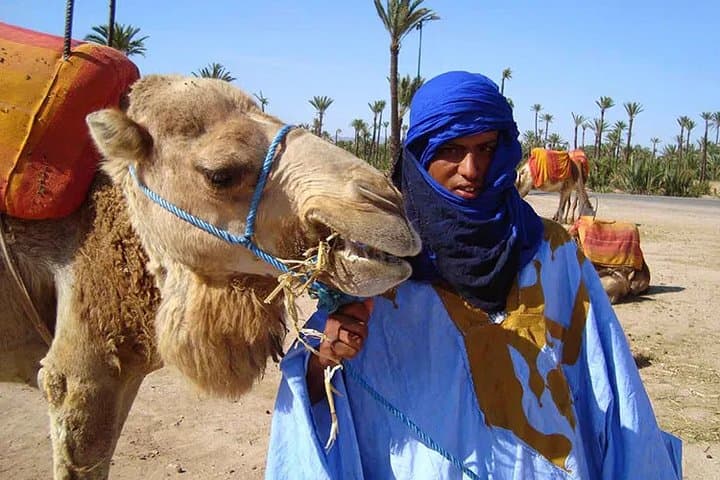
The Palmeraie grew where irrigation and human hands turned arid land into a working oasis; today the palms frame private villas, small farms and pockets of traditional life. The camel has been a transport collaborator in Morocco for centuries, and on this route guides introduce basic handling and the shesh (turban) used for sun protection. The tour pauses at a local Berber house: an informal cultural exchange with mint tea and a light snack that offers a window into daily rhythms away from Marrakech’s medina.
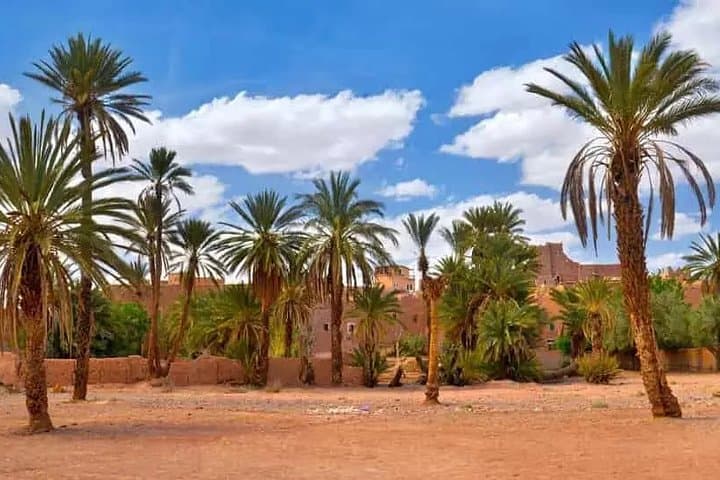
Terrain is flat sand and packed tracks running between rows of palms, punctuated by low dunes and occasional cultivated plots. Expect photographic opportunities at the grove edge as the sun dips behind the Atlas foothills.
Practical notes: the shared excursion runs about three hours total with roughly 45 minutes riding; transfers use air-conditioned vehicles and door-to-door pickup can be arranged. Wear closed-toe shoes, bring sun protection and water, and keep cameras secured during mounts. Respect private properties and the animals — follow guides’ instructions when mounting and dismounting camels. Early booking is advised for sunset slots in high season, and daytime departures are available for cooler or photographic preferences.
easy.
2–3 hours.
Suitable for most fitness levels; ability to climb onto a camel with minimal assistance required
The advertised ride is about 45 minutes within a roughly three-hour tour that includes pickup, cultural stop, and transfers.
The activity is labeled easy and generally family-friendly; check with the operator about age limits and avoid if pregnant or with severe back issues.
Yes — hotel pickup and drop-off are included; confirm exact pickup location and time during booking.
Yes, but ask permission before photographing people indoors and be mindful of private belongings and space.
The Palmeraie developed as an irrigated palm plantation on Marrakech’s outskirts; over centuries it shifted from agricultural utility to a mix of working oasis and leisure landscape.
Water use and development pressure stress the grove; visitors are encouraged to follow paths, avoid litter, and support tours that respect local land and animal welfare.
Toubkal Guide operates guided outdoor trips and adventures with an emphasis on safety, stewardship, and memorable experiences.
The last light slides through a forest of tall date palms as camels rise and fall in a slow, practiced rhythm beneath the sky. Riders leave Marrakech’s traffic behind for the Palmeraie — a broad palm grove at the city’s edge — where the air cools, shadowed trunks lengthen, and the afternoon turns to gold.
The last light slides through a forest of tall date palms as camels rise and fall in a slow, practiced rhythm beneath the sky. Riders leave Marrakech’s traffic behind for the Palmeraie — a broad palm grove at the city’s edge — where the air cools, shadowed trunks lengthen, and the afternoon turns to gold.
The Palmeraie grew where irrigation and human hands turned arid land into a working oasis; today the palms frame private villas, small farms and pockets of traditional life. The camel has been a transport collaborator in Morocco for centuries, and on this route guides introduce basic handling and the shesh (turban) used for sun protection. The tour pauses at a local Berber house: an informal cultural exchange with mint tea and a light snack that offers a window into daily rhythms away from Marrakech’s medina.
Terrain is flat sand and packed tracks running between rows of palms, punctuated by low dunes and occasional cultivated plots. Expect photographic opportunities at the grove edge as the sun dips behind the Atlas foothills.
Practical notes: the shared excursion runs about three hours total with roughly 45 minutes riding; transfers use air-conditioned vehicles and door-to-door pickup can be arranged. Wear closed-toe shoes, bring sun protection and water, and keep cameras secured during mounts. Respect private properties and the animals — follow guides’ instructions when mounting and dismounting camels. Early booking is advised for sunset slots in high season, and daytime departures are available for cooler or photographic preferences.