THE ADVENTURE COLLECTIVE® · Independent discovery and booking for outdoor travel

Spend an hour on a camel through Marrakech’s Palmeraie, sampling palm groves, villages, and a traditional mint-tea pause. This private, easy ride offers a compact window into Berber-influenced countryside just beyond the city.
Spend an hour on a camel through Marrakech’s Palmeraie, sampling palm groves, villages, and a traditional mint-tea pause. This private, easy ride offers a compact window into Berber-influenced countryside just beyond the city.
Late afternoon light slides between tall date palms as your camel rises and falls with a slow, ancient gait. The Palmeraie’s dust road opens into bands of green interrupted by scrub and rock; from the saddle you see villages, gardeners, and the city’s heat haze on the horizon. For one hour you follow routes once used by local caravans, dressed in a protective cheich and guided by a handler who reads the land like a map.
Verified experiences and guided adventures in the surrounding area.
Operated by Safari Desert Tours · Marrakech, Marrakech-Safi
Late afternoon light slides between tall date palms as your camel rises and falls with a slow, ancient gait. The Palmeraie’s dust road opens into bands of green interrupted by scrub and rock; from the saddle you see villages, gardeners, and the city’s heat haze on the horizon. For one hour you follow routes once used by local caravans, dressed in a protective cheich and guided by a handler who reads the land like a map.
The Palmeraie is a human-shaped palm oasis carved on Marrakech’s northern edge, fed historically by irrigation and by Berber agricultural practice. Geologically, the area sits on alluvial soils at the edge of the Haouz plain; the palms are planted in groves that block wind and trap morning moisture. Culturally, camel travel links to trans-Saharan trade and rural life—the ride is as much an introduction to local rhythms as it is a scenic loop.
Expect flat, sandy tracks with intermittent grass and the occasional paved path when approaching villages. Stops include a short mint-tea break and photo pauses; the rhythm is easy, suitable for most travelers, though pregnant guests are advised not to ride. Pickup and drop-off are typically included from Marrakech accommodations in air-conditioned vehicles.
Practical notes: wear closed-toe shoes and sun protection, bring a light layer for desert evenings, and keep a small bottle of water handy. Aim for late afternoon light for cooler temperatures and cleaner photos. This short, private outing gives a compact, authentic taste of Morocco’s palm landscapes without requiring long travel from the city.
easy.
2 hours.
Suitable for most fitness levels; participants should be able to mount and sit on a camel for an hour.
The guided experience is approximately one hour on the camel within a two-hour scheduled window that includes pickup and drop-off.
Yes—private transportation with pickup and drop-off from Marrakech accommodations is typically included.
Children can usually participate but pregnant travelers are advised not to ride; check provider restrictions for infants and age limits.
Light, breathable clothing, sun protection, closed-toe shoes, and a scarf for dust are recommended; a cheich is often provided.
The Palmeraie grew as an irrigated oasis tied to Marrakech’s agricultural systems and caravan routes; camels remain part of that long history of transport and trade.
Palm groves are sensitive to urban expansion and water extraction—choose operators that minimize off-track travel and respect local farming plots.
Safari Desert Tours operates guided outdoor trips and adventures with an emphasis on safety, stewardship, and memorable experiences.
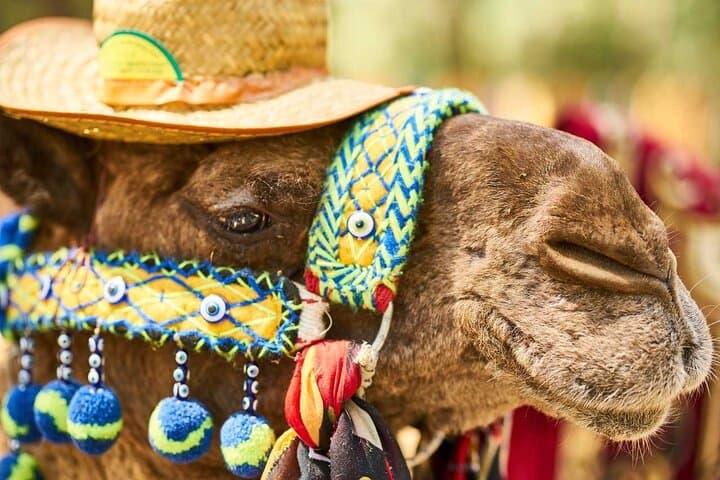
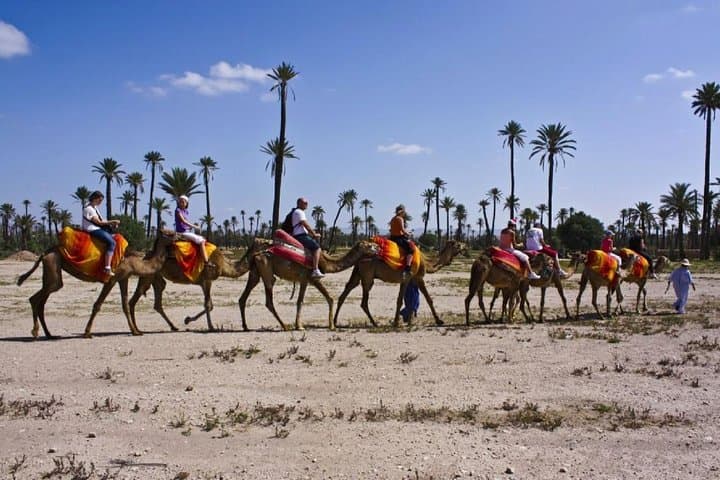
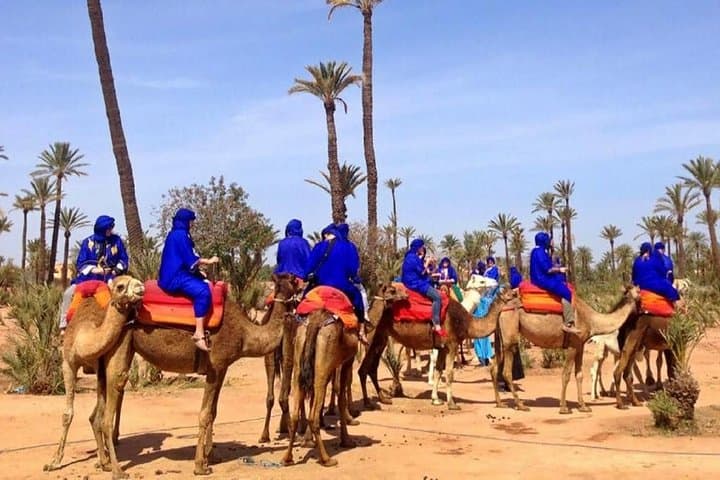
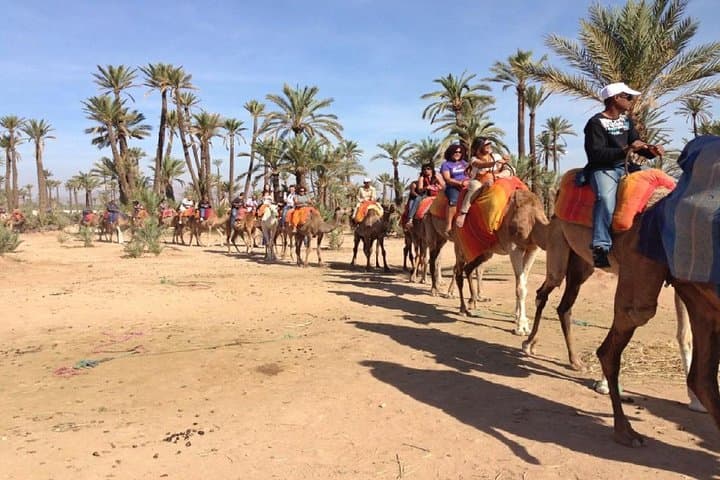
Late afternoon light slides between tall date palms as your camel rises and falls with a slow, ancient gait. The Palmeraie’s dust road opens into bands of green interrupted by scrub and rock; from the saddle you see villages, gardeners, and the city’s heat haze on the horizon. For one hour you follow routes once used by local caravans, dressed in a protective cheich and guided by a handler who reads the land like a map.
Late afternoon light slides between tall date palms as your camel rises and falls with a slow, ancient gait. The Palmeraie’s dust road opens into bands of green interrupted by scrub and rock; from the saddle you see villages, gardeners, and the city’s heat haze on the horizon. For one hour you follow routes once used by local caravans, dressed in a protective cheich and guided by a handler who reads the land like a map.
The Palmeraie is a human-shaped palm oasis carved on Marrakech’s northern edge, fed historically by irrigation and by Berber agricultural practice. Geologically, the area sits on alluvial soils at the edge of the Haouz plain; the palms are planted in groves that block wind and trap morning moisture. Culturally, camel travel links to trans-Saharan trade and rural life—the ride is as much an introduction to local rhythms as it is a scenic loop.
Expect flat, sandy tracks with intermittent grass and the occasional paved path when approaching villages. Stops include a short mint-tea break and photo pauses; the rhythm is easy, suitable for most travelers, though pregnant guests are advised not to ride. Pickup and drop-off are typically included from Marrakech accommodations in air-conditioned vehicles.
Practical notes: wear closed-toe shoes and sun protection, bring a light layer for desert evenings, and keep a small bottle of water handy. Aim for late afternoon light for cooler temperatures and cleaner photos. This short, private outing gives a compact, authentic taste of Morocco’s palm landscapes without requiring long travel from the city.