THE ADVENTURE COLLECTIVE® · Independent discovery and booking for outdoor travel

Ride a dromedary through Marrakech’s palm groves as the sun drops behind the Atlas foothills. This 2–3 hour experience pairs a short Berber homestay and traditional mint tea with an easy, photogenic camel trek—best timed for late afternoon light.
Ride a dromedary through Marrakech’s palm groves as the sun drops behind the Atlas foothills. This 2–3 hour experience pairs a short Berber homestay and traditional mint tea with an easy, photogenic camel trek—best timed for late afternoon light.
The sun slips low behind a stand of palms, and the slow sway of a dromedary becomes the day’s steady cadence. You climb into the padded saddle, the camel’s gait pitching you forward like a gentle wave, and the palm grove opens — long rows of fan leaves, pockets of ochre soil, and the distant hum of the city fading away.
Verified experiences and guided adventures in the surrounding area.
Operated by Smart Morocco Tours Excursions · Marrakech, Marrakech-Safi
The sun slips low behind a stand of palms, and the slow sway of a dromedary becomes the day’s steady cadence. You climb into the padded saddle, the camel’s gait pitching you forward like a gentle wave, and the palm grove opens — long rows of fan leaves, pockets of ochre soil, and the distant hum of the city fading away.
The Palmeraie that fringes Marrakech is a human-shaped oasis: date palms planted and irrigated for centuries, shaping microclimates that supported small settlements and seasonal farms. Dromedaries have been part of this landscape for millennia, used by Berber and Saharan cultures for transport and trade; the guides you meet often trace family ties to those traditions while offering mint tea in a nearby family home.
Geology here is simple — a flat, alluvial plain at the edge of the High Atlas foothills — but the contrast between dusty red-earth suburbs and green palms is stark and immediate. Culture and hospitality are central: expect a short visit to a Berber home, traditional dress to try on, and the ritual of mint tea before and after the ride.
Practicalities: tours run about 2–3 hours total with hotel pickup, and operators recommend riding roughly two hours before sunset for the best light. Rides are low-impact but not advised for people with back or heart issues; children must be accompanied. Bring closed-toe shoes, a sun layer, and water; cameras are essential. Respect the animals and local customs — move slowly, follow your guide, and tip if the service earns it. The rhythm of the camel and the hush of the palms make this a quiet, accessible way to touch an ancient landscape without leaving Marrakech’s doorstep.
easy.
2–3 hours.
Suitable for a wide range of fitness levels; ability to climb a low saddle and sit steadily for 30–60 minutes required.
Yes — most tours include pickup and drop-off from central hotels and riads in Marrakech; confirm your pickup point when booking.
Children can participate but must be accompanied by an adult; operators may set age or weight limits for safety so check in advance.
No — camel motion can be jarring; the activity is not recommended for those with spinal, heart, or pregnancy-related restrictions.
Guides commonly speak English and French, and many have local Arabic or Berber language skills; confirm language needs when booking.
The Palmeraie was developed over centuries as an irrigated palm plantation serving Marrakech; dromedaries and local families have long been intertwined with the grove’s economy and culture.
Water use and palm maintenance are ongoing concerns—choose operators that work with local families and avoid adding pressure to fragile irrigation resources.
Smart Morocco Tours Excursions operates guided outdoor trips and adventures with an emphasis on safety, stewardship, and memorable experiences.
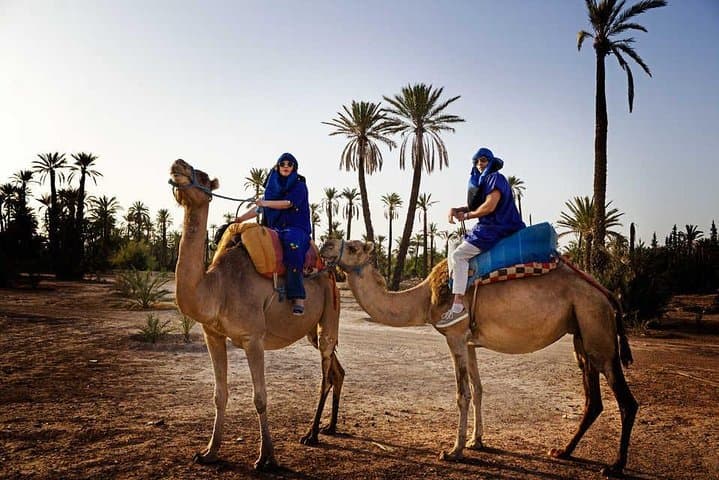
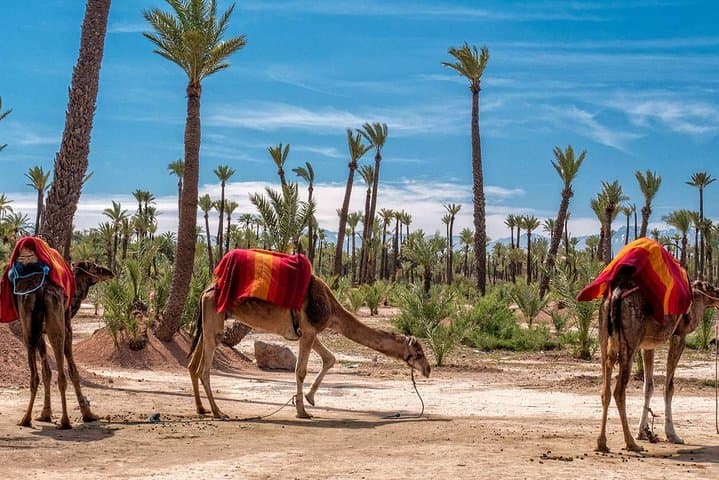
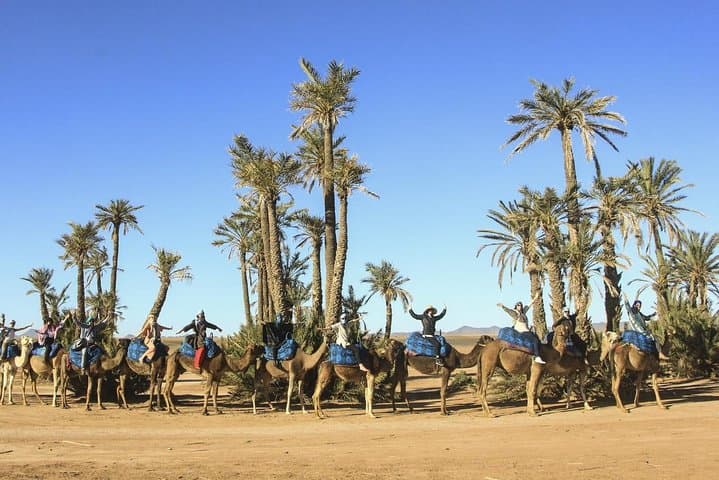
The sun slips low behind a stand of palms, and the slow sway of a dromedary becomes the day’s steady cadence. You climb into the padded saddle, the camel’s gait pitching you forward like a gentle wave, and the palm grove opens — long rows of fan leaves, pockets of ochre soil, and the distant hum of the city fading away.
The sun slips low behind a stand of palms, and the slow sway of a dromedary becomes the day’s steady cadence. You climb into the padded saddle, the camel’s gait pitching you forward like a gentle wave, and the palm grove opens — long rows of fan leaves, pockets of ochre soil, and the distant hum of the city fading away.
The Palmeraie that fringes Marrakech is a human-shaped oasis: date palms planted and irrigated for centuries, shaping microclimates that supported small settlements and seasonal farms. Dromedaries have been part of this landscape for millennia, used by Berber and Saharan cultures for transport and trade; the guides you meet often trace family ties to those traditions while offering mint tea in a nearby family home.
Geology here is simple — a flat, alluvial plain at the edge of the High Atlas foothills — but the contrast between dusty red-earth suburbs and green palms is stark and immediate. Culture and hospitality are central: expect a short visit to a Berber home, traditional dress to try on, and the ritual of mint tea before and after the ride.
Practicalities: tours run about 2–3 hours total with hotel pickup, and operators recommend riding roughly two hours before sunset for the best light. Rides are low-impact but not advised for people with back or heart issues; children must be accompanied. Bring closed-toe shoes, a sun layer, and water; cameras are essential. Respect the animals and local customs — move slowly, follow your guide, and tip if the service earns it. The rhythm of the camel and the hush of the palms make this a quiet, accessible way to touch an ancient landscape without leaving Marrakech’s doorstep.