THE ADVENTURE COLLECTIVE® · Independent discovery and booking for outdoor travel

Ride a dromedary through Marrakech’s Palmeraie as the sun drops behind the Atlas—an easy, sensory hour of palms, sand tracks, and local stories. This accessible experience pairs cultural context with practical guidance for first-time camel riders.
Ride a dromedary through Marrakech’s Palmeraie as the sun drops behind the Atlas—an easy, sensory hour of palms, sand tracks, and local stories. This accessible experience pairs cultural context with practical guidance for first-time camel riders.
You meet at Jemaa el-Fna as the city’s late-afternoon heat softens, then slip northeast toward the Palmeraie. The car drops you at a sandy track framed by rows of tall date palms; a line of docile dromedaries waits, saddled and patient. As you mount, the city’s noise fades and the Atlas Mountains slip into view like a slow-moving backdrop, the sun lowering between trunks and palms.
Verified experiences and guided adventures in the surrounding area.
Operated by The craftsman of your trip · Marrakech, Marrakech-Safi
You meet at Jemaa el-Fna as the city’s late-afternoon heat softens, then slip northeast toward the Palmeraie. The car drops you at a sandy track framed by rows of tall date palms; a line of docile dromedaries waits, saddled and patient. As you mount, the city’s noise fades and the Atlas Mountains slip into view like a slow-moving backdrop, the sun lowering between trunks and palms.
The Palmeraie is both a living agricultural landscape and a cultural landmark—centuries of irrigation transformed a dry plain into a ring of palms that once supported caravan traffic and local subsistence. Geologically it sits on the Haouz plain, where alluvial soils and traditional khettara irrigation have allowed palms to thrive in an otherwise arid environment. Camel riding here traces animal-handling traditions as much as tourism; guides often share local stories about newborn camels, date cultivation, and Berber life on the plain.
Expect a gentle, roughly one-hour camel circuit through packed sand tracks, shaded stretches, and open viewpoints for photos of the palms and the Atlas. The ride is low-impact physically but sensory—dusted light, the camel’s slow gait, and the smell of palm fronds.
Practical pointers: book the late-afternoon slot for best light and cooler temperatures; wear closed-toe shoes, sun protection, and bring water. Listen to handlers for safe mounting/dismounting and avoid sudden movements near animals. If you want sunrise calm instead of sunset crowds, ask about morning departures. This outing is ideal for travelers seeking an accessible nature-and-culture experience on the edge of Marrakech.
easy.
3 hours.
Suitable for most fitness levels; riders should be able to climb a low mount and remain seated for an hour.
The organized activity runs about three hours total including transfers and briefing, with roughly one hour on the camel through the Palmeraie.
Yes—infants can sit on laps and infant seats are available, but confirm age and safety arrangements with the operator at booking.
Pickup from central Marrakech hotels is commonly provided; confirm your pickup point during booking to avoid delays.
Yes—handlers expect photos; secure loose items and use a strap for cameras or phones to prevent drops.
The Palmeraie grew from traditional irrigation and caravan routes; its palms supported agrarian life and supplied dates and shade for centuries.
Respect animal welfare by following handler guidance and avoid feeding or startling camels; choose operators who support local camel care and community income.
The craftsman of your trip operates guided outdoor trips and adventures with an emphasis on safety, stewardship, and memorable experiences.
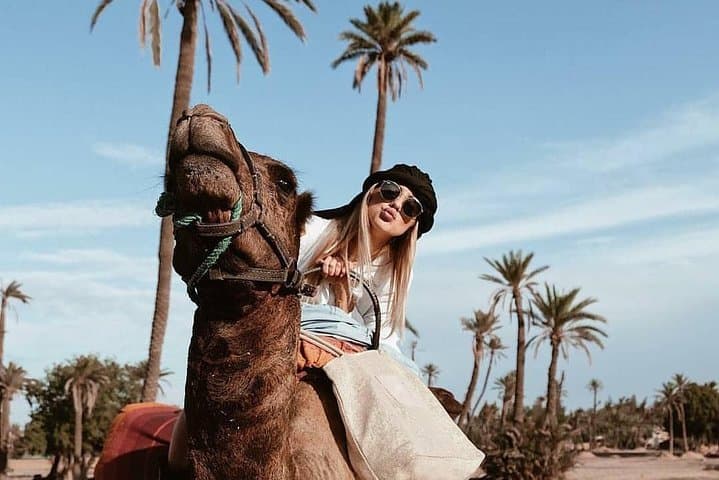
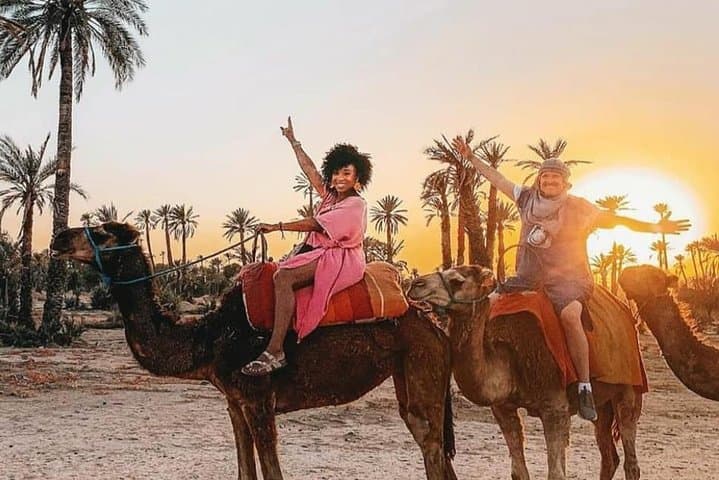
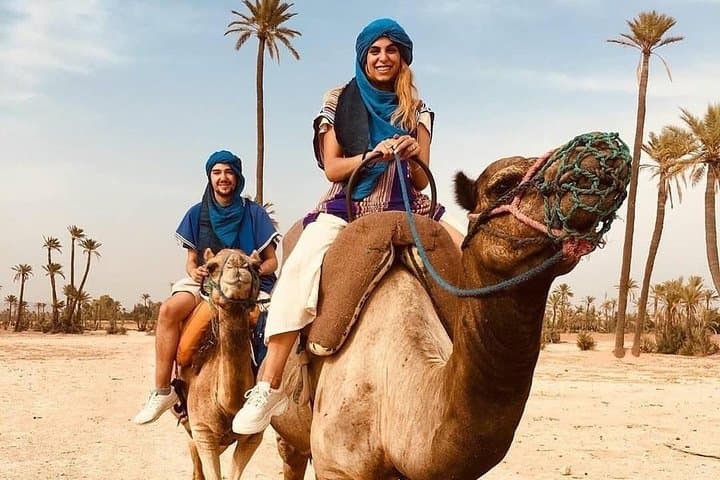
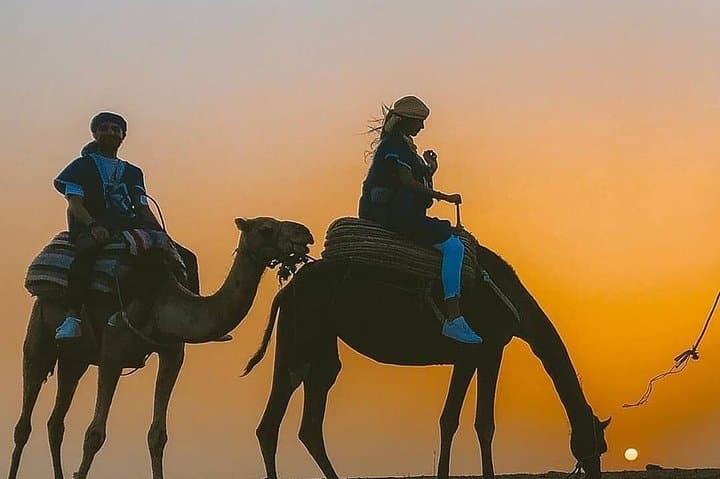
You meet at Jemaa el-Fna as the city’s late-afternoon heat softens, then slip northeast toward the Palmeraie. The car drops you at a sandy track framed by rows of tall date palms; a line of docile dromedaries waits, saddled and patient. As you mount, the city’s noise fades and the Atlas Mountains slip into view like a slow-moving backdrop, the sun lowering between trunks and palms.
You meet at Jemaa el-Fna as the city’s late-afternoon heat softens, then slip northeast toward the Palmeraie. The car drops you at a sandy track framed by rows of tall date palms; a line of docile dromedaries waits, saddled and patient. As you mount, the city’s noise fades and the Atlas Mountains slip into view like a slow-moving backdrop, the sun lowering between trunks and palms.
The Palmeraie is both a living agricultural landscape and a cultural landmark—centuries of irrigation transformed a dry plain into a ring of palms that once supported caravan traffic and local subsistence. Geologically it sits on the Haouz plain, where alluvial soils and traditional khettara irrigation have allowed palms to thrive in an otherwise arid environment. Camel riding here traces animal-handling traditions as much as tourism; guides often share local stories about newborn camels, date cultivation, and Berber life on the plain.
Expect a gentle, roughly one-hour camel circuit through packed sand tracks, shaded stretches, and open viewpoints for photos of the palms and the Atlas. The ride is low-impact physically but sensory—dusted light, the camel’s slow gait, and the smell of palm fronds.
Practical pointers: book the late-afternoon slot for best light and cooler temperatures; wear closed-toe shoes, sun protection, and bring water. Listen to handlers for safe mounting/dismounting and avoid sudden movements near animals. If you want sunrise calm instead of sunset crowds, ask about morning departures. This outing is ideal for travelers seeking an accessible nature-and-culture experience on the edge of Marrakech.