THE ADVENTURE COLLECTIVE® · Independent discovery and booking for outdoor travel

Swap the medina’s bustle for the slow sway of a camel in Marrakech’s Palmeraie. This one-hour guided ride winds through palm-lined paths with Atlas Mountain views and a taste of local Berber tea.
Swap the medina’s bustle for the slow sway of a camel in Marrakech’s Palmeraie. This one-hour guided ride winds through palm-lined paths with Atlas Mountain views and a taste of local Berber tea.
The sun drops behind the Atlas, painting the palms gold as your camel rises and falls with the slow breathing of the desert garden. A narrow track threads between rows of date palms and irrigated plots; the animals murmur beneath saddles while the city’s heat softens into evening.
Verified experiences and guided adventures in the surrounding area.
Operated by Marrakech 7 Trips · Marrakech, Marrakech-Safi
The sun drops behind the Atlas, painting the palms gold as your camel rises and falls with the slow breathing of the desert garden. A narrow track threads between rows of date palms and irrigated plots; the animals murmur beneath saddles while the city’s heat softens into evening.
The Palmeraie has been shaped over centuries — irrigation and cultivation expanded by the Almoravid and later dynasties — creating a large palm oasis on Marrakech’s northeastern edge. Geologically this is an alluvial plain fed historically by small feeder streams from the Atlas; today the grove sits beside modern villas, golf courses, and traditional Berber villages that still mark local culture.
Guides explain how the palms support local livelihoods: date harvesting, small-scale farming, and tourism. You’ll pass traces of colonial-era planting patterns and modern luxury developments, and on clear days the Atlas Mountains puncture the horizon, commanding the view.
Practical guidance: tours run about one hour on camelback (the full experience including pickup is roughly two hours). Terrain is flat packed dirt and sandy paths; riding is low-impact but expect a pronounced sway and occasional short mounts/dismounts. Wear closed-toe shoes, sun protection, and bring a light scarf for dust. Morning rides are cooler; sunset tours offer better light and a calmer atmosphere. Most operators include mint tea and bottled water; tipping guides is customary. The palms themselves seem to lean and offer shade as if acknowledging travelers — move at the grove’s pace, keep cameras ready, and leave no trace of your visit.
easy.
2 hours.
Suitable for all fitness levels; you should be able to manage short mounts and light walking.
The camel ride itself is about one hour; most bookings list a two-hour total to include pickup, transfers, and a short stop for photos and tea.
Yes, but operators often set minimums and may require a minimum of two people per booking; check age limits and available infant seats during booking.
Light, modest clothing that covers shoulders and knees, closed-toe shoes, and a scarf or hat for sun and dust protection work best.
Tipping guides and handlers is common; bring small denominations of Moroccan dirham to tip if you’re satisfied with the service.
The Palmeraie expanded under successive Moroccan dynasties using irrigation techniques that turned alluvial plains into productive date palm groves; remnants of traditional irrigation persist alongside modern development.
Water use is a growing concern; support operators that practice respectful access and avoid disturbing cultivated plots or wildlife to reduce local impact.
Marrakech 7 Trips operates guided outdoor trips and adventures with an emphasis on safety, stewardship, and memorable experiences.
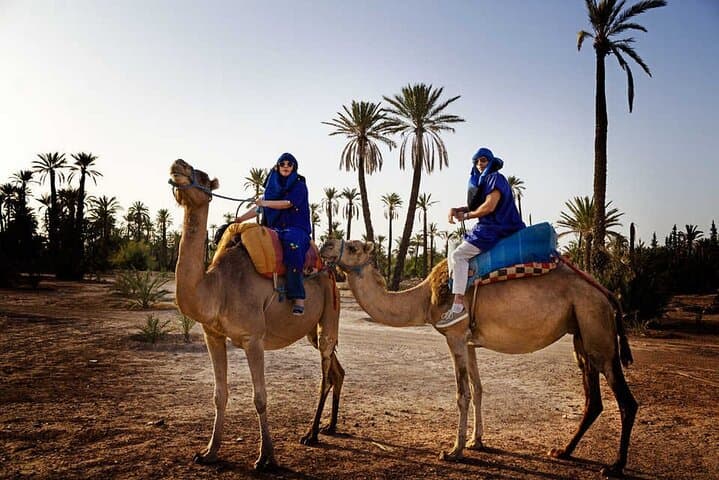
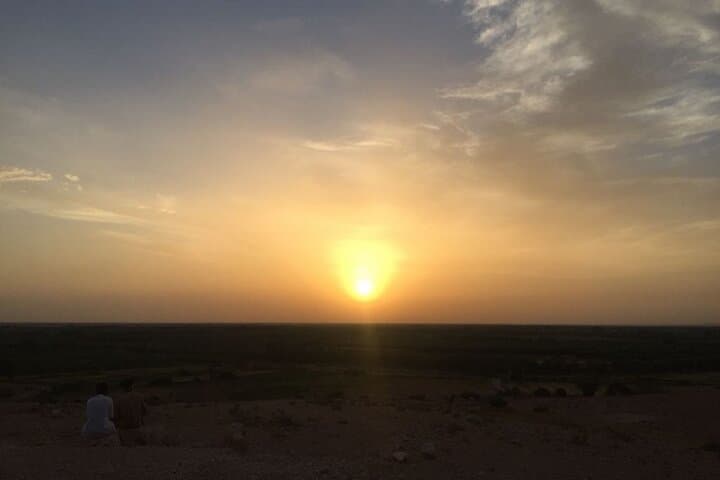
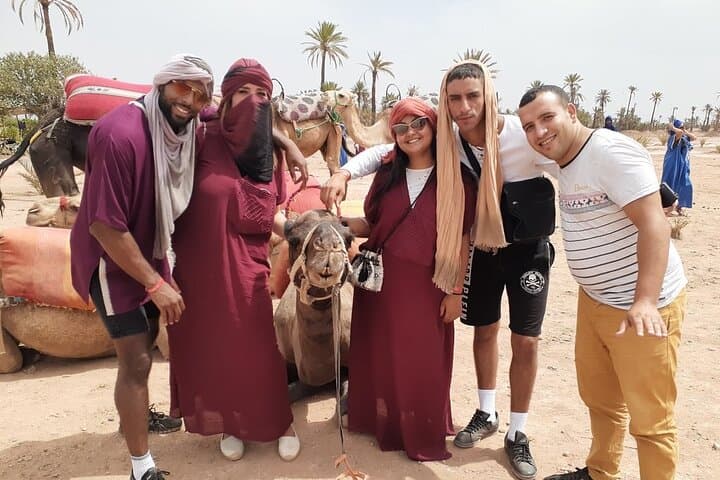
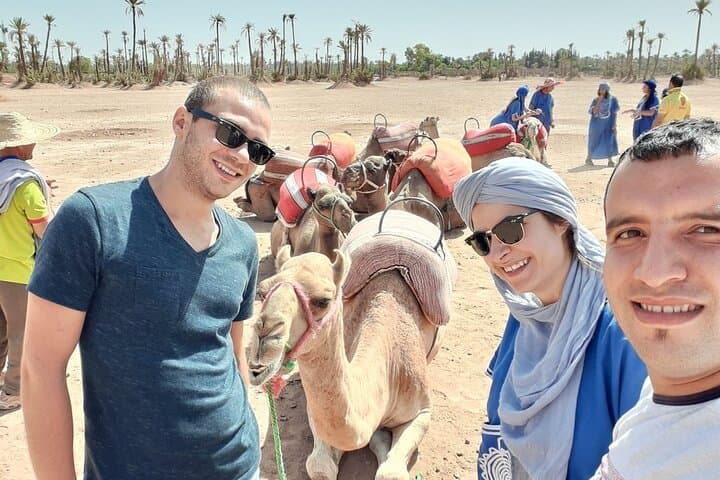
The sun drops behind the Atlas, painting the palms gold as your camel rises and falls with the slow breathing of the desert garden. A narrow track threads between rows of date palms and irrigated plots; the animals murmur beneath saddles while the city’s heat softens into evening.
The sun drops behind the Atlas, painting the palms gold as your camel rises and falls with the slow breathing of the desert garden. A narrow track threads between rows of date palms and irrigated plots; the animals murmur beneath saddles while the city’s heat softens into evening.
The Palmeraie has been shaped over centuries — irrigation and cultivation expanded by the Almoravid and later dynasties — creating a large palm oasis on Marrakech’s northeastern edge. Geologically this is an alluvial plain fed historically by small feeder streams from the Atlas; today the grove sits beside modern villas, golf courses, and traditional Berber villages that still mark local culture.
Guides explain how the palms support local livelihoods: date harvesting, small-scale farming, and tourism. You’ll pass traces of colonial-era planting patterns and modern luxury developments, and on clear days the Atlas Mountains puncture the horizon, commanding the view.
Practical guidance: tours run about one hour on camelback (the full experience including pickup is roughly two hours). Terrain is flat packed dirt and sandy paths; riding is low-impact but expect a pronounced sway and occasional short mounts/dismounts. Wear closed-toe shoes, sun protection, and bring a light scarf for dust. Morning rides are cooler; sunset tours offer better light and a calmer atmosphere. Most operators include mint tea and bottled water; tipping guides is customary. The palms themselves seem to lean and offer shade as if acknowledging travelers — move at the grove’s pace, keep cameras ready, and leave no trace of your visit.