THE ADVENTURE COLLECTIVE® · Independent discovery and booking for outdoor travel

Ride a camel through Marrakech’s Palmeraie at sunset and trade the city’s bustle for the steady sway of an oasis caravan. Expect palm-lined tracks, mint tea pauses with local hosts, and soft light ideal for photography.
Ride a camel through Marrakech’s Palmeraie at sunset and trade the city’s bustle for the steady sway of an oasis caravan. Expect palm-lined tracks, mint tea pauses with local hosts, and soft light ideal for photography.
The late-afternoon sun slants between rows of date palms, turning the Palmeraie’s trunks to long, cool columns as a caravan of camels eases forward. Each step rocks you gently; the animals seem to know the rhythm of the place, carrying visitors away from the noise of Jemaa el-Fnaa into an expanse of green and light.
Verified experiences and guided adventures in the surrounding area.
Operated by Marrakech First Trip · Marrakech, Marrakech-Safi
The late-afternoon sun slants between rows of date palms, turning the Palmeraie’s trunks to long, cool columns as a caravan of camels eases forward. Each step rocks you gently; the animals seem to know the rhythm of the place, carrying visitors away from the noise of Jemaa el-Fnaa into an expanse of green and light.
The Palmeraie is an irrigated oasis on Marrakech’s northern edge, shaped by centuries of local agriculture and later altered during the French protectorate when villas and gardens expanded into the grove. Geology here is simple—sandy soils fed by traditional khettara irrigation—while culture is layered: Berber farming families still tend parcels and offer mint tea, a small social exchange that colors the ride.
Expect a guided, roughly one-hour camel circuit that threads palm-lined tracks and skims the outskirts of small villages. Guides pause for photos and a tea break with Moroccan pancakes; the experience is as much about people and the pace of the landscape as it is about the animals.
Practical notes: book for an hour before sunset for soft light and cooler temperatures; wear closed-toe shoes and a sun hat; carry cash for tips and souvenirs. This activity suits most fitness levels but is not recommended for guests with spinal issues or pregnancy. Respect local customs—smart-casual attire and modest behavior at village stops—and leave no trace on trails or in groves.
The ride is a compact, sensory way to meet Marrakech’s palm oasis—quiet, tactile, and easily scheduled into a longer visit to the Red City.
easy.
1 hour.
Suitable for most fitness levels; requires ability to mount/dismount a camel and sit steadily for the ride.
The advertised ride is approximately one hour including a short tea break; pickup and transfers vary if included.
Children can ride but must be accompanied by an adult; infant seats may be available—check with the operator in advance.
Professional guides accompany the caravan and operators generally maintain animals for tourist use; ask the provider about care practices if concerned.
Smart-casual, modest clothing is recommended—layers for temperature shifts, closed-toe shoes for stability, and a hat for sun protection.
The Palmeraie originated as a working palm oasis supplying water and dates; it expanded into a leisure landscape during the French protectorate when gardens and villas spread through the grove.
Water is a scarce resource—stay on marked tracks, avoid littering, and support guides who follow sustainable practices to reduce impact on the grove.
Marrakech First Trip operates guided outdoor trips and adventures with an emphasis on safety, stewardship, and memorable experiences.
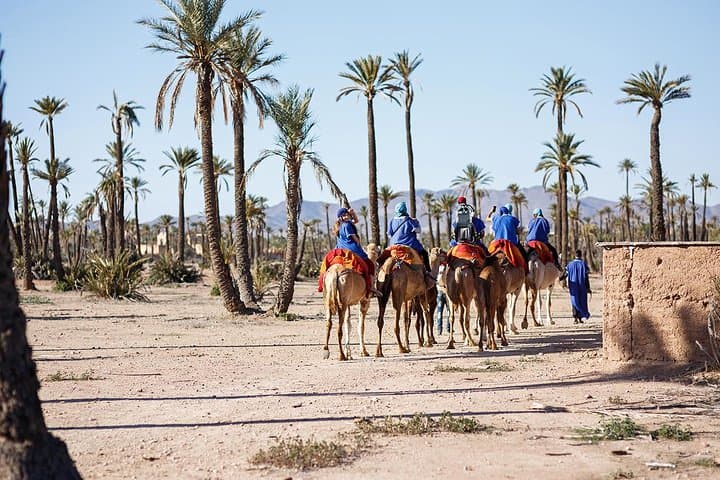
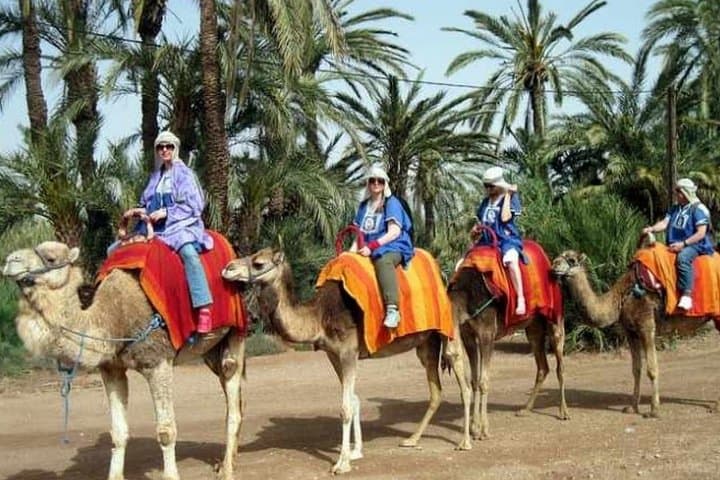
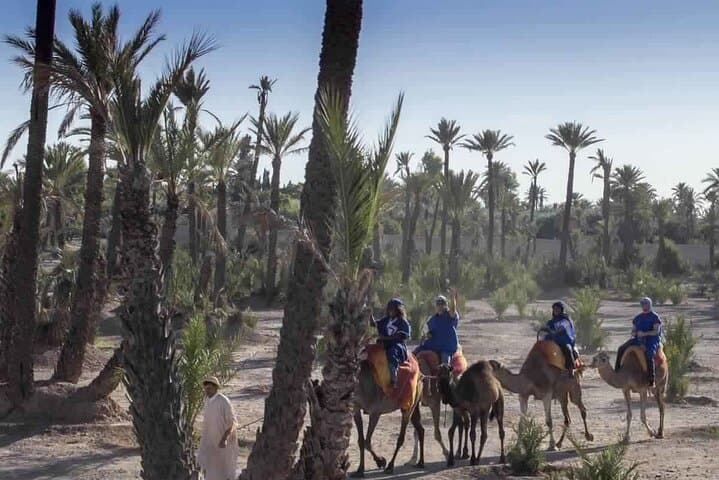
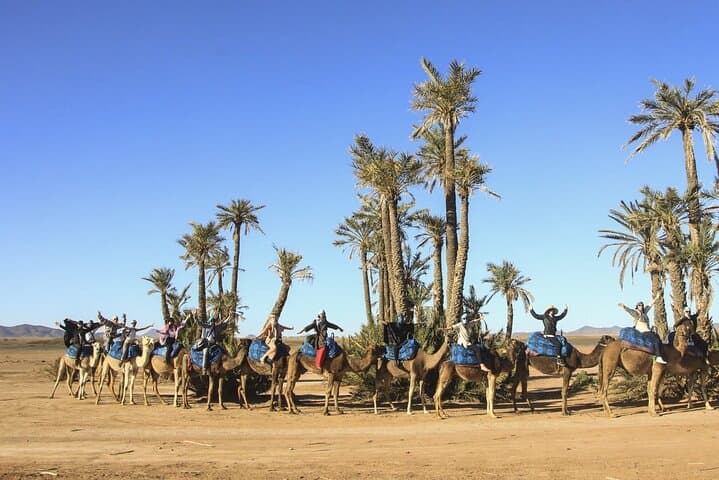
The late-afternoon sun slants between rows of date palms, turning the Palmeraie’s trunks to long, cool columns as a caravan of camels eases forward. Each step rocks you gently; the animals seem to know the rhythm of the place, carrying visitors away from the noise of Jemaa el-Fnaa into an expanse of green and light.
The late-afternoon sun slants between rows of date palms, turning the Palmeraie’s trunks to long, cool columns as a caravan of camels eases forward. Each step rocks you gently; the animals seem to know the rhythm of the place, carrying visitors away from the noise of Jemaa el-Fnaa into an expanse of green and light.
The Palmeraie is an irrigated oasis on Marrakech’s northern edge, shaped by centuries of local agriculture and later altered during the French protectorate when villas and gardens expanded into the grove. Geology here is simple—sandy soils fed by traditional khettara irrigation—while culture is layered: Berber farming families still tend parcels and offer mint tea, a small social exchange that colors the ride.
Expect a guided, roughly one-hour camel circuit that threads palm-lined tracks and skims the outskirts of small villages. Guides pause for photos and a tea break with Moroccan pancakes; the experience is as much about people and the pace of the landscape as it is about the animals.
Practical notes: book for an hour before sunset for soft light and cooler temperatures; wear closed-toe shoes and a sun hat; carry cash for tips and souvenirs. This activity suits most fitness levels but is not recommended for guests with spinal issues or pregnancy. Respect local customs—smart-casual attire and modest behavior at village stops—and leave no trace on trails or in groves.
The ride is a compact, sensory way to meet Marrakech’s palm oasis—quiet, tactile, and easily scheduled into a longer visit to the Red City.