THE ADVENTURE COLLECTIVE® · Independent discovery and booking for outdoor travel

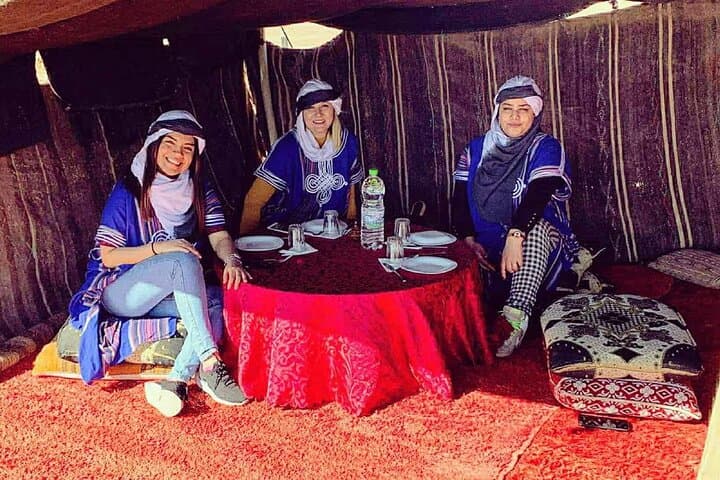
Trade Marrakech’s bustle for the stony red plains of Agafay on a private camel ride timed for sunset. This half-day experience includes hotel pickup, mint tea at a Bedouin-style camp, a one-hour dromedary ride, and drop-off back in the city.
Trade Marrakech’s bustle for the stony red plains of Agafay on a private camel ride timed for sunset. This half-day experience includes hotel pickup, mint tea at a Bedouin-style camp, a one-hour dromedary ride, and drop-off back in the city.
You leave Marrakech behind on a low, sun-baked road, olive groves sliding past the window, and the High Atlas sharpening on the horizon. The Agafay Desert opens as a wide, stony plain: low red dunes dotted with wind-sculpted rocks. Camels stand patient near a Bedouin-style tent; the guide adjusts the saddle as the light thins and the first cool breeze arrives.
Verified experiences and guided adventures in the surrounding area.
Operated by Marrakech Tours · Marrakech, Marrakesh-Safi
You leave Marrakech behind on a low, sun-baked road, olive groves sliding past the window, and the High Atlas sharpening on the horizon. The Agafay Desert opens as a wide, stony plain: low red dunes dotted with wind-sculpted rocks. Camels stand patient near a Bedouin-style tent; the guide adjusts the saddle as the light thins and the first cool breeze arrives.
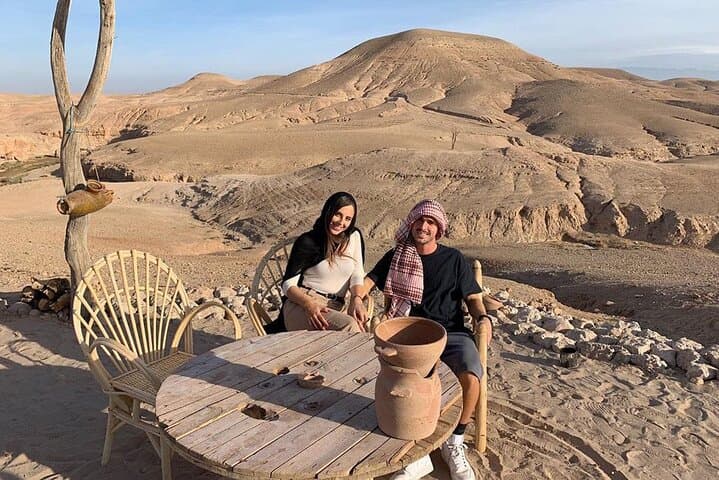
Geologically Agafay is a rocky reg plain rather than the sweeping Saharan dunes—an exposed plate of broken stones and compacted sand formed from Atlas erosion and alluvial deposits. Culturally the area sits in the transition zone between Marrakech’s oasis agriculture and Berber highland communities; mint tea and pastries are local rituals, and evening gatherings in tents echo long-standing hospitality traditions.
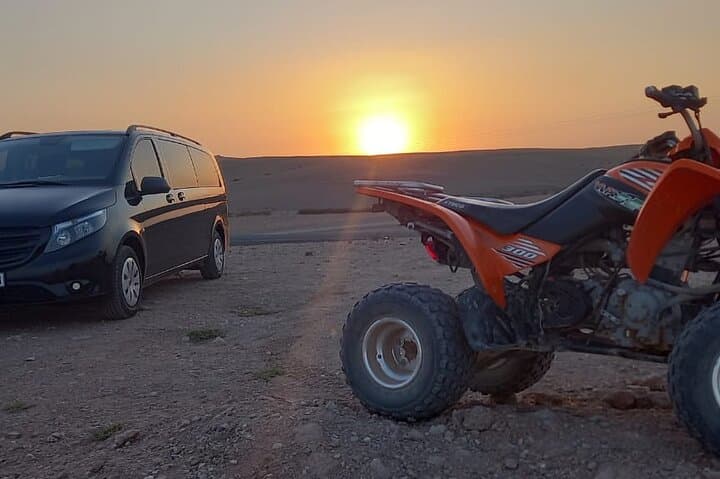
Expect a roughly 40-minute drive from Marrakech (about 30–40 km), a short camp visit, a one-hour camel ride timed for sunset, and a relaxed return to your hotel. Terrain underfoot is firm and uneven—small dunes, gravel, and occasional stone ledges—at elevations similar to Marrakech, with the Atlas rising to the south.
Practical guidance: schedule the ride for late afternoon to avoid heat, wear closed-toe shoes and sun protection, and bring a camera with extra battery. The camel pace is steady and gentle, suitable for most travelers; inform the operator of mobility concerns ahead of time. Respect the camp spaces, tip guides for animal care, and leave no trace—this fragile, semi-arid landscape recovers slowly from foot and hoof traffic.
easy.
4 hours.
Suitable for most fitness levels; you should be able to mount a camel and sit for an hour.
The guided camel ride included with this tour is typically one hour, timed to watch the sunset and capture changing light.
Yes—this private experience includes pickup and drop-off from hotels in Marrakech with an air-conditioned vehicle.
Yes; camels used for tourist rides are accustomed to riders and move at a slow, steady pace, but follow your guide’s mounting and dismounting instructions.
The operator lists wheelchair accessibility for vehicles and limited accessibility at the camp, but the camel ride itself requires mounting and is not suitable for most wheelchairs—contact the provider to confirm accommodations.
Agafay is a rocky ‘reg’ landscape formed by Atlas erosion; the area has long been used seasonally by Berber shepherds and as grazing land rather than a classic sandy Sahara.
The semi-arid soil and sparse vegetation recover slowly from disturbance—stick to established paths, avoid bringing plastic waste, and support camps that source local materials and pay guides fairly.
Marrakech Tours operates guided outdoor trips and adventures with an emphasis on safety, stewardship, and memorable experiences.
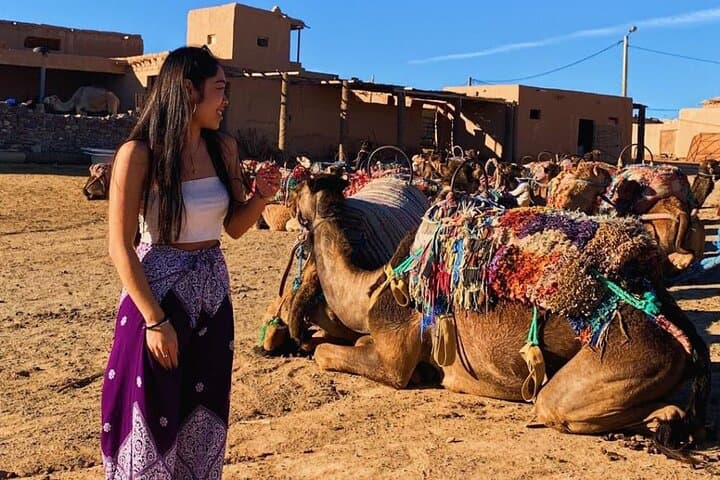
You leave Marrakech behind on a low, sun-baked road, olive groves sliding past the window, and the High Atlas sharpening on the horizon. The Agafay Desert opens as a wide, stony plain: low red dunes dotted with wind-sculpted rocks. Camels stand patient near a Bedouin-style tent; the guide adjusts the saddle as the light thins and the first cool breeze arrives.
You leave Marrakech behind on a low, sun-baked road, olive groves sliding past the window, and the High Atlas sharpening on the horizon. The Agafay Desert opens as a wide, stony plain: low red dunes dotted with wind-sculpted rocks. Camels stand patient near a Bedouin-style tent; the guide adjusts the saddle as the light thins and the first cool breeze arrives.
Geologically Agafay is a rocky reg plain rather than the sweeping Saharan dunes—an exposed plate of broken stones and compacted sand formed from Atlas erosion and alluvial deposits. Culturally the area sits in the transition zone between Marrakech’s oasis agriculture and Berber highland communities; mint tea and pastries are local rituals, and evening gatherings in tents echo long-standing hospitality traditions.
Expect a roughly 40-minute drive from Marrakech (about 30–40 km), a short camp visit, a one-hour camel ride timed for sunset, and a relaxed return to your hotel. Terrain underfoot is firm and uneven—small dunes, gravel, and occasional stone ledges—at elevations similar to Marrakech, with the Atlas rising to the south.
Practical guidance: schedule the ride for late afternoon to avoid heat, wear closed-toe shoes and sun protection, and bring a camera with extra battery. The camel pace is steady and gentle, suitable for most travelers; inform the operator of mobility concerns ahead of time. Respect the camp spaces, tip guides for animal care, and leave no trace—this fragile, semi-arid landscape recovers slowly from foot and hoof traffic.