THE ADVENTURE COLLECTIVE® · Independent discovery and booking for outdoor travel

Watch sunset from a dromedary across Agafay’s stony plains, then settle into a haima for traditional Moroccan dinner and live music. This half-day experience pairs simple desert travel with cultural performance and an accessible, photogenic sunset ride.
Watch sunset from a dromedary across Agafay’s stony plains, then settle into a haima for traditional Moroccan dinner and live music. This half-day experience pairs simple desert travel with cultural performance and an accessible, photogenic sunset ride.
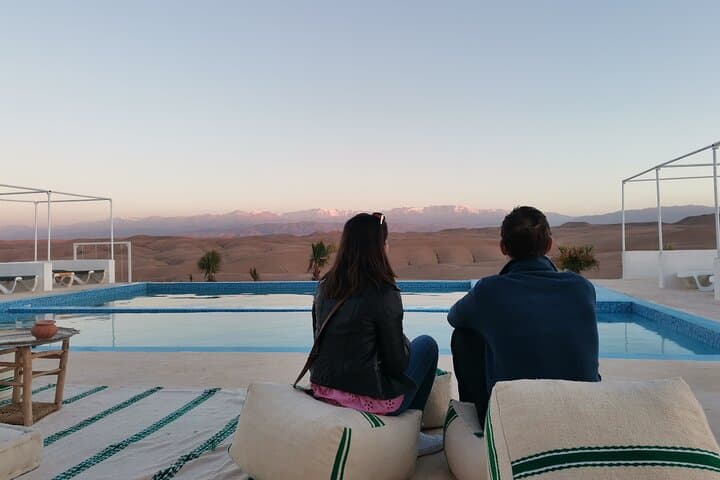
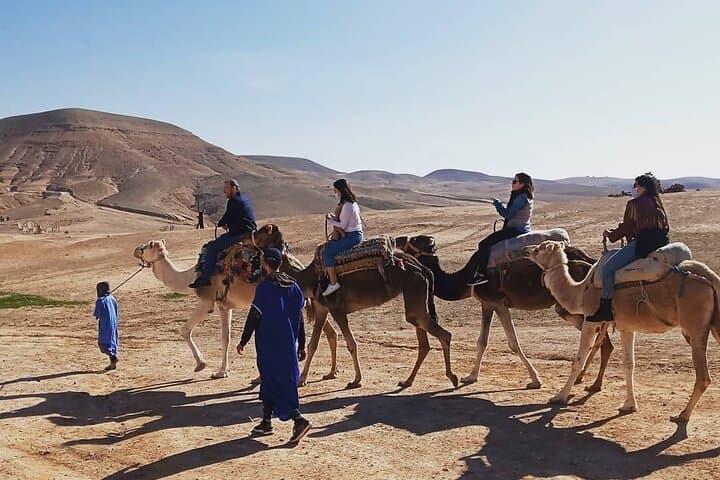
Late afternoon light thins into honey as the road leaves Marrakech behind and the landscape hardens into the Agafay—an expanse of stony, ochre plains that dares you to slow down. Camels stand patient against a sky that softens from blue to pink; the wind sketches the dry ground and the occasional scrub tree leans like an old listener. Mounting a dromedary here feels deliberate: each step is steady, the animal's gait setting the rhythm for watching the sun lower toward the Atlas foothills.
Verified experiences and guided adventures in the surrounding area.
Operated by Morocco Sahara Desert Travel · Marrakech, Marrakech-Safi
Late afternoon light thins into honey as the road leaves Marrakech behind and the landscape hardens into the Agafay—an expanse of stony, ochre plains that dares you to slow down. Camels stand patient against a sky that softens from blue to pink; the wind sketches the dry ground and the occasional scrub tree leans like an old listener. Mounting a dromedary here feels deliberate: each step is steady, the animal's gait setting the rhythm for watching the sun lower toward the Atlas foothills.
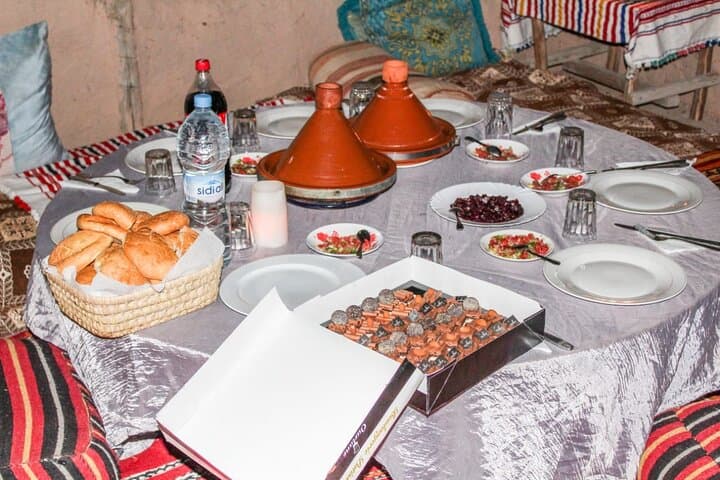
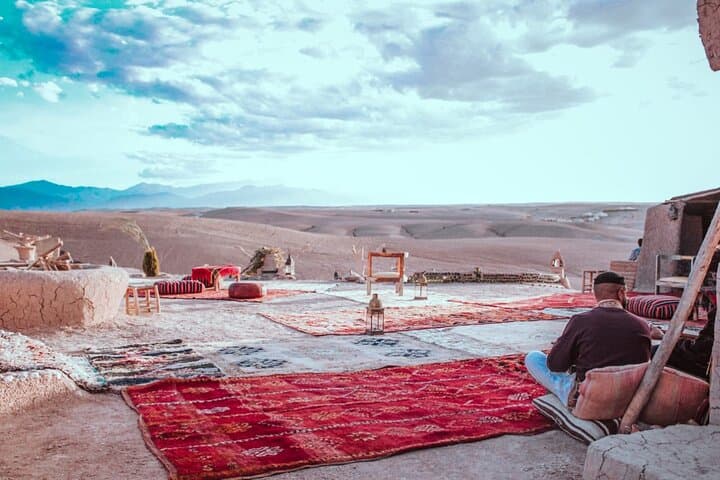
Geologically the Agafay is not Sahara sand but a reg—a stony desert created by millennia of erosion and alluvial fans spilling from nearby ranges. Culturally this is Berber land where tents (haimas) and music maintain a living link to pastoral life; an evening meal in a haima is as much performance as hospitality, with gnawa rhythms and tagines offering texture to the night.
Practically: tours typically run 6–7 hours with hotel pickup from Marrakech, an hour camel ride timed for sunset, followed by dinner and live music. The terrain is flat to rolling stone—no technical hiking—but bring sun protection, closed-toe shoes for the camel mounting area, and a light layer for post-sunset chill. Photography is constant but be mindful of guides and riders when moving around camels. If you have back or heart issues, or are pregnant, this experience is not recommended. Expect basic facilities at the haima; tipping local guides and handlers supports small families who rely on tourism here.
This itinerary balances simple logistics with a vivid, sensory evening—one part desert, one part cultural table, all within an easy drive from Marrakech.
moderate.
6–7 hours.
Moderate fitness — able to mount a camel and sit for about an hour; comfortable walking on uneven ground
Yes—most operators include round-trip pickup from Marrakech accommodations; confirm your pickup point at booking.
No—this tour is not recommended for pregnant travelers or those with serious back or heart conditions.
The camel ride lasts about one hour and the full experience (pickup, transfer, ride, dinner, return) runs roughly 6–7 hours.
Children are allowed but must be accompanied by an adult; infant seats are available on request for transfers.
Agafay is a stony reg formed by erosion from the High Atlas; historically it sat along local routes linking Marrakech to mountain and plateau communities.
Operators encourage low-impact visits—avoid littering, minimize water use, and support local guides and artisans to keep tourism benefits local.
Morocco Sahara Desert Travel operates guided outdoor trips and adventures with an emphasis on safety, stewardship, and memorable experiences.
Late afternoon light thins into honey as the road leaves Marrakech behind and the landscape hardens into the Agafay—an expanse of stony, ochre plains that dares you to slow down. Camels stand patient against a sky that softens from blue to pink; the wind sketches the dry ground and the occasional scrub tree leans like an old listener. Mounting a dromedary here feels deliberate: each step is steady, the animal's gait setting the rhythm for watching the sun lower toward the Atlas foothills.
Late afternoon light thins into honey as the road leaves Marrakech behind and the landscape hardens into the Agafay—an expanse of stony, ochre plains that dares you to slow down. Camels stand patient against a sky that softens from blue to pink; the wind sketches the dry ground and the occasional scrub tree leans like an old listener. Mounting a dromedary here feels deliberate: each step is steady, the animal's gait setting the rhythm for watching the sun lower toward the Atlas foothills.
Geologically the Agafay is not Sahara sand but a reg—a stony desert created by millennia of erosion and alluvial fans spilling from nearby ranges. Culturally this is Berber land where tents (haimas) and music maintain a living link to pastoral life; an evening meal in a haima is as much performance as hospitality, with gnawa rhythms and tagines offering texture to the night.
Practically: tours typically run 6–7 hours with hotel pickup from Marrakech, an hour camel ride timed for sunset, followed by dinner and live music. The terrain is flat to rolling stone—no technical hiking—but bring sun protection, closed-toe shoes for the camel mounting area, and a light layer for post-sunset chill. Photography is constant but be mindful of guides and riders when moving around camels. If you have back or heart issues, or are pregnant, this experience is not recommended. Expect basic facilities at the haima; tipping local guides and handlers supports small families who rely on tourism here.
This itinerary balances simple logistics with a vivid, sensory evening—one part desert, one part cultural table, all within an easy drive from Marrakech.