THE ADVENTURE COLLECTIVE® · Independent discovery and booking for outdoor travel

Trade Marrakech’s bustle for the Agafay’s stony expanse on a 1.5-hour sunset camel ride. Enjoy mint tea, a local house visit and sweeping views of the Atlas Mountains as light falls across the plateau.
Trade Marrakech’s bustle for the Agafay’s stony expanse on a 1.5-hour sunset camel ride. Enjoy mint tea, a local house visit and sweeping views of the Atlas Mountains as light falls across the plateau.
The van eases out of Marrakech and the colors of the city peel away—then the landscape flattens into the Agafay’s stony plains, an expanse of compacted gravel and low scrub that throws back the last light. You meet the herd as the sun starts to tilt, share steaming mint tea under a low awning and climb onto a patient camel whose steady step sets the afternoon’s rhythm.
Verified experiences and guided adventures in the surrounding area.
Operated by Toubkal Guide · Marrakech, Marrakech-Safi
The van eases out of Marrakech and the colors of the city peel away—then the landscape flattens into the Agafay’s stony plains, an expanse of compacted gravel and low scrub that throws back the last light. You meet the herd as the sun starts to tilt, share steaming mint tea under a low awning and climb onto a patient camel whose steady step sets the afternoon’s rhythm.
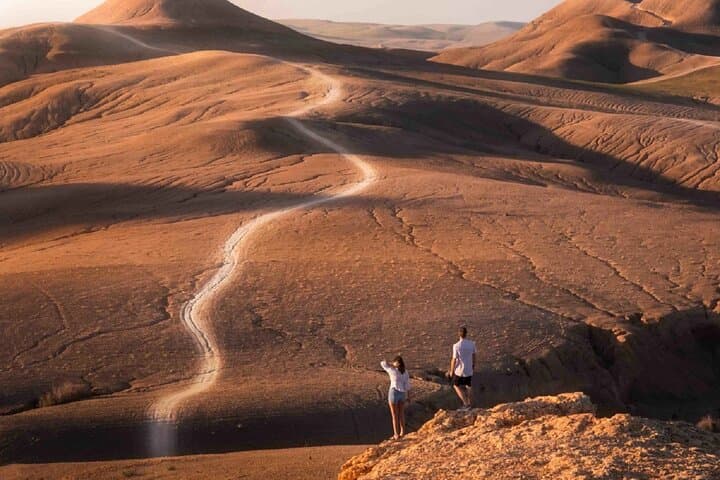
Agafay is not a Saharan dune sea but a “stone desert” on the foothills of the High Atlas, shaped by millennia of erosion and seasonal torrents that left a hard, pebble-strewn surface. The presence of the Atlas—often capped with winter snow—gives the ride a dramatic backdrop and explains the long human history of trade and travel in the region. Local families keep pockets of hospitality here; a stop at a nearby house introduces traditional teas, music and a view into rural life outside Marrakech.
Expect 45 minutes of road transfer from the city, a 1.5-hour camel caravan and time for photos and a short cultural stop—about three hours total. The terrain is flat but uneven underfoot; the ride is gentle but requires basic balance when mounting. Pack sun protection, a light jacket for early evening chills, and a reusable water bottle. Aim for the hour before sunset to catch warm light on the rocks and the silhouette of the Atlas. The Agafay’s wind and skeletal vistas will test your eyelids with dust and delight your camera with clean, open horizons.
easy.
1.5–3 hours.
Suitable for most fitness levels; requires basic mobility for mounting and sitting on a camel for 90 minutes
The camel caravan is about 1.5 hours; the full excursion including transfers and a short cultural stop is roughly three hours.
Yes—camels used for these tours are accustomed to riders and handlers lead the caravan; basic balance and care when mounting are recommended.
There are multiple meeting points in Marrakech; upgrade options commonly include hotel or riad pickup and drop-off in an air-conditioned vehicle.
No—Agafay is a rocky plateau near Marrakech, not the sandy dunes of the Sahara; it offers wide views and a different desert environment.
The Agafay lies on traditional caravan routes linking Marrakech to mountain valleys; local settlements have traded pastoral life and crafts for centuries.
Tours are increasingly mindful of water use and waste—bring reusable containers and follow guides’ instructions to avoid disturbing fragile vegetation.
Toubkal Guide operates guided outdoor trips and adventures with an emphasis on safety, stewardship, and memorable experiences.
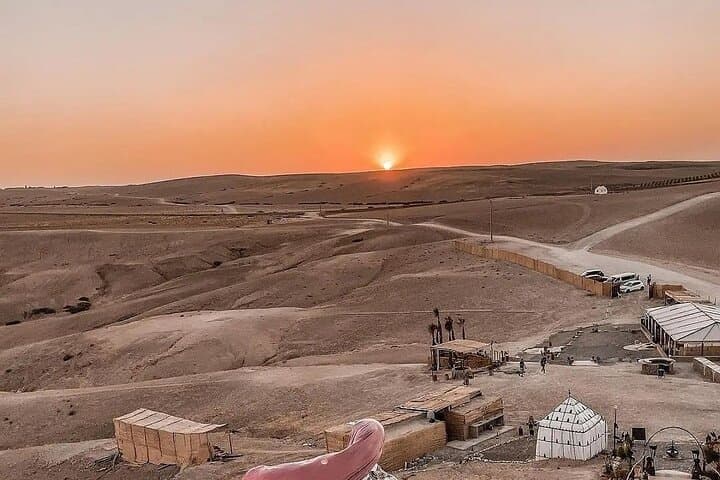
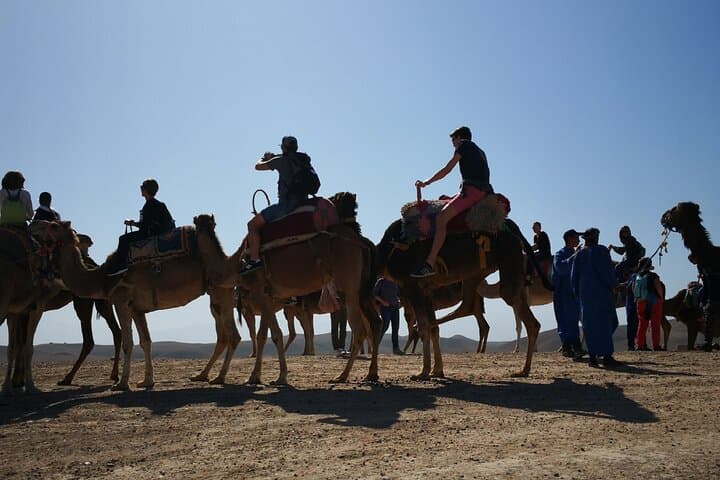
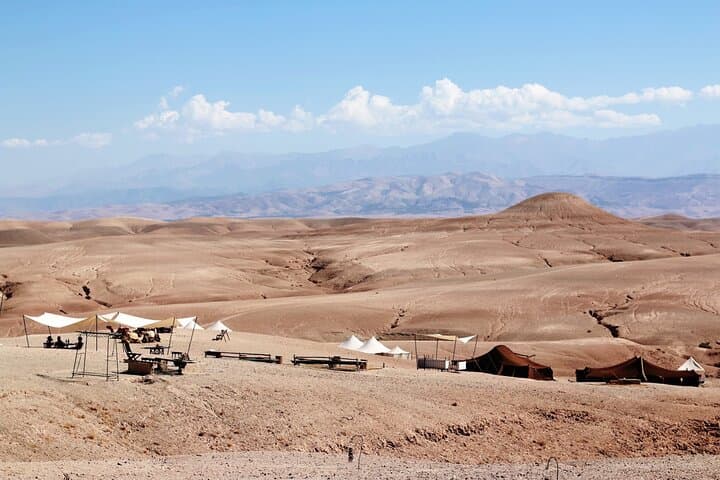
The van eases out of Marrakech and the colors of the city peel away—then the landscape flattens into the Agafay’s stony plains, an expanse of compacted gravel and low scrub that throws back the last light. You meet the herd as the sun starts to tilt, share steaming mint tea under a low awning and climb onto a patient camel whose steady step sets the afternoon’s rhythm.
The van eases out of Marrakech and the colors of the city peel away—then the landscape flattens into the Agafay’s stony plains, an expanse of compacted gravel and low scrub that throws back the last light. You meet the herd as the sun starts to tilt, share steaming mint tea under a low awning and climb onto a patient camel whose steady step sets the afternoon’s rhythm.
Agafay is not a Saharan dune sea but a “stone desert” on the foothills of the High Atlas, shaped by millennia of erosion and seasonal torrents that left a hard, pebble-strewn surface. The presence of the Atlas—often capped with winter snow—gives the ride a dramatic backdrop and explains the long human history of trade and travel in the region. Local families keep pockets of hospitality here; a stop at a nearby house introduces traditional teas, music and a view into rural life outside Marrakech.
Expect 45 minutes of road transfer from the city, a 1.5-hour camel caravan and time for photos and a short cultural stop—about three hours total. The terrain is flat but uneven underfoot; the ride is gentle but requires basic balance when mounting. Pack sun protection, a light jacket for early evening chills, and a reusable water bottle. Aim for the hour before sunset to catch warm light on the rocks and the silhouette of the Atlas. The Agafay’s wind and skeletal vistas will test your eyelids with dust and delight your camera with clean, open horizons.