THE ADVENTURE COLLECTIVE® · Independent discovery and booking for outdoor travel

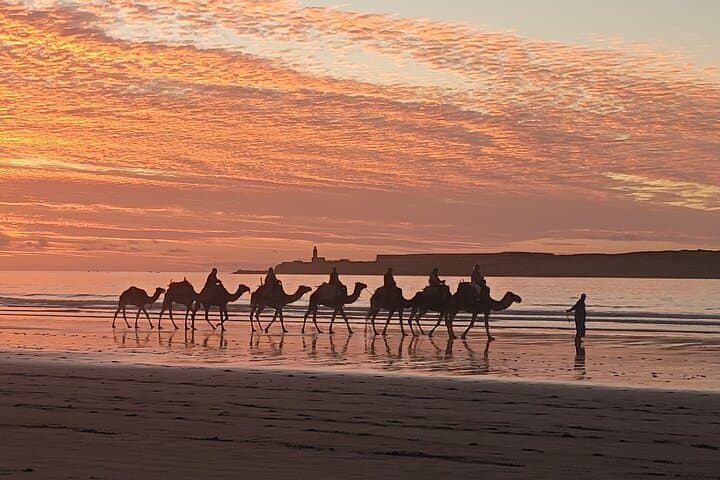
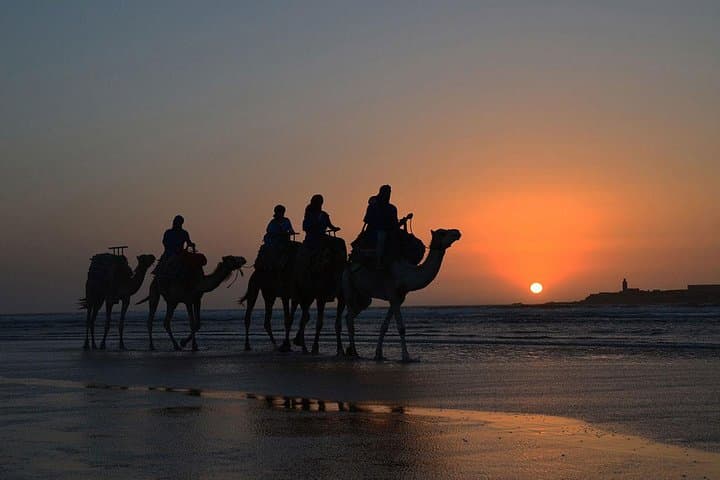
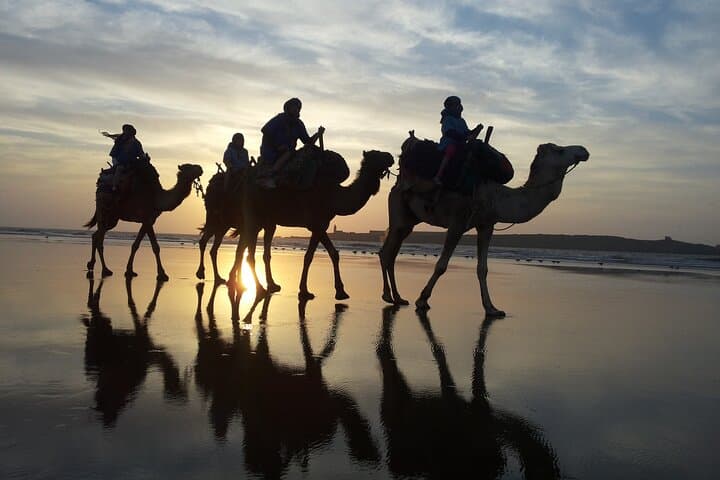
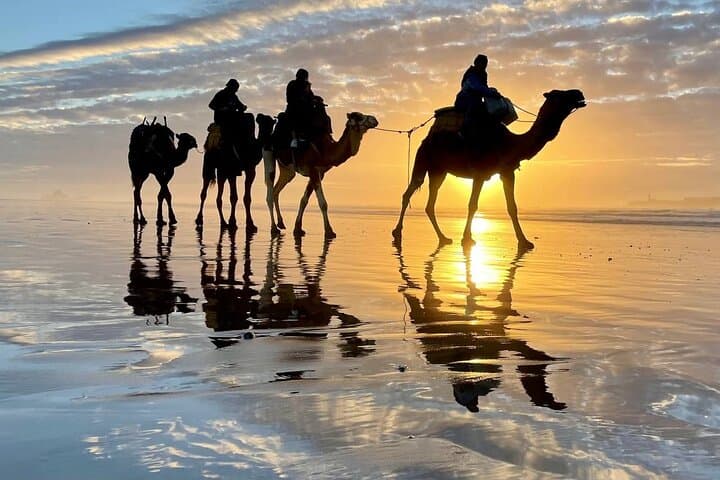
Trace the Atlantic shore on a three-hour camel ride from Essaouira, moving through eucalyptus groves, windswept dunes and coastal ruins as the sun dips toward the sea. A guided picnic and cultural commentary make this a relaxed, informative sunset experience.
Trace the Atlantic shore on a three-hour camel ride from Essaouira, moving through eucalyptus groves, windswept dunes and coastal ruins as the sun dips toward the sea. A guided picnic and cultural commentary make this a relaxed, informative sunset experience.
The ride begins when the light softens and the Atlantic edge cools: camels file out from a salt-dusted track, their hooves whispering over packed sand as gulls wheel overhead. For three hours you move between surf and scrub, the wind teasing the djellaba provided by your guide and the dunes daring you to pause and look back at the town’s white roofs shrinking toward the harbor.
Verified experiences and guided adventures in the surrounding area.
Operated by Lima Dromadaires · Essaouira, Marrakesh-Safi
The ride begins when the light softens and the Atlantic edge cools: camels file out from a salt-dusted track, their hooves whispering over packed sand as gulls wheel overhead. For three hours you move between surf and scrub, the wind teasing the djellaba provided by your guide and the dunes daring you to pause and look back at the town’s white roofs shrinking toward the harbor.
This coastline holds layers of history — Phoenician and Berber trade routes, a 16th-century Portuguese borj (fort) and the quiet village of Diabat whose ruins recall past conflicts between seafarers and sultans. Geologically, the landscape alternates compacted beach, wind-sculpted dune fields and stands of introduced Eucalyptus that anchor the sand behind the shoreline.
Cultural touches arrive in small rituals: a stop for royal mint tea, homemade bread brushed with argan oil, and a guide’s short explanation of the dromedary’s anatomy and role in local life. The rhythm of the camel makes conversation easy and the pace invites observation — tracks of shorebirds, tumbled pottery fragments, and the slow geometry of dunes.
Practical guidance: arrive with sun protection and closed shoes; the provided djellaba helps against sand and evening chill. Expect sandy terrain and occasional uneven footing when mounting or dismounting. A picnic break about an hour in offers shade and refueling; bring any personal medication and a camera with a strap. Evening light shifts fast — plan transport back to Essaouira before full dark. Operators typically brief riders before departure, and the ride is family-friendly but not recommended for those with serious back problems.
easy.
3 hours.
Suitable for most fitness levels; ability to mount a camel and sit comfortably for 2–3 hours required
Yes; the tour is family-friendly and operators can accommodate children, though infants may need to sit on an adult’s lap and comfort mounting should be considered.
Facilities are limited on the route; use facilities in Essaouira before departure and expect only basic stops during the ride and picnic.
Wear sun-protective clothing, closed-toe shoes, and bring a light jacket for the cool breeze after sunset; a djellaba is provided to guard against sand.
Meeting points are typically close to Essaouira’s outskirts; most overnight visitors stay in Essaouira and transfers or meeting details are confirmed with the operator.
Essaouira’s coast has been a crossroads of Berber, Portuguese and Moroccan influence; the nearby borj and Diabat traces reflect centuries of maritime trade and conflict.
Dune ecosystems are fragile—stay on established tracks, avoid trampling vegetation, and choose operators that manage camel welfare and limit group sizes.
Lima Dromadaires operates guided outdoor trips and adventures with an emphasis on safety, stewardship, and memorable experiences.
The ride begins when the light softens and the Atlantic edge cools: camels file out from a salt-dusted track, their hooves whispering over packed sand as gulls wheel overhead. For three hours you move between surf and scrub, the wind teasing the djellaba provided by your guide and the dunes daring you to pause and look back at the town’s white roofs shrinking toward the harbor.
The ride begins when the light softens and the Atlantic edge cools: camels file out from a salt-dusted track, their hooves whispering over packed sand as gulls wheel overhead. For three hours you move between surf and scrub, the wind teasing the djellaba provided by your guide and the dunes daring you to pause and look back at the town’s white roofs shrinking toward the harbor.
This coastline holds layers of history — Phoenician and Berber trade routes, a 16th-century Portuguese borj (fort) and the quiet village of Diabat whose ruins recall past conflicts between seafarers and sultans. Geologically, the landscape alternates compacted beach, wind-sculpted dune fields and stands of introduced Eucalyptus that anchor the sand behind the shoreline.
Cultural touches arrive in small rituals: a stop for royal mint tea, homemade bread brushed with argan oil, and a guide’s short explanation of the dromedary’s anatomy and role in local life. The rhythm of the camel makes conversation easy and the pace invites observation — tracks of shorebirds, tumbled pottery fragments, and the slow geometry of dunes.
Practical guidance: arrive with sun protection and closed shoes; the provided djellaba helps against sand and evening chill. Expect sandy terrain and occasional uneven footing when mounting or dismounting. A picnic break about an hour in offers shade and refueling; bring any personal medication and a camera with a strap. Evening light shifts fast — plan transport back to Essaouira before full dark. Operators typically brief riders before departure, and the ride is family-friendly but not recommended for those with serious back problems.