THE ADVENTURE COLLECTIVE® · Independent discovery and booking for outdoor travel

Catch the desert at golden hour on a gentle camel trek, then settle into an evening of Rajasthani music and a buffet dinner beneath the stars. Practical tips cover timing, health limits, and what to pack so you arrive ready for the dunes.
Catch the desert at golden hour on a gentle camel trek, then settle into an evening of Rajasthani music and a buffet dinner beneath the stars. Practical tips cover timing, health limits, and what to pack so you arrive ready for the dunes.
The ride begins as the sun simplifies itself into a coin and slides toward the rim of the Thar Desert. Travelers climb aboard slow-moving camels and cross wind-sculpted dunes while the sand seems to nudge them onward, shaping each footstep into a deliberate rhythm.
Verified experiences and guided adventures in the surrounding area.
Operated by Shahi Camel Safari Jaisalmer · Jaisalmer, Rajasthan
The ride begins as the sun simplifies itself into a coin and slides toward the rim of the Thar Desert. Travelers climb aboard slow-moving camels and cross wind-sculpted dunes while the sand seems to nudge them onward, shaping each footstep into a deliberate rhythm.
Jaisalmer sits on a sandstone ridge and long served as a trading post between India and western caravan routes; the camel remains both transport and cultural icon. Geologically, the dunes are recent Holocene deposits—loose, shifting sand over older baked sandstone outcrops that form the town’s golden fortress. Local culture centers on Rajasthani music, dance, and cuisine: expect live folk performances after sunset and a buffet of regional dishes served under the open sky.
Practical guidance: departures align to catch sunset—arrive at least 30 minutes early for transfers and saddle adjustments. The route is gentle; camels move steadily but mounting can strain the lower back, so heed health warnings. Wear closed, stable shoes for dune walking, carry 1–2 liters of water, and bring a light layer for post-sunset temperatures that drop quickly. Photography rewards discipline—silhouettes and warm stone tones peak in the 20 minutes after the sun dips.
Logistics: the experience runs roughly 6–8 hours including transfers, cultural program, and dinner. It’s family-friendly but not recommended for pregnant travelers or those with spinal or serious cardiovascular conditions. Be prepared to tip guides and respect livestock — camels here are working animals, not props.
easy.
6–8 hours.
Suitable for most fitness levels; must be able to mount/dismount a camel and walk short uneven dune sections.
The camel segment is typically 30–60 minutes, embedded within a 6–8 hour program that includes transfers, a cultural show, and dinner.
Yes—children may ride, but infants must sit on an adult’s lap; handlers assess suitability based on age and size.
Casual, modest clothing that covers shoulders and knees is appropriate; bring a light layer for cooler evenings.
The tour may be canceled for bad weather or if minimum traveler numbers aren’t met; full refunds are typically provided if canceled at least 24 hours before departure.
Jaisalmer grew as a fortified trading hub on caravan routes; camel caravans once moved salt, spices, and cloth across these dunes, shaping local livelihoods and culture.
Visitors should avoid trampling fragile dune vegetation, carry out waste, and choose operators who provide humane care for camels and hire local staff.
Shahi Camel Safari Jaisalmer operates guided outdoor trips and adventures with an emphasis on safety, stewardship, and memorable experiences.
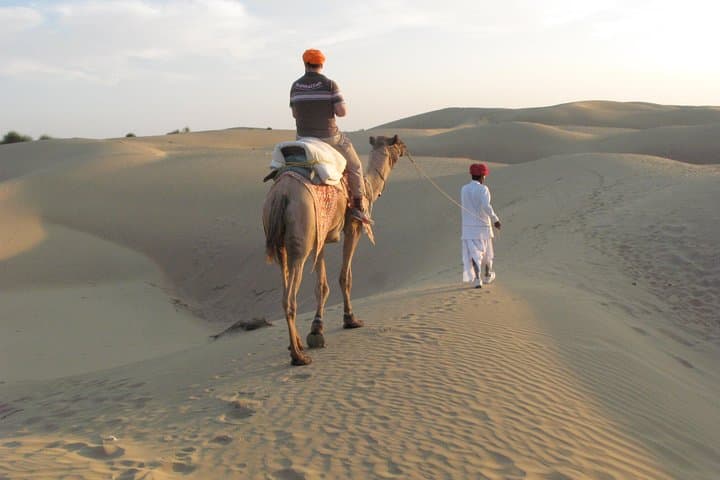
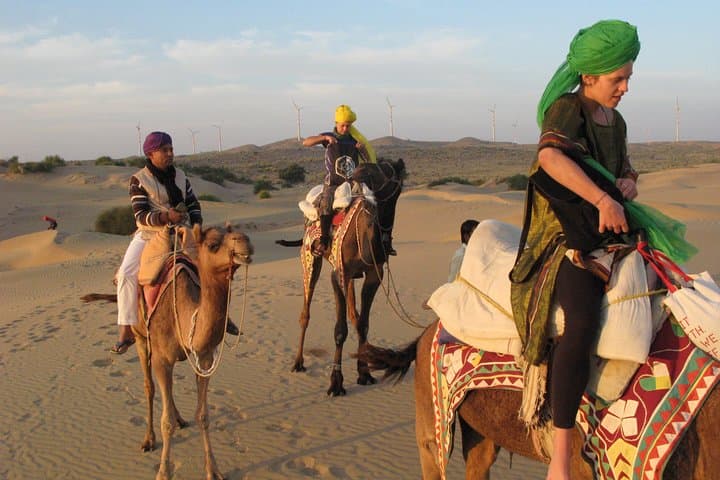
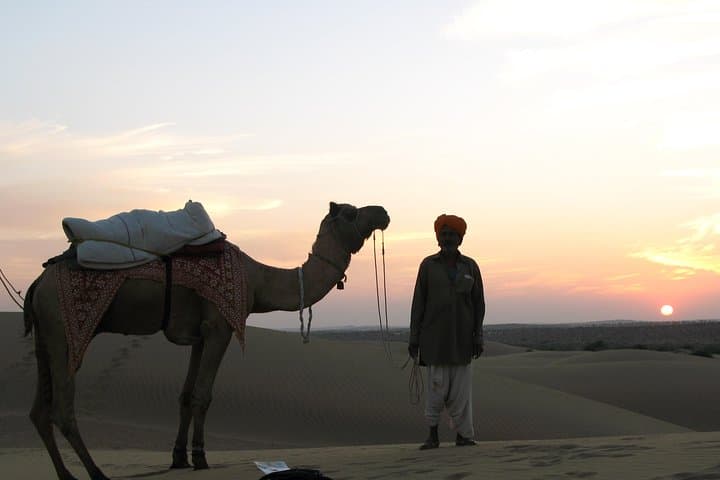
The ride begins as the sun simplifies itself into a coin and slides toward the rim of the Thar Desert. Travelers climb aboard slow-moving camels and cross wind-sculpted dunes while the sand seems to nudge them onward, shaping each footstep into a deliberate rhythm.
The ride begins as the sun simplifies itself into a coin and slides toward the rim of the Thar Desert. Travelers climb aboard slow-moving camels and cross wind-sculpted dunes while the sand seems to nudge them onward, shaping each footstep into a deliberate rhythm.
Jaisalmer sits on a sandstone ridge and long served as a trading post between India and western caravan routes; the camel remains both transport and cultural icon. Geologically, the dunes are recent Holocene deposits—loose, shifting sand over older baked sandstone outcrops that form the town’s golden fortress. Local culture centers on Rajasthani music, dance, and cuisine: expect live folk performances after sunset and a buffet of regional dishes served under the open sky.
Practical guidance: departures align to catch sunset—arrive at least 30 minutes early for transfers and saddle adjustments. The route is gentle; camels move steadily but mounting can strain the lower back, so heed health warnings. Wear closed, stable shoes for dune walking, carry 1–2 liters of water, and bring a light layer for post-sunset temperatures that drop quickly. Photography rewards discipline—silhouettes and warm stone tones peak in the 20 minutes after the sun dips.
Logistics: the experience runs roughly 6–8 hours including transfers, cultural program, and dinner. It’s family-friendly but not recommended for pregnant travelers or those with spinal or serious cardiovascular conditions. Be prepared to tip guides and respect livestock — camels here are working animals, not props.