THE ADVENTURE COLLECTIVE® · Independent discovery and booking for outdoor travel

Leave Marrakech for a short drive to the rocky Agafay plain where a brief camel caravan, argan cooperative visit, and a shared Berber dinner under the stars make for an accessible desert evening. Expect wide horizons, crunchy terrain, and a sunset that sharpens the Atlas silhouette.
Leave Marrakech for a short drive to the rocky Agafay plain where a brief camel caravan, argan cooperative visit, and a shared Berber dinner under the stars make for an accessible desert evening. Expect wide horizons, crunchy terrain, and a sunset that sharpens the Atlas silhouette.
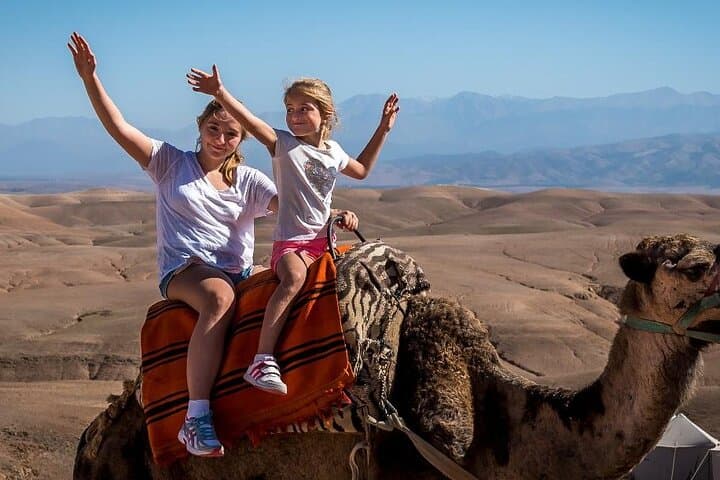
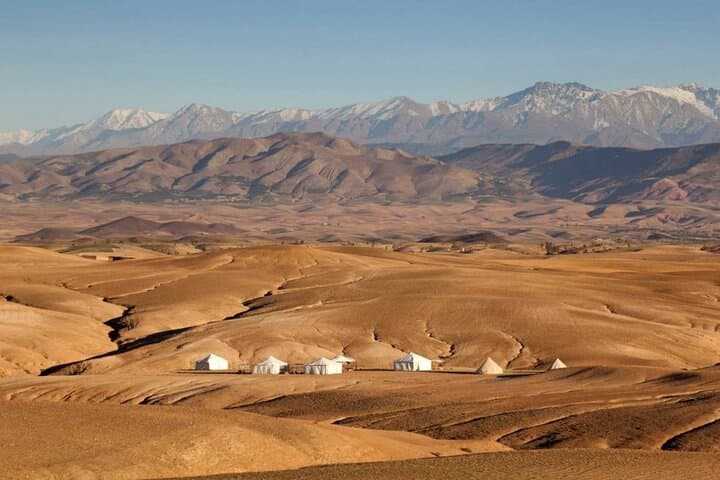
The van pulls off the ring road and the city noise thins to a hum. Under a wide cobalt sky the Agafay’s stony plains open like an unexpected sea — low, rolling mounds of packed earth and pale quartz grit that catch the last light. Guests dismount to meet a caravan of camels; the animals shift, patient and deliberate, as the horizon reddens behind the High Atlas.
Verified experiences and guided adventures in the surrounding area.
Operated by Explore Morocco's wonders · Marrakech, Marrakesh-Safi
The van pulls off the ring road and the city noise thins to a hum. Under a wide cobalt sky the Agafay’s stony plains open like an unexpected sea — low, rolling mounds of packed earth and pale quartz grit that catch the last light. Guests dismount to meet a caravan of camels; the animals shift, patient and deliberate, as the horizon reddens behind the High Atlas.
Agafay isn’t a sand sea but a rocky, arid plateau formed by uplifted sediment and centuries of erosion, a landscape used by Berber communities for grazing and trade routes that skirted the Atlas. Nearby argan cooperatives preserve a local craft economy: women’s groups press oil and trade stories learned across generations. The camp’s evening program—mint tea, tajine, and drumming—reflects an intersection of contemporary tourism and authentic regional practice.
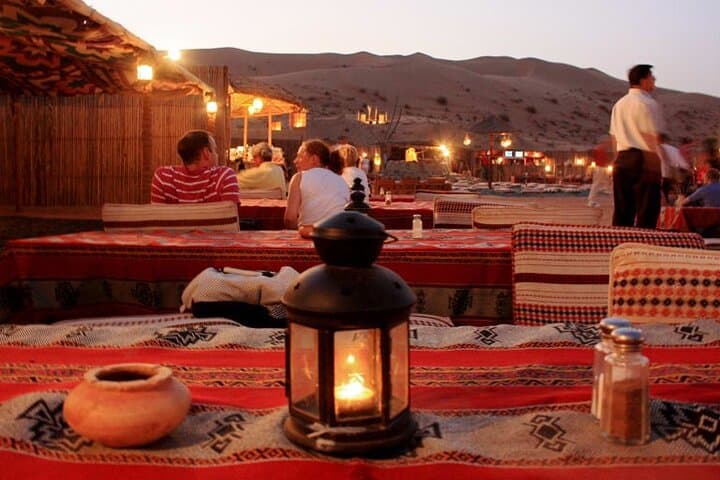
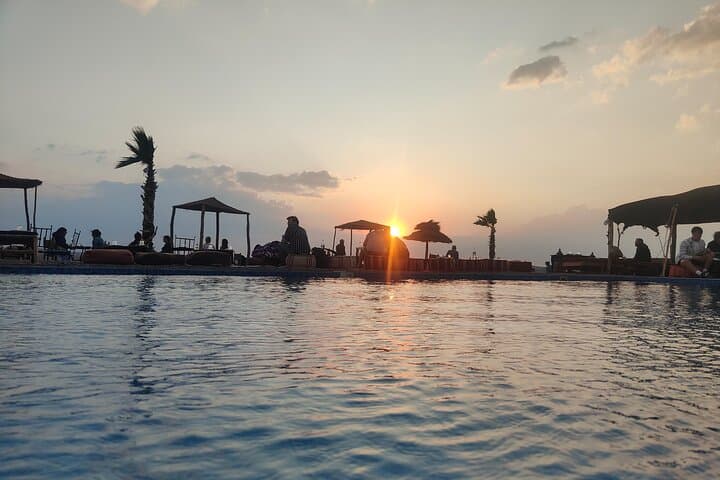
Expect a short camel ride (about 20–30 minutes), a cooperative visit, and a communal dinner beneath open sky. The geology is visible at every step: weather-polished stones, sparse scrub, and occasional splayed roots holding fast to thin soil. Sunsets here are sharp, the light throwing hard shadows across a minimalist terrain that rewards wide-angle attention.
Practicalities: transport from Marrakech is roughly 50–70 minutes depending on traffic; the excursion runs about 5–6 hours total. Wear closed shoes for walking among rubble, bring layered clothing as temperatures drop after sunset, and carry water to stay hydrated. If you plan the optional quad-bike, book and insurancerequirements in advance. For a smooth evening, confirm pickup point and dietary needs when you book.
easy.
5–6 hours.
Suitable for most fitness levels; involves short mounted camel ride and brief walking on uneven ground
The included camel ride is typically about 20–30 minutes, enough to enjoy the light and terrain without extensive riding experience.
Yes — round-trip transportation from central Marrakech hotels or designated pickup points is included; confirm the pickup time and location when booking.
Yes — the operator can accommodate vegetarian, vegan, and gluten-free requests if noted during booking or at pickup.
Yes — a 30-minute quad-bike option is often available for an extra fee (about €15); book in advance when possible and check any age or safety restrictions.
Agafay is a rocky plateau used historically for grazing and as a corridor near routes linking Marrakech to southern plains; nearby Berber communities maintain traditional crafts like argan oil production.
The area’s fragile soil and sparse vegetation recover slowly; stick to established tracks, minimize campfire impact, and support local cooperatives to ensure community benefits.
Explore Morocco's wonders operates guided outdoor trips and adventures with an emphasis on safety, stewardship, and memorable experiences.
The van pulls off the ring road and the city noise thins to a hum. Under a wide cobalt sky the Agafay’s stony plains open like an unexpected sea — low, rolling mounds of packed earth and pale quartz grit that catch the last light. Guests dismount to meet a caravan of camels; the animals shift, patient and deliberate, as the horizon reddens behind the High Atlas.
The van pulls off the ring road and the city noise thins to a hum. Under a wide cobalt sky the Agafay’s stony plains open like an unexpected sea — low, rolling mounds of packed earth and pale quartz grit that catch the last light. Guests dismount to meet a caravan of camels; the animals shift, patient and deliberate, as the horizon reddens behind the High Atlas.
Agafay isn’t a sand sea but a rocky, arid plateau formed by uplifted sediment and centuries of erosion, a landscape used by Berber communities for grazing and trade routes that skirted the Atlas. Nearby argan cooperatives preserve a local craft economy: women’s groups press oil and trade stories learned across generations. The camp’s evening program—mint tea, tajine, and drumming—reflects an intersection of contemporary tourism and authentic regional practice.
Expect a short camel ride (about 20–30 minutes), a cooperative visit, and a communal dinner beneath open sky. The geology is visible at every step: weather-polished stones, sparse scrub, and occasional splayed roots holding fast to thin soil. Sunsets here are sharp, the light throwing hard shadows across a minimalist terrain that rewards wide-angle attention.
Practicalities: transport from Marrakech is roughly 50–70 minutes depending on traffic; the excursion runs about 5–6 hours total. Wear closed shoes for walking among rubble, bring layered clothing as temperatures drop after sunset, and carry water to stay hydrated. If you plan the optional quad-bike, book and insurancerequirements in advance. For a smooth evening, confirm pickup point and dietary needs when you book.