THE ADVENTURE COLLECTIVE® · Independent discovery and booking for outdoor travel

Circle the Great Pyramids on camelback as late-day light sculpts the ancient stones. This practical guide covers what to expect, historic context, and essential tips for a safe, comfortable sunset ride.
Circle the Great Pyramids on camelback as late-day light sculpts the ancient stones. This practical guide covers what to expect, historic context, and essential tips for a safe, comfortable sunset ride.
The sun slides low behind the three ancient silhouettes and the desert exhales heat; a single camel's slow gait sets the rhythm as you circle the Great Pyramids. From the saddle the limestone faces of Khufu, Khafre and Menkaure loom large, their angled shadows spilling across wind-scoured sand.
Verified experiences and guided adventures in the surrounding area.
Operated by Three Pyramids Tours · Giza, Giza Governorate
The sun slides low behind the three ancient silhouettes and the desert exhales heat; a single camel's slow gait sets the rhythm as you circle the Great Pyramids. From the saddle the limestone faces of Khufu, Khafre and Menkaure loom large, their angled shadows spilling across wind-scoured sand.
This short safari blends an iconic camel ride with a crash course in Egyptian history. The Giza Plateau sits on Miocene and Eocene limestones that quarry the raw blocks seen in the pyramids, built as pharaonic tombs around 4,500 years ago. The area is as much a cultural stage as a geological one—camel handlers, guided by local operators, guide tourists while sharing practical knowledge about the site and its etiquette.
Expect quiet stretches of open sand, short bursts of uneven footing when mounting or dismounting, and panoramic viewpoints rather than an archaeological deep-dive. The operator typically provides pickup in an air-conditioned vehicle and a guide who times the ride for late afternoon light.
Practical notes: bring sun protection, a small daypack, and a water bottle; wear closed-toe shoes for the sandy approaches and modest clothing out of respect for local customs. The ride is low-impact but not recommended for people with spinal issues—handlers assist getting on and off. Carry small change for tips and a camera with a strap; phones can blow sand into ports.
A sunset camel ride here is short on technical challenge but long on atmosphere—an accessible way to stand next to structures that have shaped human history and feel the desert push at your edges.
easy.
5 hours.
Suitable for most fitness levels; requires basic mobility to mount/dismount a camel and walk short sandy approaches.
The full experience with pickup, briefings and the camel loop is about 3–5 hours; the on-camel portion typically runs 20–40 minutes depending on the operator.
Yes—many children take part, but handlers evaluate each rider; younger kids should fit securely in the saddle and have an adult accompany them.
No—climbing the pyramids is prohibited and heavily enforced; the tour offers external viewpoints and photo stops only.
The tour notes it’s wheelchair accessible for transfers and vehicle transport, but camel riding is not recommended for people with spinal injuries or severe mobility issues.
The three main pyramids at Giza date to Egypt’s Fourth Dynasty (c. 2600–2500 BCE) and were built as royal tombs; Khufu’s pyramid was the tallest man-made structure for millennia.
Stick to marked areas, avoid climbing or touching fragile masonry, and follow the guide’s instructions—visitor behavior directly affects site preservation and local stewardship.
Three Pyramids Tours operates guided outdoor trips and adventures with an emphasis on safety, stewardship, and memorable experiences.
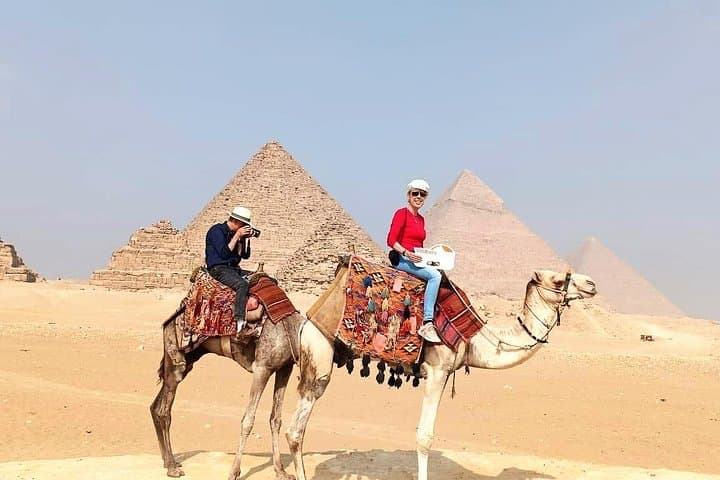
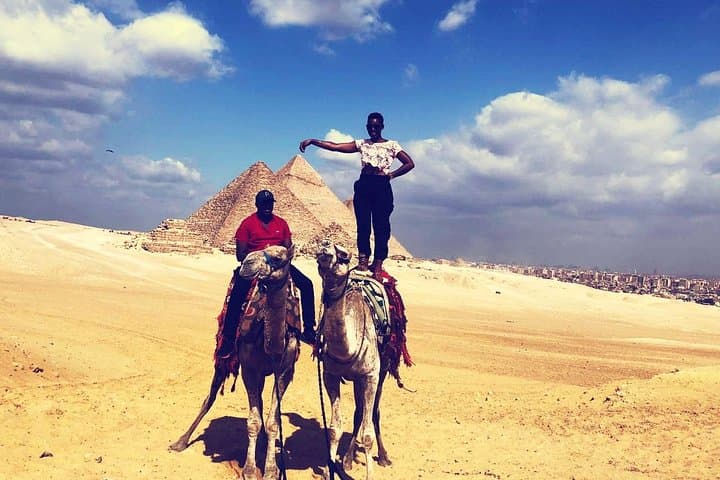
The sun slides low behind the three ancient silhouettes and the desert exhales heat; a single camel's slow gait sets the rhythm as you circle the Great Pyramids. From the saddle the limestone faces of Khufu, Khafre and Menkaure loom large, their angled shadows spilling across wind-scoured sand.
The sun slides low behind the three ancient silhouettes and the desert exhales heat; a single camel's slow gait sets the rhythm as you circle the Great Pyramids. From the saddle the limestone faces of Khufu, Khafre and Menkaure loom large, their angled shadows spilling across wind-scoured sand.
This short safari blends an iconic camel ride with a crash course in Egyptian history. The Giza Plateau sits on Miocene and Eocene limestones that quarry the raw blocks seen in the pyramids, built as pharaonic tombs around 4,500 years ago. The area is as much a cultural stage as a geological one—camel handlers, guided by local operators, guide tourists while sharing practical knowledge about the site and its etiquette.
Expect quiet stretches of open sand, short bursts of uneven footing when mounting or dismounting, and panoramic viewpoints rather than an archaeological deep-dive. The operator typically provides pickup in an air-conditioned vehicle and a guide who times the ride for late afternoon light.
Practical notes: bring sun protection, a small daypack, and a water bottle; wear closed-toe shoes for the sandy approaches and modest clothing out of respect for local customs. The ride is low-impact but not recommended for people with spinal issues—handlers assist getting on and off. Carry small change for tips and a camera with a strap; phones can blow sand into ports.
A sunset camel ride here is short on technical challenge but long on atmosphere—an accessible way to stand next to structures that have shaped human history and feel the desert push at your edges.