THE ADVENTURE COLLECTIVE® · Independent discovery and booking for outdoor travel

Experience the Pyramids of Giza from the back of a camel at sunset—sand, light and the Great Pyramid's profile make for unforgettable photos and quiet, low-effort exploration. This five-hour excursion pairs a short camel ride with local insight into the plateau's history and layout.
Experience the Pyramids of Giza from the back of a camel at sunset—sand, light and the Great Pyramid's profile make for unforgettable photos and quiet, low-effort exploration. This five-hour excursion pairs a short camel ride with local insight into the plateau's history and layout.
A low-slung sun drifts toward the horizon and the three great silhouettes — Khufu, Khafre and Menkaure — sharpen against a copper sky. The camel's steady gait rocks you forward across wind-scoured sand as dust and light play across ancient stone; the plateau opens into a plain where human history feels immediate and tactile.
Verified experiences and guided adventures in the surrounding area.
Operated by Three Pyramids Tours · Giza, Giza
A low-slung sun drifts toward the horizon and the three great silhouettes — Khufu, Khafre and Menkaure — sharpen against a copper sky. The camel's steady gait rocks you forward across wind-scoured sand as dust and light play across ancient stone; the plateau opens into a plain where human history feels immediate and tactile.
The Pyramids of Giza date to Egypt's Fourth Dynasty; the Great Pyramid (Khufu) was the tallest man-made structure for millennia. Geologically the plateau is limestone bedrock capped by wind-blown sand; the original smooth casing stones are mostly gone, leaving the stepped faces visitors see today. The area's modern culture is a patchwork of Cairo commerce, Bedouin guides who know the plateau's angles, and a tourism infrastructure focused on short, impactful visits.
Practically, the experience is straightforward: expect about five hours including pickup, transport, an orientation and a 20–40 minute camel ride around the pyramids at sunset. Terrain is sandy and uneven—short walks over loose stone and sand are common, with minimal elevation change but slick footing near edges.
Plan for strong sun, dust and crowds at prime light. Wear closed shoes with traction, carry water and a hat, and protect gear from grit. Photography is best as the sun falls; ask your guide for a clear vantage and be prepared to step aside for other riders. Respect signage and staff—climbing the monuments is illegal and damages the site. For an accessible, sensory introduction to one of the world’s oldest urban skylines, a sunset camel ride delivers dramatic views with manageable effort.
easy.
5 hours.
Suitable for most fitness levels; requires short periods of walking on sand and uneven stone and the ability to mount a camel with assistance.
Typical camel saddles are booked for about 20–40 minutes around the pyramids; total tour time including pickup is roughly 5 hours.
Confirm with your operator—many tours include transport and guide fees but not all ticket types; check your booking details before arrival.
Many operators allow children and casual riders, but camel mounting can be jostling; not recommended for travelers with serious back or spinal conditions or late-term pregnancy.
Climbing the pyramids is illegal and harmful; access inside the Great Pyramid requires a separate, limited ticket and is often sold independently.
The pyramids were built during Egypt's Old Kingdom as royal burial monuments; Khufu’s pyramid was constructed from roughly 2.3 million limestone blocks and dominated the skyline for thousands of years.
Visitor pressure stresses the plateau—avoid touching ancient stone, follow designated paths, and minimize single-use plastics to help protect the site.
Three Pyramids Tours operates guided outdoor trips and adventures with an emphasis on safety, stewardship, and memorable experiences.
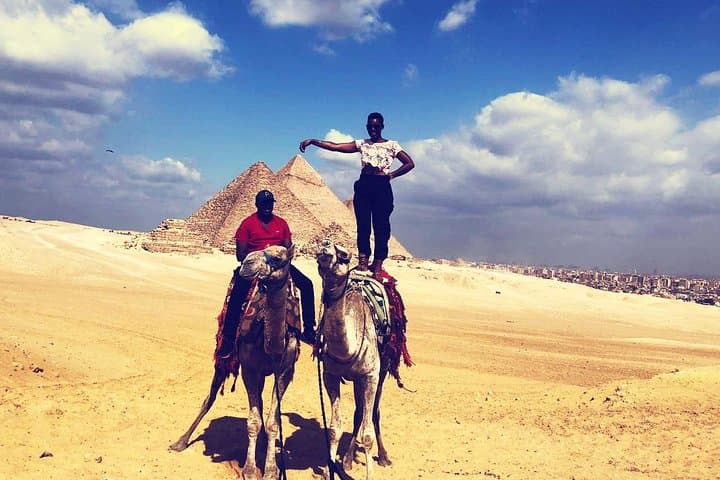
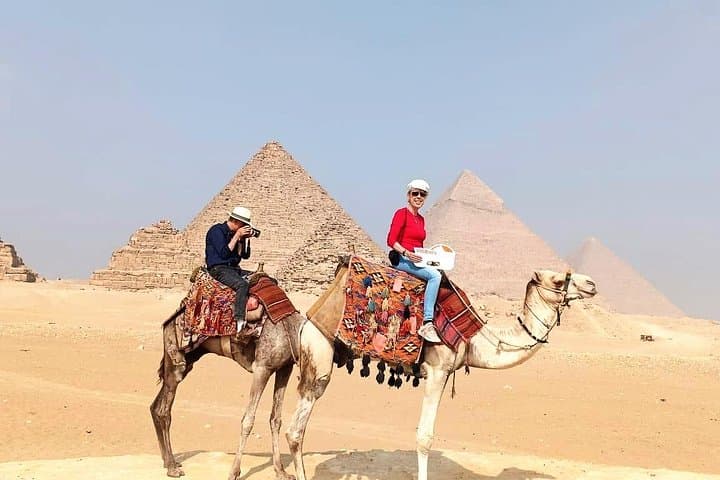


A low-slung sun drifts toward the horizon and the three great silhouettes — Khufu, Khafre and Menkaure — sharpen against a copper sky. The camel's steady gait rocks you forward across wind-scoured sand as dust and light play across ancient stone; the plateau opens into a plain where human history feels immediate and tactile.
A low-slung sun drifts toward the horizon and the three great silhouettes — Khufu, Khafre and Menkaure — sharpen against a copper sky. The camel's steady gait rocks you forward across wind-scoured sand as dust and light play across ancient stone; the plateau opens into a plain where human history feels immediate and tactile.
The Pyramids of Giza date to Egypt's Fourth Dynasty; the Great Pyramid (Khufu) was the tallest man-made structure for millennia. Geologically the plateau is limestone bedrock capped by wind-blown sand; the original smooth casing stones are mostly gone, leaving the stepped faces visitors see today. The area's modern culture is a patchwork of Cairo commerce, Bedouin guides who know the plateau's angles, and a tourism infrastructure focused on short, impactful visits.
Practically, the experience is straightforward: expect about five hours including pickup, transport, an orientation and a 20–40 minute camel ride around the pyramids at sunset. Terrain is sandy and uneven—short walks over loose stone and sand are common, with minimal elevation change but slick footing near edges.
Plan for strong sun, dust and crowds at prime light. Wear closed shoes with traction, carry water and a hat, and protect gear from grit. Photography is best as the sun falls; ask your guide for a clear vantage and be prepared to step aside for other riders. Respect signage and staff—climbing the monuments is illegal and damages the site. For an accessible, sensory introduction to one of the world’s oldest urban skylines, a sunset camel ride delivers dramatic views with manageable effort.