THE ADVENTURE COLLECTIVE® · Independent discovery and booking for outdoor travel

Ride a camel across the Giza Plateau as sunset paints the pyramids in gold. This 3-hour activity blends ancient landscape, trained camels, and easy photography opportunities with hotel transfer and bottled water included.
Ride a camel across the Giza Plateau as sunset paints the pyramids in gold. This 3-hour activity blends ancient landscape, trained camels, and easy photography opportunities with hotel transfer and bottled water included.
The warm light of dusk softens the faces of the three great pyramids as you climb onto a camel and step away from the crowd. The camel’s slow sway sets the pace; the plateau opens ahead in broad, sandy planes and stepped silhouettes of stone. As you ride, the desert air cools and the pyramids take on ochre and gold, an expansive scene that reads differently from camel-back than from the crowded walkways.
Verified experiences and guided adventures in the surrounding area.
Operated by UG Travel Egypt · Giza, Giza Governorate
The warm light of dusk softens the faces of the three great pyramids as you climb onto a camel and step away from the crowd. The camel’s slow sway sets the pace; the plateau opens ahead in broad, sandy planes and stepped silhouettes of stone. As you ride, the desert air cools and the pyramids take on ochre and gold, an expansive scene that reads differently from camel-back than from the crowded walkways.
This section of the Giza Plateau holds nearly 4,500 years of human engineering — the Great Pyramid of Khufu, the complex of Khafre and Menkaure, and nearby mortuary temples. Geologically, you’re on Eocene limestone bedrock capped by windblown sand; culturally, the area blends modern Cairo life with long-standing Bedouin equestrian traditions. Local handlers guide well-trained camels used for generations as transport and tourism livelihoods.
Expect a paced, 3-hour activity that includes roundtrip transfer, bottled water, and basic briefing on camel mounting and etiquette. Snapping photos is easy from the saddle, but stay mindful of heat, uneven footing at camel stands, and restrictions around monument access — climbing the pyramids is prohibited.
Practical notes: wear closed-toe shoes and long sleeves to guard against sand and sun; bring a sun hat and layered clothing for the quick temperature drop after sunset. If you have back or heart issues, consider a shorter option — the ride is relaxed but mounting and dismounting are physical. Book late afternoon to catch the light, and let the plateau’s scale slow your cadence rather than rush it.
moderate.
3 hours.
Moderate fitness: able to mount/dismount, stand on uneven ground, and sit for 45–90 minutes intermittently.
The full activity is three hours including transfers; the actual camel circuit around the plateau typically lasts 45–90 minutes depending on stops.
Yes, roundtrip transfers from hotels in Cairo or Giza are included, normally in an air-conditioned vehicle.
Children can usually participate but infant seats may be available; the activity is not recommended for pregnant travelers or those with serious spinal or heart conditions.
No — climbing the pyramids is prohibited; the tour offers guided viewpoints and photo stops near the monuments.
The Giza complex dates to Egypt’s Old Kingdom around 2600–2500 BCE; the Great Pyramid was built for Pharaoh Khufu and remains one of the oldest standing monuments on Earth.
Visitor management focuses on protecting fragile archaeological zones—stay on designated routes, avoid litter, and support licensed guides to help fund local preservation efforts.
UG Travel Egypt operates guided outdoor trips and adventures with an emphasis on safety, stewardship, and memorable experiences.


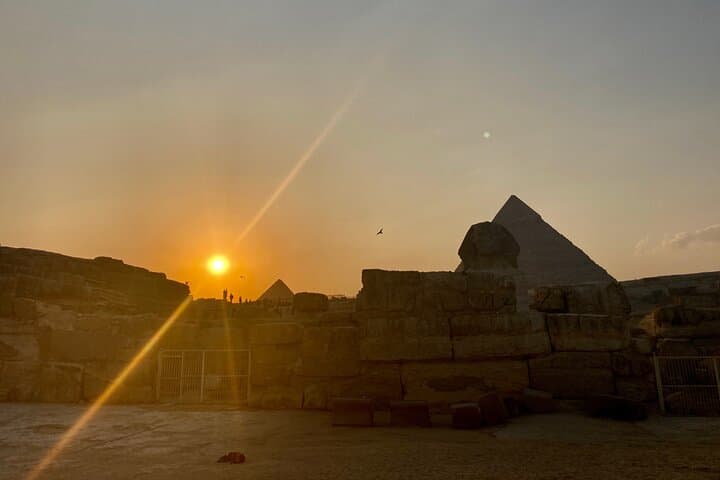
The warm light of dusk softens the faces of the three great pyramids as you climb onto a camel and step away from the crowd. The camel’s slow sway sets the pace; the plateau opens ahead in broad, sandy planes and stepped silhouettes of stone. As you ride, the desert air cools and the pyramids take on ochre and gold, an expansive scene that reads differently from camel-back than from the crowded walkways.
The warm light of dusk softens the faces of the three great pyramids as you climb onto a camel and step away from the crowd. The camel’s slow sway sets the pace; the plateau opens ahead in broad, sandy planes and stepped silhouettes of stone. As you ride, the desert air cools and the pyramids take on ochre and gold, an expansive scene that reads differently from camel-back than from the crowded walkways.
This section of the Giza Plateau holds nearly 4,500 years of human engineering — the Great Pyramid of Khufu, the complex of Khafre and Menkaure, and nearby mortuary temples. Geologically, you’re on Eocene limestone bedrock capped by windblown sand; culturally, the area blends modern Cairo life with long-standing Bedouin equestrian traditions. Local handlers guide well-trained camels used for generations as transport and tourism livelihoods.
Expect a paced, 3-hour activity that includes roundtrip transfer, bottled water, and basic briefing on camel mounting and etiquette. Snapping photos is easy from the saddle, but stay mindful of heat, uneven footing at camel stands, and restrictions around monument access — climbing the pyramids is prohibited.
Practical notes: wear closed-toe shoes and long sleeves to guard against sand and sun; bring a sun hat and layered clothing for the quick temperature drop after sunset. If you have back or heart issues, consider a shorter option — the ride is relaxed but mounting and dismounting are physical. Book late afternoon to catch the light, and let the plateau’s scale slow your cadence rather than rush it.