THE ADVENTURE COLLECTIVE® · Independent discovery and booking for outdoor travel

Ride a camel around the Giza Plateau at sunset and watch the Great Pyramids change color as the day cools. This short, guided loop pairs easy physical demand with high-impact history and photography opportunities.
Ride a camel around the Giza Plateau at sunset and watch the Great Pyramids change color as the day cools. This short, guided loop pairs easy physical demand with high-impact history and photography opportunities.
The sun leans low over the Giza Plateau and the desert light sharpens the edges of three stone giants. You mount a patient camel and the animal rocks forward, each step settling you into an unusually quiet view of Khufu, Khafre and Menkaure beyond the bustle of Cairo.
Verified experiences and guided adventures in the surrounding area.
Operated by Three Pyramids Tours · Giza, Giza Governorate
The sun leans low over the Giza Plateau and the desert light sharpens the edges of three stone giants. You mount a patient camel and the animal rocks forward, each step settling you into an unusually quiet view of Khufu, Khafre and Menkaure beyond the bustle of Cairo.
These pyramids are built on a Jurassic limestone plateau laid down tens of millions of years ago; the blocks you pass were quarried here and hauled into place by ancient engineering. The site is as much a cultural stage as a geological one — pharaonic tombs, later burial grounds and modern Bedouin hospitality all occupy the same horizon.
A sunset camel ride is straightforward: a guided loop around the outer faces of the pyramids timed for cooler light and photo opportunities. Guides will point out sightlines to the Sphinx, explain pyramid history and orient you to how the plateau relates to the Nile valley below. The soft rattle of camel tack and the wind pushing graining sand create a sensory rhythm that feels both foreign and elemental.
Practicalities: rides typically last 20–40 minutes on the camel, with hotel pickup and an air-conditioned transfer included. Wear closed-toe shoes for sandy approaches, apply high-SPF sunscreen, and bring a refillable water bottle; temperatures drop quickly after sunset so a light layer helps. Respect animal handlers, agree on price and tip locally; keep cameras secure while mounting. For travelers wanting a compact, low-effort outdoor experience with high historical payoff, this ride is an accessible way to meet Egypt’s oldest skyline.
easy.
4–5 hours.
Suitable for most fitness levels; requires brief mounting and dismounting and light walking on sand.
Rides range from about 20 to 40 minutes on the camel, with the full tour (including transfers and commentary) around 4–5 hours.
The tour is classified easy, but not recommended for travelers with spinal injuries; young children should be supervised and may have age restrictions from operators.
Most operators include hotel pickup and drop-off in an air-conditioned vehicle; confirm pickup point and time when booking.
Yes—photography is permitted, but always ask local guides or handlers before photographing people close-up and follow site rules.
The Great Pyramids at Giza date to the Fourth Dynasty (c. 2600–2500 BCE) and represent burial complexes built for pharaohs Khufu, Khafre and Menkaure.
The site faces pressures from tourism, urban encroachment and wind-blown sand; stick to established paths, avoid touching masonry, and support licensed guides to reduce off-trail impact.
Three Pyramids Tours operates guided outdoor trips and adventures with an emphasis on safety, stewardship, and memorable experiences.
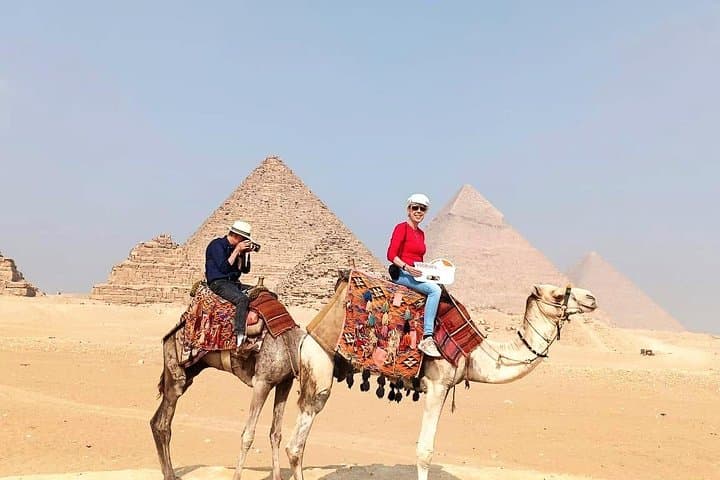
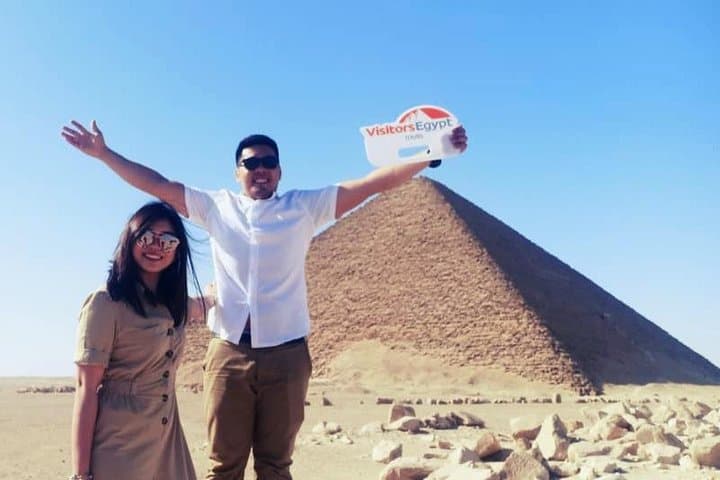
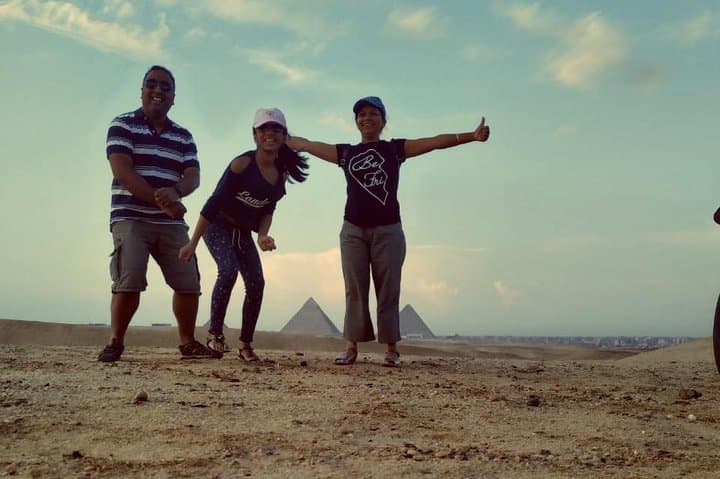
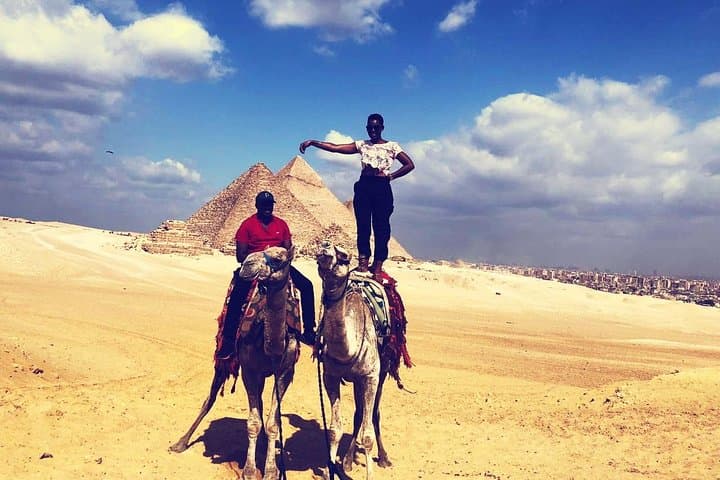
The sun leans low over the Giza Plateau and the desert light sharpens the edges of three stone giants. You mount a patient camel and the animal rocks forward, each step settling you into an unusually quiet view of Khufu, Khafre and Menkaure beyond the bustle of Cairo.
The sun leans low over the Giza Plateau and the desert light sharpens the edges of three stone giants. You mount a patient camel and the animal rocks forward, each step settling you into an unusually quiet view of Khufu, Khafre and Menkaure beyond the bustle of Cairo.
These pyramids are built on a Jurassic limestone plateau laid down tens of millions of years ago; the blocks you pass were quarried here and hauled into place by ancient engineering. The site is as much a cultural stage as a geological one — pharaonic tombs, later burial grounds and modern Bedouin hospitality all occupy the same horizon.
A sunset camel ride is straightforward: a guided loop around the outer faces of the pyramids timed for cooler light and photo opportunities. Guides will point out sightlines to the Sphinx, explain pyramid history and orient you to how the plateau relates to the Nile valley below. The soft rattle of camel tack and the wind pushing graining sand create a sensory rhythm that feels both foreign and elemental.
Practicalities: rides typically last 20–40 minutes on the camel, with hotel pickup and an air-conditioned transfer included. Wear closed-toe shoes for sandy approaches, apply high-SPF sunscreen, and bring a refillable water bottle; temperatures drop quickly after sunset so a light layer helps. Respect animal handlers, agree on price and tip locally; keep cameras secure while mounting. For travelers wanting a compact, low-effort outdoor experience with high historical payoff, this ride is an accessible way to meet Egypt’s oldest skyline.