THE ADVENTURE COLLECTIVE® · Independent discovery and booking for outdoor travel

Ride a camel as the sun drops behind the Great Pyramids on the Giza Plateau. This short, guided evening tour includes hotel pickup, a camel ride with sunset views, and traditional tea before transfer back to Cairo.
Ride a camel as the sun drops behind the Great Pyramids on the Giza Plateau. This short, guided evening tour includes hotel pickup, a camel ride with sunset views, and traditional tea before transfer back to Cairo.
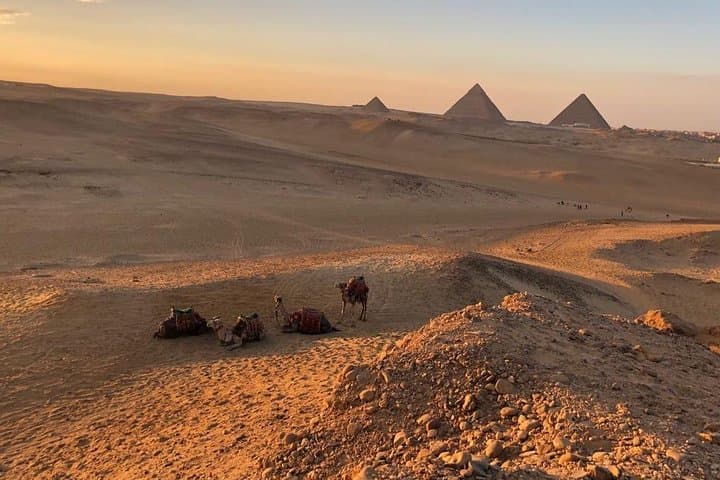
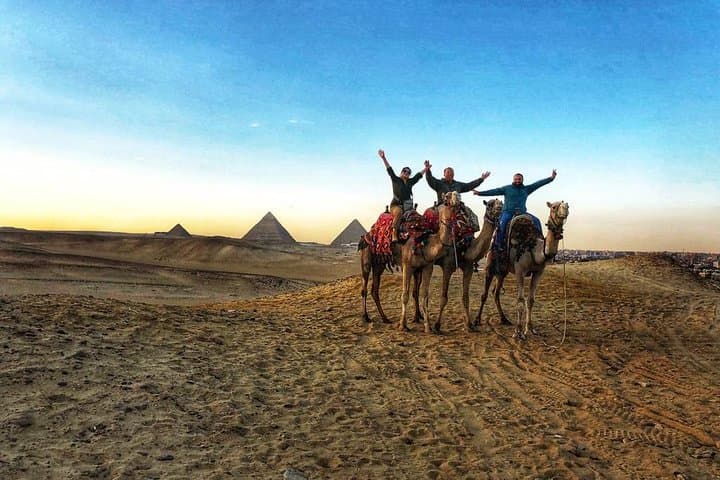
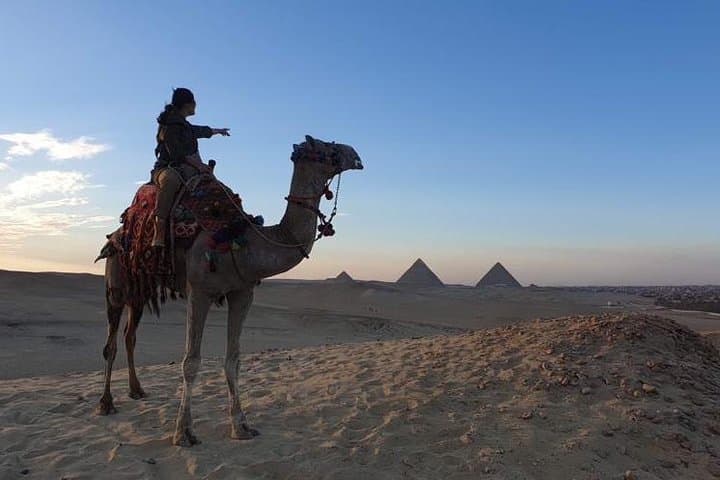
The sun slides low over the Giza Plateau, and the desert exhales a warm, sandy breath as a line of camels picks its way along the ridge. From a gentle distance the three great pyramids cut clean silhouettes against the orange sky—an hour when the heat softens and the world seems to hush.
Verified experiences and guided adventures in the surrounding area.
Operated by Egypt Tours Planner · Giza, Cairo Governorate
The sun slides low over the Giza Plateau, and the desert exhales a warm, sandy breath as a line of camels picks its way along the ridge. From a gentle distance the three great pyramids cut clean silhouettes against the orange sky—an hour when the heat softens and the world seems to hush.
These stone giants date to Egypt's Old Kingdom, more than 4,000 years old, built from limestone blocks quarried nearby and arranged with a precision that still puzzles engineers. The plateau sits on sedimentary rock shaped by ancient seas; today the desert’s wind plays across rippled sand and loose gravel, shaping the approach to the viewing terraces. Culturally, an evening camel ride echoes millennia of local travel—camels have been part of Sinai and Nile-edge life for centuries—and your guide often offers traditional Egyptian tea, a quiet nod to hospitality.
Practically, this is an easy, short excursion: expect a roughly three-hour round trip with hotel pickup in Cairo, a brief guided camel saddle, time for photos at sunset, and return transfer. Terrain is flat desert with some uneven footing; camels are led by handlers and the ride is gentle but bouncy. Bring sun protection, a light layer for cooler post-sunset air, and small bills for tea or tips. Photographers will want a fast lens for low light; planners should time pickup to arrive at the plateau at least 20–30 minutes before sunset for best light. Respect marked areas—do not climb on the monuments—and listen to your guide to balance a memorable view with protection of a unique archaeological landscape.
easy.
3 hours.
Suitable for all fitness levels; riding is gentle but involves mounting and dismounting.
Yes—this tour includes hotel pickup and drop-off from central Cairo locations; you'll provide your pickup point at booking.
Riders stay at designated viewing areas a short distance from the pyramids; direct access onto the monuments is restricted to protect them.
Rides are considered easy and suitable for most ages, but confirm any mobility concerns with the operator—handlers assist mounting and dismounting.
Absolutely—sunset is prime time for photos; be mindful of other visitors and follow your guide’s direction for safe vantage points.
The Giza Plateau hosts pyramids built during Egypt’s Fourth Dynasty (c. 2600–2500 BCE), with neighboring tombs and the Sphinx forming a major archaeological complex.
Visitor impact is managed through designated viewing zones and guided access; stick to paths and avoid littering to help preserve fragile desert soils and ancient masonry.
Egypt Tours Planner operates guided outdoor trips and adventures with an emphasis on safety, stewardship, and memorable experiences.
The sun slides low over the Giza Plateau, and the desert exhales a warm, sandy breath as a line of camels picks its way along the ridge. From a gentle distance the three great pyramids cut clean silhouettes against the orange sky—an hour when the heat softens and the world seems to hush.
The sun slides low over the Giza Plateau, and the desert exhales a warm, sandy breath as a line of camels picks its way along the ridge. From a gentle distance the three great pyramids cut clean silhouettes against the orange sky—an hour when the heat softens and the world seems to hush.
These stone giants date to Egypt's Old Kingdom, more than 4,000 years old, built from limestone blocks quarried nearby and arranged with a precision that still puzzles engineers. The plateau sits on sedimentary rock shaped by ancient seas; today the desert’s wind plays across rippled sand and loose gravel, shaping the approach to the viewing terraces. Culturally, an evening camel ride echoes millennia of local travel—camels have been part of Sinai and Nile-edge life for centuries—and your guide often offers traditional Egyptian tea, a quiet nod to hospitality.
Practically, this is an easy, short excursion: expect a roughly three-hour round trip with hotel pickup in Cairo, a brief guided camel saddle, time for photos at sunset, and return transfer. Terrain is flat desert with some uneven footing; camels are led by handlers and the ride is gentle but bouncy. Bring sun protection, a light layer for cooler post-sunset air, and small bills for tea or tips. Photographers will want a fast lens for low light; planners should time pickup to arrive at the plateau at least 20–30 minutes before sunset for best light. Respect marked areas—do not climb on the monuments—and listen to your guide to balance a memorable view with protection of a unique archaeological landscape.