THE ADVENTURE COLLECTIVE® · Independent discovery and booking for outdoor travel

Ride a camel at sunset across the Giza Plateau for direct views of the Great Pyramid and its companions. This private tour pairs an easy camel experience with hotel pickup and light evening refreshments.
Ride a camel at sunset across the Giza Plateau for direct views of the Great Pyramid and its companions. This private tour pairs an easy camel experience with hotel pickup and light evening refreshments.
The sun is low over the Giza Plateau as you settle into the sway of a camel's gait, the triangular silhouettes of Khufu, Khafre and Menkaure sharpening against an ochre sky.
Verified experiences and guided adventures in the surrounding area.
Operated by Three Pyramids Tours · Giza, Cairo Governorate
The sun is low over the Giza Plateau as you settle into the sway of a camel's gait, the triangular silhouettes of Khufu, Khafre and Menkaure sharpening against an ochre sky.
This tour places you on the rim of one of the world's oldest skylines: the Great Pyramid, a 4,500‑year‑old monument of limestone and mortar that for millennia dominated the Nile floodplain. The plateau's geology—bedrock capped by wind‑worked sand—creates the broad, open views that make sunset here cinematic. Culturally, the pyramids remain active sites of Egyptian identity and tourism; local guides interpret ancient builders' feats alongside modern Bedouin and Cairo influences that shape the visitor experience.
Expect a short camel saddle, pauses for photos at classic vantage points, and a relaxed evening with light snacks; private pick‑up from Cairo or Giza hotels usually precedes the ride. Because the plateau is exposed, wind and sun are immediate actors—sand can sting and shadows lengthen fast—so timing your visit for late afternoon brings cooler temperatures and richer light for photography.
Practical guidance: carry at least 1–2 liters of water, use broad‑brim sun protection, and wear sturdy closed‑toe shoes for rocky approaches. The ride itself is low‑impact but can be unsteady—those with spinal issues should avoid it. Respect barriers and signage: climbing the pyramids is illegal and damaging to the site.
A camel ride here is as much about place as motion—the desert around the stones pushes visitors to slow, look, and reckon with human scale across deep time.
easy.
4–6 hours.
Suitable for most fitness levels; riders should be able to mount a camel with assistance and tolerate brief unsteady motion.
The overall tour runs about 4–6 hours including pickup, but the camel ride and photo stops typically last 30–60 minutes depending on the itinerary.
Yes—operators generally describe it as suitable for all fitness levels; however, travelers with spinal issues or severe mobility limitations should avoid camel riding.
No; climbing the pyramids is illegal and prohibited by site authorities. Photo stops are arranged at approved vantage points only.
Yes—most bookings include private hotel pickup and drop‑off in Cairo and Giza via an air‑conditioned vehicle.
The Giza Pyramids were built during Egypt's Fourth Dynasty (c. 2600–2500 BCE); the Great Pyramid once stood as the tallest man‑made structure for nearly 3,800 years.
Visitor management and strict regulations aim to limit wear on the stones—stick to designated paths and avoid littering to reduce impact on the plateau.
Three Pyramids Tours operates guided outdoor trips and adventures with an emphasis on safety, stewardship, and memorable experiences.
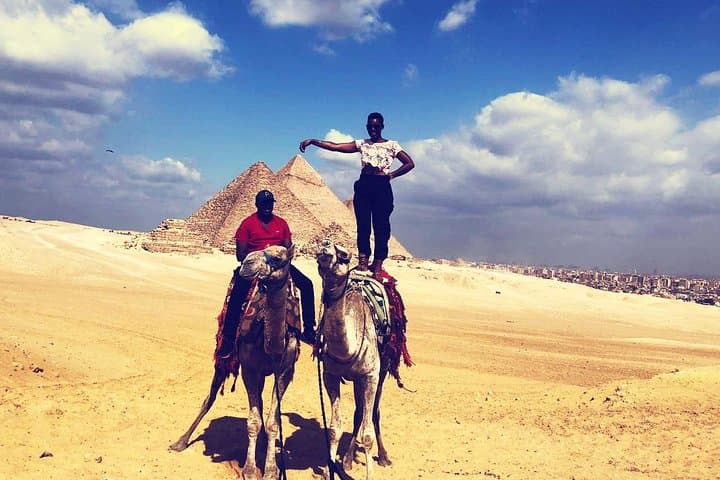
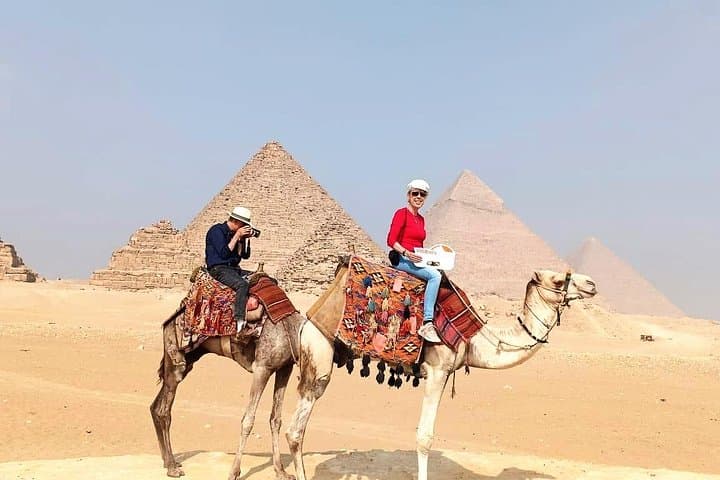
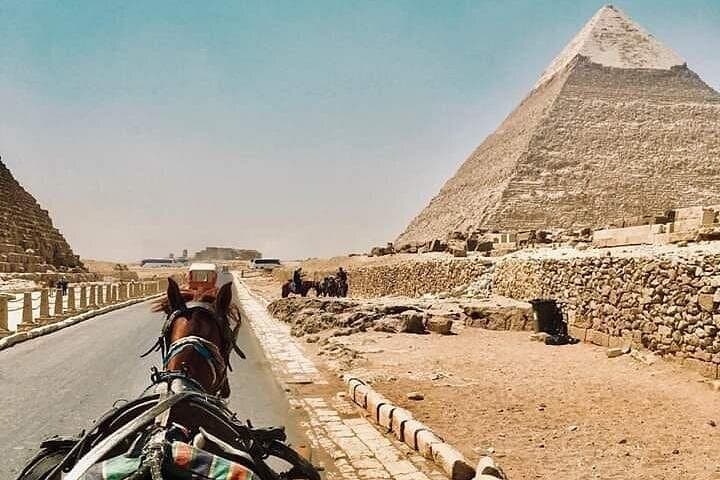
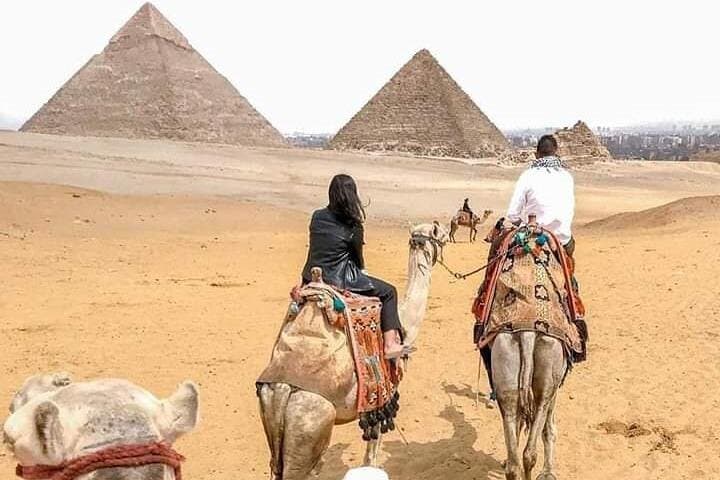
The sun is low over the Giza Plateau as you settle into the sway of a camel's gait, the triangular silhouettes of Khufu, Khafre and Menkaure sharpening against an ochre sky.
The sun is low over the Giza Plateau as you settle into the sway of a camel's gait, the triangular silhouettes of Khufu, Khafre and Menkaure sharpening against an ochre sky.
This tour places you on the rim of one of the world's oldest skylines: the Great Pyramid, a 4,500‑year‑old monument of limestone and mortar that for millennia dominated the Nile floodplain. The plateau's geology—bedrock capped by wind‑worked sand—creates the broad, open views that make sunset here cinematic. Culturally, the pyramids remain active sites of Egyptian identity and tourism; local guides interpret ancient builders' feats alongside modern Bedouin and Cairo influences that shape the visitor experience.
Expect a short camel saddle, pauses for photos at classic vantage points, and a relaxed evening with light snacks; private pick‑up from Cairo or Giza hotels usually precedes the ride. Because the plateau is exposed, wind and sun are immediate actors—sand can sting and shadows lengthen fast—so timing your visit for late afternoon brings cooler temperatures and richer light for photography.
Practical guidance: carry at least 1–2 liters of water, use broad‑brim sun protection, and wear sturdy closed‑toe shoes for rocky approaches. The ride itself is low‑impact but can be unsteady—those with spinal issues should avoid it. Respect barriers and signage: climbing the pyramids is illegal and damaging to the site.
A camel ride here is as much about place as motion—the desert around the stones pushes visitors to slow, look, and reckon with human scale across deep time.