THE ADVENTURE COLLECTIVE® · Independent discovery and booking for outdoor travel

Ride a camel across Agafay’s rocky plain, watch the sun slide behind stony ridges, and finish with an open-air Moroccan dinner. This short, accessible tour combines landscape, local culture and an easy desert experience just outside Marrakech.
Ride a camel across Agafay’s rocky plain, watch the sun slide behind stony ridges, and finish with an open-air Moroccan dinner. This short, accessible tour combines landscape, local culture and an easy desert experience just outside Marrakech.
The sun leans low over the Agafay plain and the first camels lift and shuffle against a horizon of stony ridges—an evening that feels pared down to light, wind and the slow sway of a camel’s gait. As you climb into the saddle, the desert doesn't roar; it nudges you forward, the scrubby vegetation and volcanic rock holding the heat of the day a moment longer while the sky cools.
Verified experiences and guided adventures in the surrounding area.
Operated by Morocco Friendly Tours · Marrakech, Marrakech-Safi
The sun leans low over the Agafay plain and the first camels lift and shuffle against a horizon of stony ridges—an evening that feels pared down to light, wind and the slow sway of a camel’s gait. As you climb into the saddle, the desert doesn't roar; it nudges you forward, the scrubby vegetation and volcanic rock holding the heat of the day a moment longer while the sky cools.
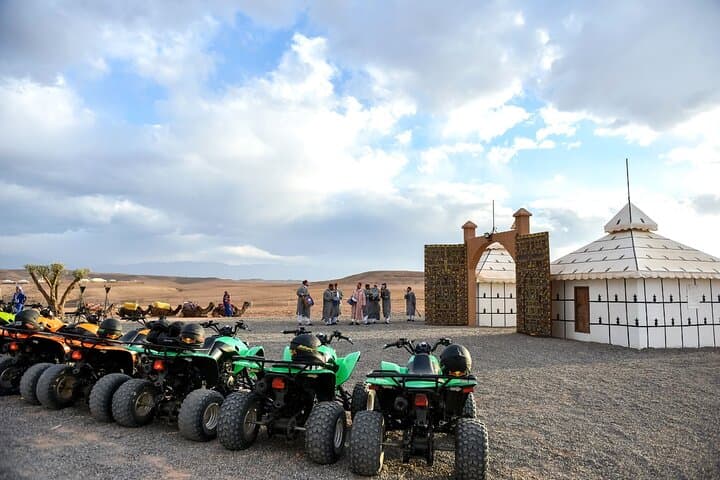
Agafay is not a sand sea but a hamada: a rocky, lunar-like landscape shaped by erosion and ancient river channels. The area has long been used by Amazigh (Berber) communities for grazing and trade; today local guides and argan cooperatives connect visitors to that living heritage. You’ll often visit a women’s argan oil co-op on these excursions, a brief cultural stop that explains traditional production and local livelihoods.
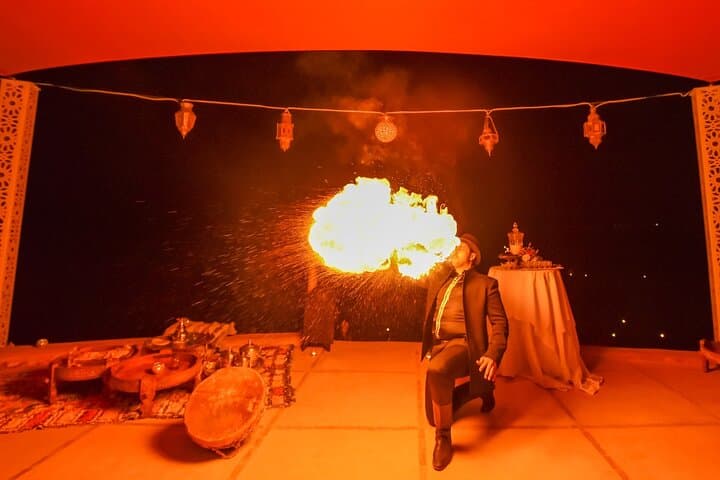
Expect a relaxed two-hour outing—pickup from Marrakech, a 30-minute camel ride across stony flats, and an open-air sunset dinner beneath stars that arrive fast in the dry air. Terrain is flat but uneven; camels give a steady, loping motion rather than the towering dune caravans of the Sahara. Guides handle saddling, and the meal is typically Moroccan fare served at a low table with mint tea.
Practical notes: bring closed, sturdy shoes (no flip-flops), layers for rapid temperature drop after sunset, sun protection, and a reusable water bottle. If you want photos, ask your guide for a brief pause at the best vantage; dusk light is short. Respect local customs—ask before photographing people and consider a modest tip for camel handlers and cooperative staff.
easy.
2 hours.
Suitable for most fitness levels; ability to mount a camel and sit comfortably for about 30–60 minutes is helpful
The typical camel portion is about 30–60 minutes within a two-hour tour that includes transfers and dinner.
No—Agafay is a stony hamada near Marrakech, without the tall dunes of the Sahara, offering rocky plains and panoramic sunset views.
Yes—camels used on tourist rides are trained and handlers assist mounting; tours note suitability for most ages but check with the operator about infants or mobility concerns.
Casual, modest clothing is appropriate—layers for evening chill; shoes may be removed at some dining setups, so socks are advisable.
The Agafay plain sits within lands long used by Amazigh communities for grazing and trade; modern tourism now uses those routes for short cultural and landscape experiences.
Support local co-ops and follow Leave No Trace principles—avoid littering, stick to established paths, and use local guides to reduce disturbance to fragile desert soils.
Morocco Friendly Tours operates guided outdoor trips and adventures with an emphasis on safety, stewardship, and memorable experiences.
The sun leans low over the Agafay plain and the first camels lift and shuffle against a horizon of stony ridges—an evening that feels pared down to light, wind and the slow sway of a camel’s gait. As you climb into the saddle, the desert doesn't roar; it nudges you forward, the scrubby vegetation and volcanic rock holding the heat of the day a moment longer while the sky cools.
The sun leans low over the Agafay plain and the first camels lift and shuffle against a horizon of stony ridges—an evening that feels pared down to light, wind and the slow sway of a camel’s gait. As you climb into the saddle, the desert doesn't roar; it nudges you forward, the scrubby vegetation and volcanic rock holding the heat of the day a moment longer while the sky cools.
Agafay is not a sand sea but a hamada: a rocky, lunar-like landscape shaped by erosion and ancient river channels. The area has long been used by Amazigh (Berber) communities for grazing and trade; today local guides and argan cooperatives connect visitors to that living heritage. You’ll often visit a women’s argan oil co-op on these excursions, a brief cultural stop that explains traditional production and local livelihoods.
Expect a relaxed two-hour outing—pickup from Marrakech, a 30-minute camel ride across stony flats, and an open-air sunset dinner beneath stars that arrive fast in the dry air. Terrain is flat but uneven; camels give a steady, loping motion rather than the towering dune caravans of the Sahara. Guides handle saddling, and the meal is typically Moroccan fare served at a low table with mint tea.
Practical notes: bring closed, sturdy shoes (no flip-flops), layers for rapid temperature drop after sunset, sun protection, and a reusable water bottle. If you want photos, ask your guide for a brief pause at the best vantage; dusk light is short. Respect local customs—ask before photographing people and consider a modest tip for camel handlers and cooperative staff.