THE ADVENTURE COLLECTIVE® · Independent discovery and booking for outdoor travel

Ride camels across a rocky desert plain, watch the Atlas Mountains soften at sunset, then settle into a three-course Moroccan dinner with live music and a fire show. This half-day Agafay outing pairs easy accessibility from Marrakech with an immersive Berber-style evening.
Ride camels across a rocky desert plain, watch the Atlas Mountains soften at sunset, then settle into a three-course Moroccan dinner with live music and a fire show. This half-day Agafay outing pairs easy accessibility from Marrakech with an immersive Berber-style evening.
Evening light flattens the rocky plain into a patchwork of umber and gold as your minivan slips away from Marrakech. In the Agafay, the horizon is a hard line—no dunes, only wind-sculpted stone and the silhouette of the High Atlas daring you to look closer.
Verified experiences and guided adventures in the surrounding area.
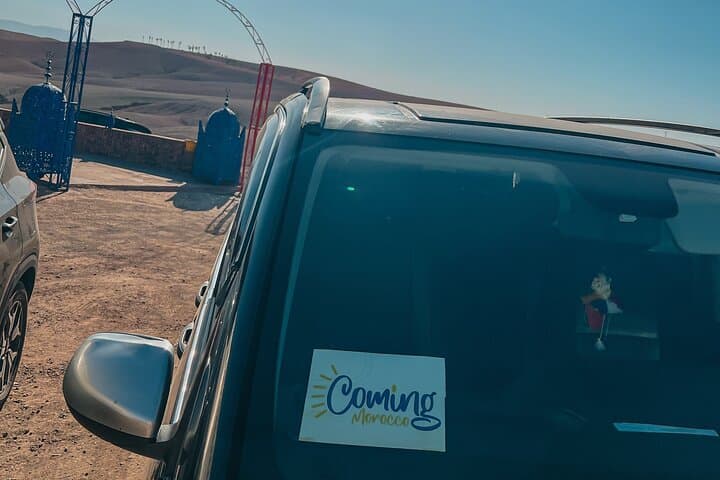
Operated by Coming Morocco · Marrakech, Marrakech-Safi
Evening light flattens the rocky plain into a patchwork of umber and gold as your minivan slips away from Marrakech. In the Agafay, the horizon is a hard line—no dunes, only wind-sculpted stone and the silhouette of the High Atlas daring you to look closer.
The Agafay is a stony desert formed from ancient river sediments and compacted scree rather than Sahara sand—a landscape shaped by erosion and proximity to the Atlas Mountains. Local Berber hosts have long used the plateau as a seasonal grazing and gathering ground; today small camps recreate traditional hospitality with mint tea, tagine, and live Gnawa and Berber music.
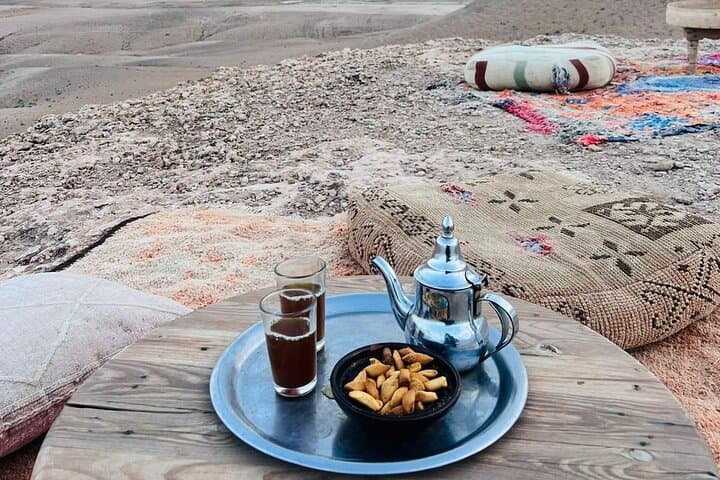
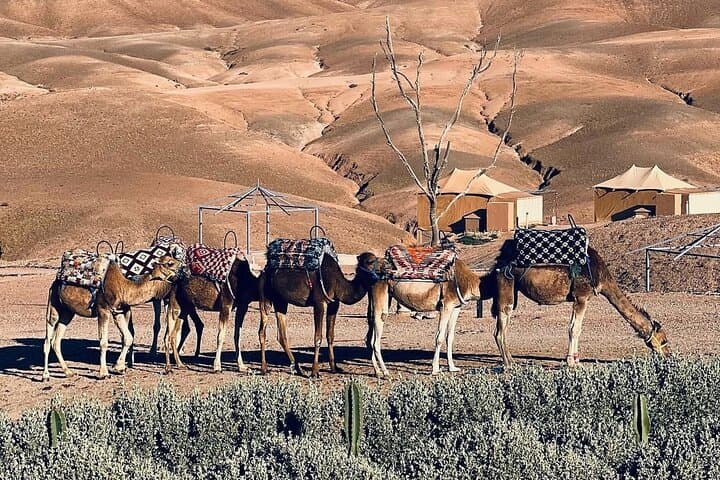
Expect a gentle, sensory evening: a roughly 40-minute transfer from central Marrakech, a guided one-hour camel ride across firm terrain as the sun drops behind the Atlas, then a mint tea break and a three-course Moroccan dinner in a tent. The program typically ends with musicians and a choreographed fire show.
Practical edge: the terrain is rocky and uneven—sturdy shoes and layers matter because temperatures tumble after sunset. If you have back problems or are pregnant, skip the camel; organizers note the ride is not recommended. Most tours include hotel pickup/drop-off and bottled water; bring a camera with a low-light setting for sunset and performance shots.
Timing your visit around clear weather maximizes Atlas views; arrive with time to adjust to the heat and leave with a clear sense of why Marrakech’s outskirts feel elemental and immediate.
easy.
6 hours.
Suitable for most fitness levels; you should be able to mount a camel and walk on uneven ground.
The camel ride included is approximately one hour, typically timed around sunset for the best views.
Yes—most tours include pickup and drop-off from central Marrakech riads and hotels; confirm your pickup point at booking.
A three-course Moroccan dinner plus bottled water and traditional mint tea are included; soda may also be offered.
Children can join but infants are usually required to sit on an adult's lap; check age limits and safety rules with the operator.
The Agafay plain sits on rock deposits left by ancient rivers and has been used by Amazigh (Berber) communities for seasonal activities; contemporary desert camps echo those traditions in hospitality and music.
The area is fragile—avoid trampling vegetation and take all trash with you; many operators support local communities but choose companies that limit single-use plastics.
Coming Morocco operates guided outdoor trips and adventures with an emphasis on safety, stewardship, and memorable experiences.
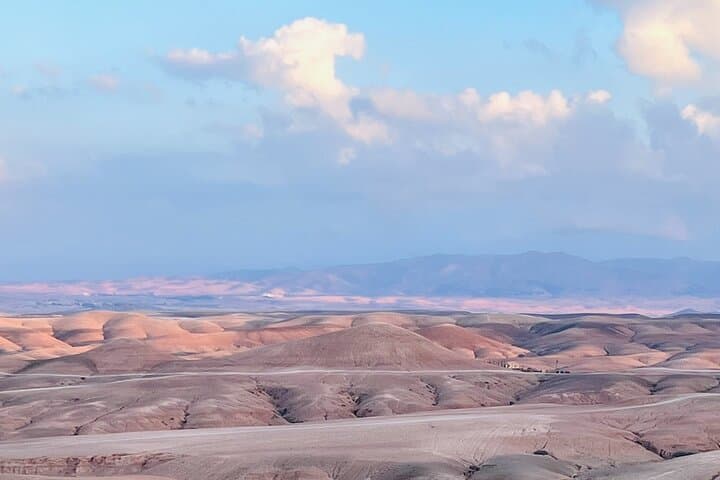
Evening light flattens the rocky plain into a patchwork of umber and gold as your minivan slips away from Marrakech. In the Agafay, the horizon is a hard line—no dunes, only wind-sculpted stone and the silhouette of the High Atlas daring you to look closer.
Evening light flattens the rocky plain into a patchwork of umber and gold as your minivan slips away from Marrakech. In the Agafay, the horizon is a hard line—no dunes, only wind-sculpted stone and the silhouette of the High Atlas daring you to look closer.
The Agafay is a stony desert formed from ancient river sediments and compacted scree rather than Sahara sand—a landscape shaped by erosion and proximity to the Atlas Mountains. Local Berber hosts have long used the plateau as a seasonal grazing and gathering ground; today small camps recreate traditional hospitality with mint tea, tagine, and live Gnawa and Berber music.
Expect a gentle, sensory evening: a roughly 40-minute transfer from central Marrakech, a guided one-hour camel ride across firm terrain as the sun drops behind the Atlas, then a mint tea break and a three-course Moroccan dinner in a tent. The program typically ends with musicians and a choreographed fire show.
Practical edge: the terrain is rocky and uneven—sturdy shoes and layers matter because temperatures tumble after sunset. If you have back problems or are pregnant, skip the camel; organizers note the ride is not recommended. Most tours include hotel pickup/drop-off and bottled water; bring a camera with a low-light setting for sunset and performance shots.
Timing your visit around clear weather maximizes Atlas views; arrive with time to adjust to the heat and leave with a clear sense of why Marrakech’s outskirts feel elemental and immediate.