THE ADVENTURE COLLECTIVE® · Independent discovery and booking for outdoor travel

Head into the Carpathians at dusk to watch wild brown bears from a secure hide with an English-speaking forest ranger. A short drive from Brașov, this small-group outing blends patient observation with practical wildlife stewardship.
Head into the Carpathians at dusk to watch wild brown bears from a secure hide with an English-speaking forest ranger. A short drive from Brașov, this small-group outing blends patient observation with practical wildlife stewardship.
The minivan eases out of Brașov as daylight thins, roads giving way to pines and the low, carved ridges of the Eastern Carpathians. At the hide, the forest holds its breath — trunks darken, wind nudges needles, and the forest seems to lean toward the clearing where bears come to feed. The ranger settles the group; silence becomes the currency.
Verified experiences and guided adventures in the surrounding area.
Operated by Active Travel Day Tours · Brașov, Brașov County
The minivan eases out of Brașov as daylight thins, roads giving way to pines and the low, carved ridges of the Eastern Carpathians. At the hide, the forest holds its breath — trunks darken, wind nudges needles, and the forest seems to lean toward the clearing where bears come to feed. The ranger settles the group; silence becomes the currency.
These forests are part of Romania's ancient beech and mixed-conifer systems, shaped by glacial-era valleys and limestone outcrops. Carpathian brown bears have roamed here for millennia; local shepherding and mountain villages have adapted cultural rhythms around their presence. Today’s hides follow a long tradition of observing wildlife with minimal disturbance — learned practices that balance tourism and stewardship.
Expect a short drive (roughly 40 minutes from central Brașov) and a quiet, patient 1–3 hour vigil from a secure hide at dusk. Terrain is forest floor and uneven access paths; weather shifts quickly at elevation so layers matter. The chance to see bears is strong but never certain — about 70% historically — and sightings can include large males, sows with cubs, and transient subadults. Other wildlife like red deer and wild boar are common and may appear.
Practical guidance: plan for cold, damp conditions at sunset, leave scented products and food behind, and follow ranger instructions on noise and flash photography. Bring binoculars and a camera with a telephoto if you want detailed photos, but prioritize patience; the best encounters are quiet ones. Pickup is in late afternoon; confirm exact time 2–3 days before departure.
easy.
3–4 hours.
Suitable for most fitness levels; requires short walk on uneven forest paths and sitting quietly for extended periods
No — sightings are not guaranteed. Operators report about a 70% chance historically, but wildlife movements vary with season and food availability.
You will be in a secure, permanently located hide at a safe distance; the exact distance varies by site and is managed by the ranger to minimize disturbance.
Minimum age is 12; tours require at least two people to run at the listed price (single travelers may pay for two unless joined by others).
Yes — return drop-off in Brașov can usually be arranged for an extra fee; inform the driver in advance.
The Carpathians have long supported large predator populations; local pastoral communities historically coexisted with bears through seasonal grazing and traditional deterrents.
Ranger-led hides reduce disturbance and discourage feeding; visitors are asked to follow strict no-food, no-scent rules to protect animals and habitats.
Active Travel Day Tours operates guided outdoor trips and adventures with an emphasis on safety, stewardship, and memorable experiences.
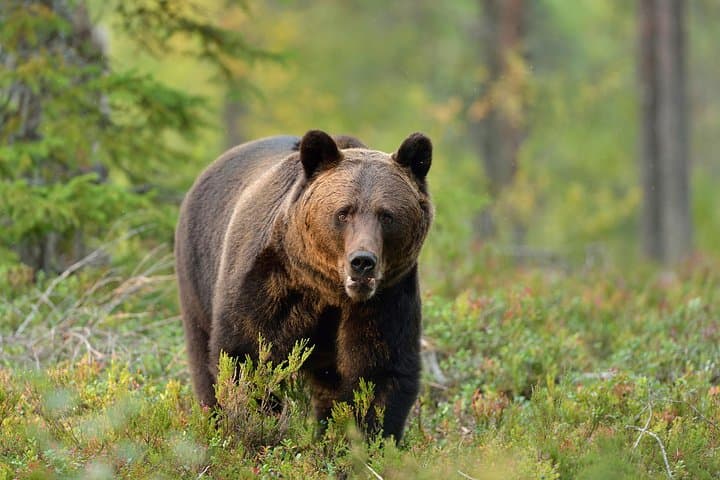


The minivan eases out of Brașov as daylight thins, roads giving way to pines and the low, carved ridges of the Eastern Carpathians. At the hide, the forest holds its breath — trunks darken, wind nudges needles, and the forest seems to lean toward the clearing where bears come to feed. The ranger settles the group; silence becomes the currency.
The minivan eases out of Brașov as daylight thins, roads giving way to pines and the low, carved ridges of the Eastern Carpathians. At the hide, the forest holds its breath — trunks darken, wind nudges needles, and the forest seems to lean toward the clearing where bears come to feed. The ranger settles the group; silence becomes the currency.
These forests are part of Romania's ancient beech and mixed-conifer systems, shaped by glacial-era valleys and limestone outcrops. Carpathian brown bears have roamed here for millennia; local shepherding and mountain villages have adapted cultural rhythms around their presence. Today’s hides follow a long tradition of observing wildlife with minimal disturbance — learned practices that balance tourism and stewardship.
Expect a short drive (roughly 40 minutes from central Brașov) and a quiet, patient 1–3 hour vigil from a secure hide at dusk. Terrain is forest floor and uneven access paths; weather shifts quickly at elevation so layers matter. The chance to see bears is strong but never certain — about 70% historically — and sightings can include large males, sows with cubs, and transient subadults. Other wildlife like red deer and wild boar are common and may appear.
Practical guidance: plan for cold, damp conditions at sunset, leave scented products and food behind, and follow ranger instructions on noise and flash photography. Bring binoculars and a camera with a telephoto if you want detailed photos, but prioritize patience; the best encounters are quiet ones. Pickup is in late afternoon; confirm exact time 2–3 days before departure.