
Sunset Bioluminescence Boat Tour in Paquera Bay, Costa Rica
Watch Paquera Bay light up after dark on a two-hour evening cruise. Small-group boats anchor offshore so you can swim through glowing plankton, with snorkeling gear and life jackets provided.
An Adventure In Paquera.
Watch Paquera Bay light up after dark on a two-hour evening cruise. Small-group boats anchor offshore so you can swim through glowing plankton, with snorkeling gear and life jackets provided.
Read the full experience
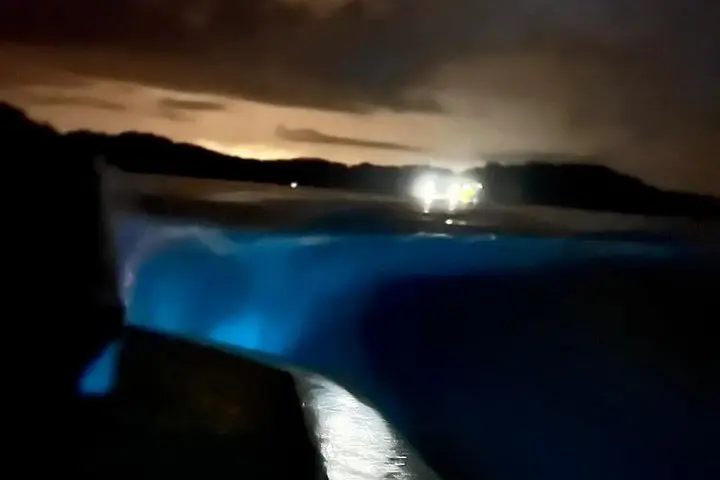
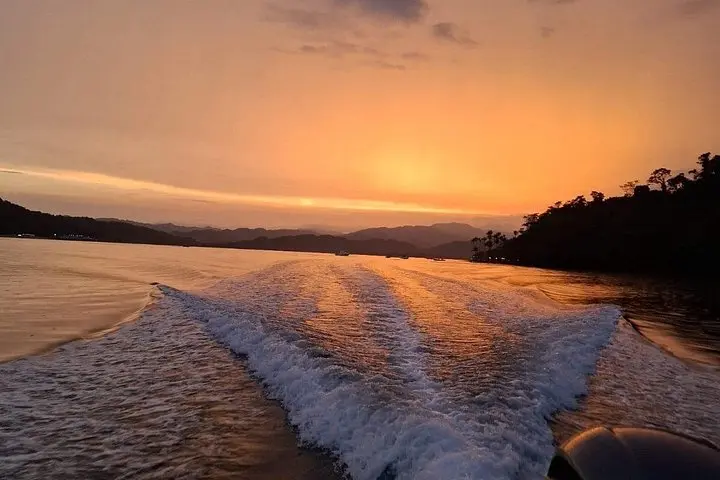
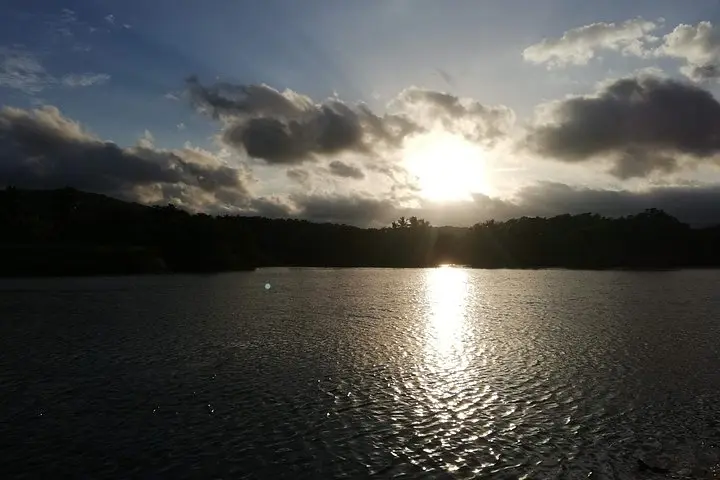
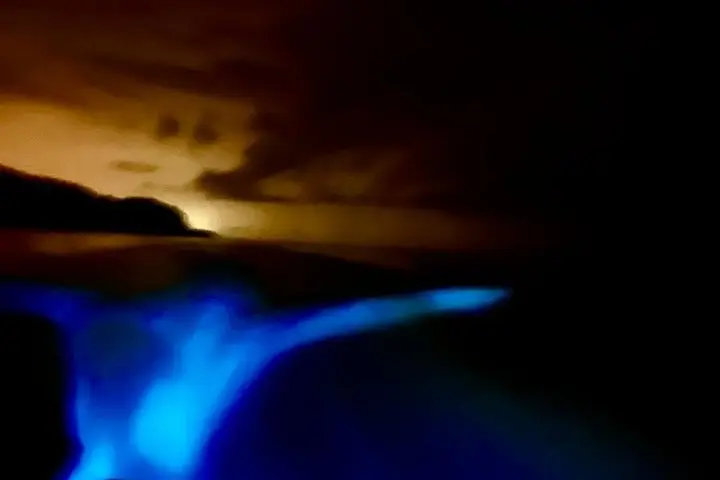
The boat slips away from the small beach beside Paquera’s ferry dock as the sky bruises into sunset. Salt and warm evening air press against your face while the boat idles offshore; as darkness deepens the water begins to pulse—tiny organisms flare like underwater stars whenever a fish cuts through or your hand parts the surface. For about an hour the bay becomes an active ceiling of light that moves with every stroke and wake.
The boat slips away from the small beach beside Paquera’s ferry dock as the sky bruises into sunset. Salt and warm evening air press against your face while the boat idles offshore; as darkness deepens the water begins to pulse—tiny organisms flare like underwater stars whenever a fish cuts through or your hand parts the surface. For about an hour the bay becomes an active ceiling of light that moves with every stroke and wake.
This part of the Nicoya Peninsula has long been a working maritime landscape—fishing villages, mangrove inlets, and a coastline shaped by tectonic uplift and Pacific tides. The bay’s sheltered waters and incoming streams create the low-salinity pockets that help certain dinoflagellates thrive year-round here. Locally, small-boat operators have run evening runs for visitors while also balancing community fishing rhythms and moon cycles that affect visibility.
Expect a small-group outing (boats commonly cap at about a dozen guests), a brief anchoring period where you can swim in life jackets, and basic snacks and bottled water provided. Visibility dims in the nights leading up to and including full moon; tides and freshwater runoff also change the intensity. Guides supply snorkeling gear, life jackets, and instructions for low-impact swimming—avoid sunscreens and lotions before entering the water to protect the plankton and marine life.
Practical tips: arrive early to park near the ferry dock, bring a warm layer for the post-sunset ride, and keep cameras on manual settings for low-light long exposures. The whole experience runs roughly two hours and is accessible to most people with basic swimming comfort—what starts as a simple sunset cruise becomes a quiet, luminous conversation between you and the ocean.
Frequently asked questions
The excursion lasts about two hours from the meeting point at the beach next to the Paquera ferry dock.
Yes—boats anchor and guests are invited to swim with life jackets; snorkeling gear is provided and swimming is optional.
No—visibility depends on moon phase, tides, and freshwater runoff; operators warn the week before and night of a full moon are less reliable.
Yes—tours are suitable for most ages and fitness levels. Life jackets are provided for swimmers and non-swimmers alike.
About This Experience
El Gecko Tours operates guided outdoor trips and adventures with an emphasis on safety, stewardship, and memorable experiences.
Adventure tips
Recommended gear
- Light wind/rain jacket: Keeps you warm on the open boat after sunset.
- Headlamp with red-light mode: Hands-free light for boarding and moving around without ruining night vision.
- Reusable water bottle: Stay hydrated—operators provide bottled water but a refillable bottle reduces waste.
- Waterproof phone pouch or small camera: Protect your devices while photographing low-light scenes and brief swims.
Photos of the experience
Related adventures & guides
Read the full experience
The boat slips away from the small beach beside Paquera’s ferry dock as the sky bruises into sunset. Salt and warm evening air press against your face while the boat idles offshore; as darkness deepens the water begins to pulse—tiny organisms flare like underwater stars whenever a fish cuts through or your hand parts the surface. For about an hour the bay becomes an active ceiling of light that moves with every stroke and wake.
The boat slips away from the small beach beside Paquera’s ferry dock as the sky bruises into sunset. Salt and warm evening air press against your face while the boat idles offshore; as darkness deepens the water begins to pulse—tiny organisms flare like underwater stars whenever a fish cuts through or your hand parts the surface. For about an hour the bay becomes an active ceiling of light that moves with every stroke and wake.
This part of the Nicoya Peninsula has long been a working maritime landscape—fishing villages, mangrove inlets, and a coastline shaped by tectonic uplift and Pacific tides. The bay’s sheltered waters and incoming streams create the low-salinity pockets that help certain dinoflagellates thrive year-round here. Locally, small-boat operators have run evening runs for visitors while also balancing community fishing rhythms and moon cycles that affect visibility.
Expect a small-group outing (boats commonly cap at about a dozen guests), a brief anchoring period where you can swim in life jackets, and basic snacks and bottled water provided. Visibility dims in the nights leading up to and including full moon; tides and freshwater runoff also change the intensity. Guides supply snorkeling gear, life jackets, and instructions for low-impact swimming—avoid sunscreens and lotions before entering the water to protect the plankton and marine life.
Practical tips: arrive early to park near the ferry dock, bring a warm layer for the post-sunset ride, and keep cameras on manual settings for low-light long exposures. The whole experience runs roughly two hours and is accessible to most people with basic swimming comfort—what starts as a simple sunset cruise becomes a quiet, luminous conversation between you and the ocean.
Make a day of it nearby.
Verified experiences and guided adventures in the surrounding area.