THE ADVENTURE COLLECTIVE® · Independent discovery and booking for outdoor travel

Paddle from the Waller Creek Boathouse at sunset and watch 1.5 million Mexican free-tailed bats stream out from under Congress Avenue Bridge. This two-hour guided kayak tour mixes calm flatwater paddling with an unforgettable wildlife spectacle and practical, beginner-friendly guidance.
Paddle from the Waller Creek Boathouse at sunset and watch 1.5 million Mexican free-tailed bats stream out from under Congress Avenue Bridge. This two-hour guided kayak tour mixes calm flatwater paddling with an unforgettable wildlife spectacle and practical, beginner-friendly guidance.
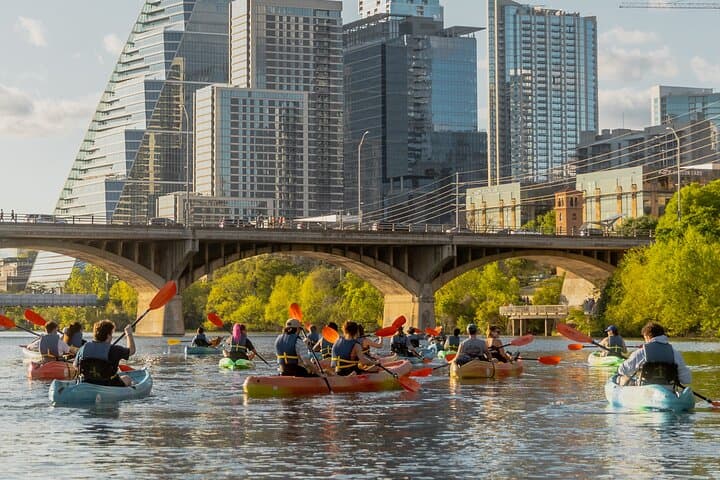
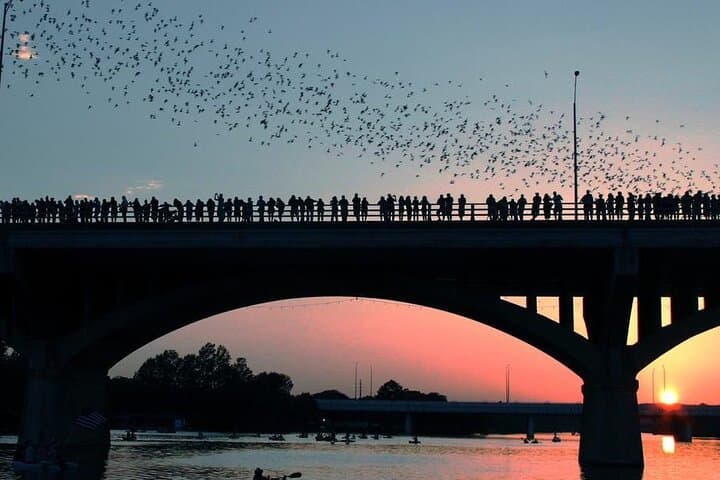
You push off from a low wooden dock as the city sheds its workday armor: office lights stitch the skyline, joggers finish circuits on the shore, and the river—Lady Bird Lake—pulls calm around your hull. Paddles dip in rhythm, and the guide points low toward the Congress Avenue Bridge. For a few breathless minutes the water is a theater and you are in the front row: clouds of Mexican free-tailed bats begin to spill from under the bridge, darkening the sky in a twisting, living river that dares you to keep watching.
Verified experiences and guided adventures in the surrounding area.
Operated by Austin Rowing Club · Austin, Texas
You push off from a low wooden dock as the city sheds its workday armor: office lights stitch the skyline, joggers finish circuits on the shore, and the river—Lady Bird Lake—pulls calm around your hull. Paddles dip in rhythm, and the guide points low toward the Congress Avenue Bridge. For a few breathless minutes the water is a theater and you are in the front row: clouds of Mexican free-tailed bats begin to spill from under the bridge, darkening the sky in a twisting, living river that dares you to keep watching.
The bridge has been home to this remarkable colony since the 1980s, after urban structures provided more nooks than the bats’ native caves. The city’s geology—calcareous limestone and the slow, steady flow of the Colorado River—created the lake and the pedestrian corridors that make evening paddles possible. Culturally, the bats are part of Austin’s identity: a local oddity turned major draw, tied to conservation efforts and to a history of urban coexistence with wildlife.
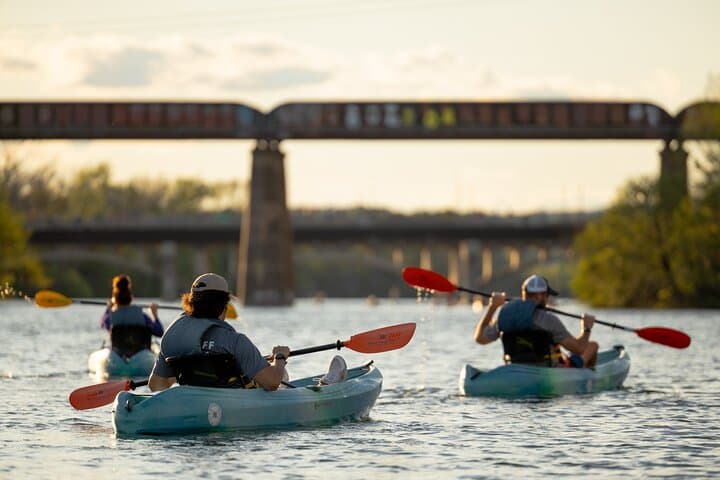
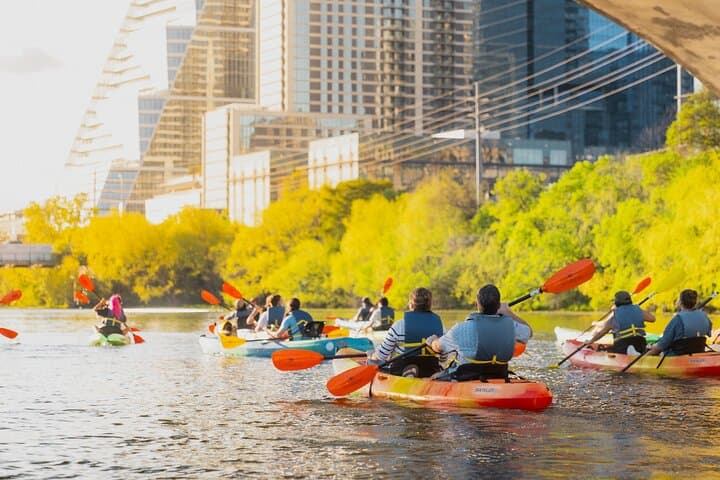
The tour follows Lady Bird Lake’s central corridor, paddling along the Hike and Bike Trail with the downtown skyline always on one shoulder. Expect about two hours on the water with minimal exertion—this is a guided, accessible outing rather than a day of hard paddling. Terrain is flat water with light boat traffic near the bridge; the guides use stable recreational kayaks suited to first-timers and families.
Timing is everything. The bats emerge at sunset, but that clock moves through the year—earlier in summer, later in winter. Guides read the light and the animals and position you for the best views while pointing out local markers—the Stevie Ray Vaughan memorial bronze, the river’s bend, gulls and herons perched like quiet observers.
Practical side: meet at the Waller Creek Boathouse, arrive 15–20 minutes early for a quick orientation and life-jacket fitting. The company supplies kayaks, paddles and flotation devices; waterproofs and dry bags are smart if you carry a camera. Wear closed-toe shoes that can get wet, bring a reusable water bottle, and layer for cooling after the sun drops behind the skyline. Flash photography can disorient the bats—your phone camera is fine, but keep lights low and follow guide instructions.
This outing blends easy paddling with a wildlife spectacle: suitable for beginners, accessible to many mobility levels, and ideal for photographers who prefer silhouette and motion over static shots. The experience is short, sensory, and unmistakably Austin—urban skyline, river glass, and a dark plume of animals that turns a city evening into a natural performance.
If you want a quieter view, consider mid-week bookings or shoulder seasons; for the densest emergences, summer evenings draw the largest colonies. Regardless, come ready to be patient, keep your lights off, and let the bats lead the show.
easy.
2 hours.
Light fitness required; suitable for beginners and families who can sit and paddle for short periods
The guided tour lasts about two hours; guides time the paddle to reach Congress Avenue Bridge before the bats’ nightly emergence, which shifts seasonally and generally occurs at or just after sunset.
No—this tour uses stable recreational kayaks and is designed for beginners; guides provide a basic paddling and safety briefing before launch.
Yes—infants may sit on laps and the tour is family-friendly, but check age restrictions and reserve a tandem or double kayak if needed.
The meeting and boathouse are wheelchair accessible; discuss any mobility needs with the operator when booking so they can accommodate landing and gear.
Tours may be canceled for thunderstorms, high winds, or unsafe conditions; the operator’s policy allows full refunds if you cancel at least 24 hours prior or if the company cancels due to weather.
Use a camera with good low-light performance or your phone on night mode; avoid flash and stabilize your device on your knees or a small strap-mounted brace to reduce motion blur.
The Ann W. Richards Congress Avenue Bridge, originating as an early 20th-century crossing, became a major bat roost in the late 20th century when urban gaps replicated cave crevices favored by Mexican free-tailed bats.
Respect the colony by keeping lights off, not approaching roosting areas, and following guide rules—local groups monitor bat health and encourage low-impact tourism.
Austin Rowing Club operates guided outdoor trips and adventures with an emphasis on safety, stewardship, and memorable experiences.
You push off from a low wooden dock as the city sheds its workday armor: office lights stitch the skyline, joggers finish circuits on the shore, and the river—Lady Bird Lake—pulls calm around your hull. Paddles dip in rhythm, and the guide points low toward the Congress Avenue Bridge. For a few breathless minutes the water is a theater and you are in the front row: clouds of Mexican free-tailed bats begin to spill from under the bridge, darkening the sky in a twisting, living river that dares you to keep watching.
You push off from a low wooden dock as the city sheds its workday armor: office lights stitch the skyline, joggers finish circuits on the shore, and the river—Lady Bird Lake—pulls calm around your hull. Paddles dip in rhythm, and the guide points low toward the Congress Avenue Bridge. For a few breathless minutes the water is a theater and you are in the front row: clouds of Mexican free-tailed bats begin to spill from under the bridge, darkening the sky in a twisting, living river that dares you to keep watching.
The bridge has been home to this remarkable colony since the 1980s, after urban structures provided more nooks than the bats’ native caves. The city’s geology—calcareous limestone and the slow, steady flow of the Colorado River—created the lake and the pedestrian corridors that make evening paddles possible. Culturally, the bats are part of Austin’s identity: a local oddity turned major draw, tied to conservation efforts and to a history of urban coexistence with wildlife.
The tour follows Lady Bird Lake’s central corridor, paddling along the Hike and Bike Trail with the downtown skyline always on one shoulder. Expect about two hours on the water with minimal exertion—this is a guided, accessible outing rather than a day of hard paddling. Terrain is flat water with light boat traffic near the bridge; the guides use stable recreational kayaks suited to first-timers and families.
Timing is everything. The bats emerge at sunset, but that clock moves through the year—earlier in summer, later in winter. Guides read the light and the animals and position you for the best views while pointing out local markers—the Stevie Ray Vaughan memorial bronze, the river’s bend, gulls and herons perched like quiet observers.
Practical side: meet at the Waller Creek Boathouse, arrive 15–20 minutes early for a quick orientation and life-jacket fitting. The company supplies kayaks, paddles and flotation devices; waterproofs and dry bags are smart if you carry a camera. Wear closed-toe shoes that can get wet, bring a reusable water bottle, and layer for cooling after the sun drops behind the skyline. Flash photography can disorient the bats—your phone camera is fine, but keep lights low and follow guide instructions.
This outing blends easy paddling with a wildlife spectacle: suitable for beginners, accessible to many mobility levels, and ideal for photographers who prefer silhouette and motion over static shots. The experience is short, sensory, and unmistakably Austin—urban skyline, river glass, and a dark plume of animals that turns a city evening into a natural performance.
If you want a quieter view, consider mid-week bookings or shoulder seasons; for the densest emergences, summer evenings draw the largest colonies. Regardless, come ready to be patient, keep your lights off, and let the bats lead the show.